Losing a B2B customer is not like losing a retail customer. In consumer markets, one churned customer is one transaction. In B2B, one churned account can mean a multi-year contract, dozens of users, and a referral network that quietly redirects away from you. The stakes are structurally different.
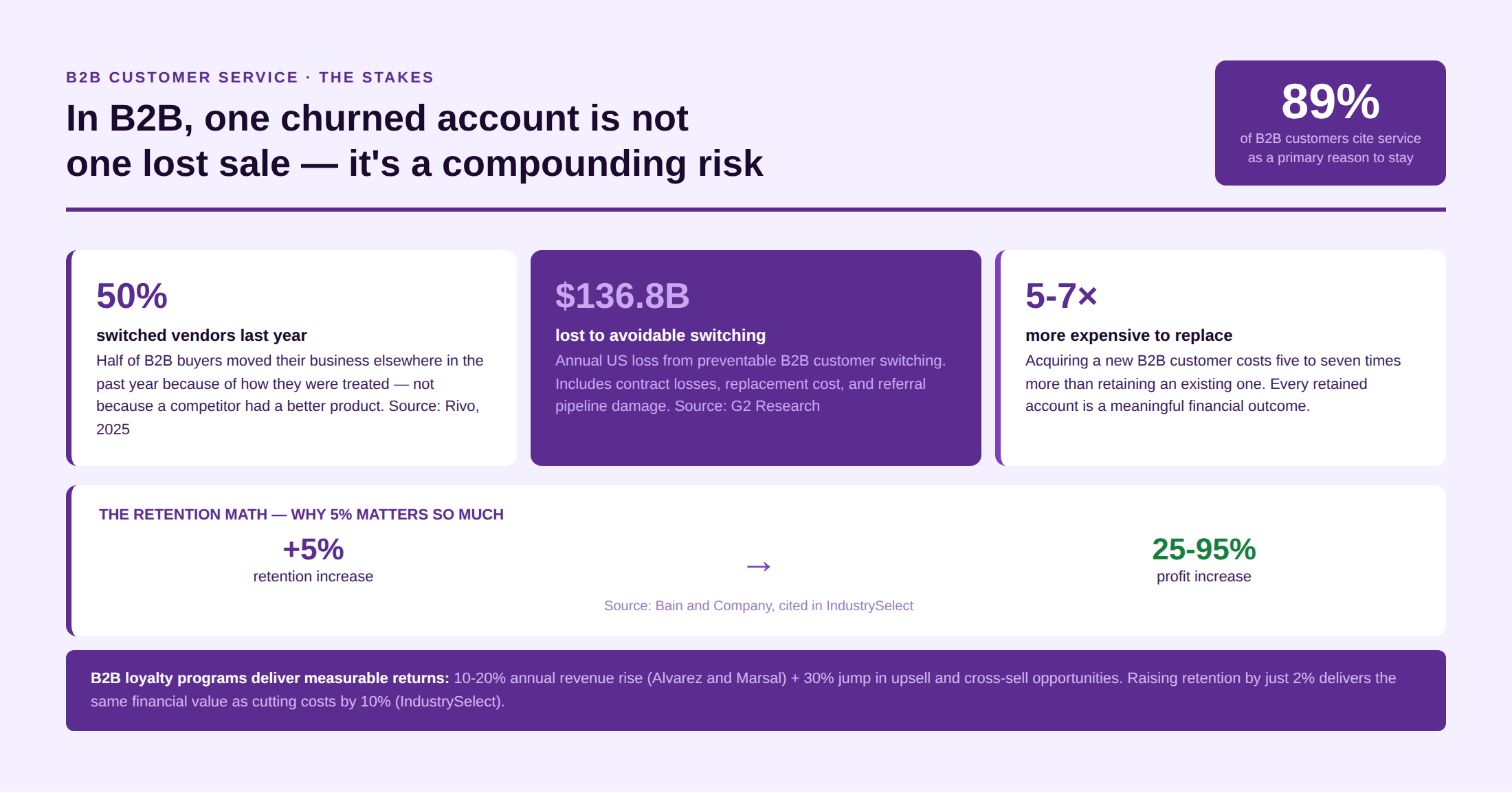
89% of B2B customers cite customer service as a primary factor in staying with a vendor, and 50% have switched vendors in the past year due to poor service experiences (Rivo, 2025). That second number is striking. In a single year, half of B2B buyers moved their business elsewhere because of how they were treated, not because a competitor had a better product.
This guide defines what B2B customer service is, how it differs structurally from B2C, how it impacts your business across revenue, retention, and brand reputation, and the practices that separate companies that retain clients from those that perpetually replace them.
Rellated read: Top B2B Customer service tools
What Is B2B Customer Service?
B2B customer service (business-to-business customer service) refers to the support, relationship management, and post-sale engagement a company provides to other businesses it sells to. Unlike consumer customer service, B2B support is not transactional. It is relational, technically complex, high-stakes, and deeply tied to the long-term commercial relationship between the vendor and the client.
A B2B customer is not a single individual with a single problem. It is an organization with multiple stakeholders, a procurement process, a dedicated account relationship, integration dependencies, and a contract that renews or terminates on a schedule. The service team in a B2B company must navigate that complexity on behalf of every client, consistently, often in real time.
Bad customer service costs US companies over $75 billion every year (IndustrySelect, cited in Quality Incentive Company). In the B2B context, that figure reflects not just individual account losses but cascading effects on referral pipelines, renewal rates, and brand positioning in specific industries where buyers talk to each other.
B2B vs B2C Customer Service: Understanding the Core Differences
The most important distinction between B2B and B2C customer service is not the channel or the tone. It is the structural relationship between the service team and the customer.
| B2B Customer Service | B2C Customer Service | |
| Customer type | Organizations with multiple stakeholders | Individual consumers |
| Relationship length | Months to years, contract-based | Transaction-based, often one-time |
| Account value | High, often six to seven figures | Low to moderate per customer |
| Query complexity | Technical, product-integrated, often urgent | Generally simpler, process-driven |
| Response expectation | Dedicated account manager, SLA-bound | Fast first response, any agent |
| Decision maker | Multiple stakeholders, procurement teams | Usually the individual |
| Impact of service failure | Contract loss, referral impact, brand risk | Churn of one customer |
In B2C, customer experience is largely shaped by speed, convenience, and the feel of the brand. In B2B, it is shaped by trust, technical competence, and the quality of the ongoing relationship. A B2C customer who has a bad experience may leave a review. A B2B customer who has a bad experience may terminate a contract, tell ten industry peers, and impact the vendor’s pipeline for years.
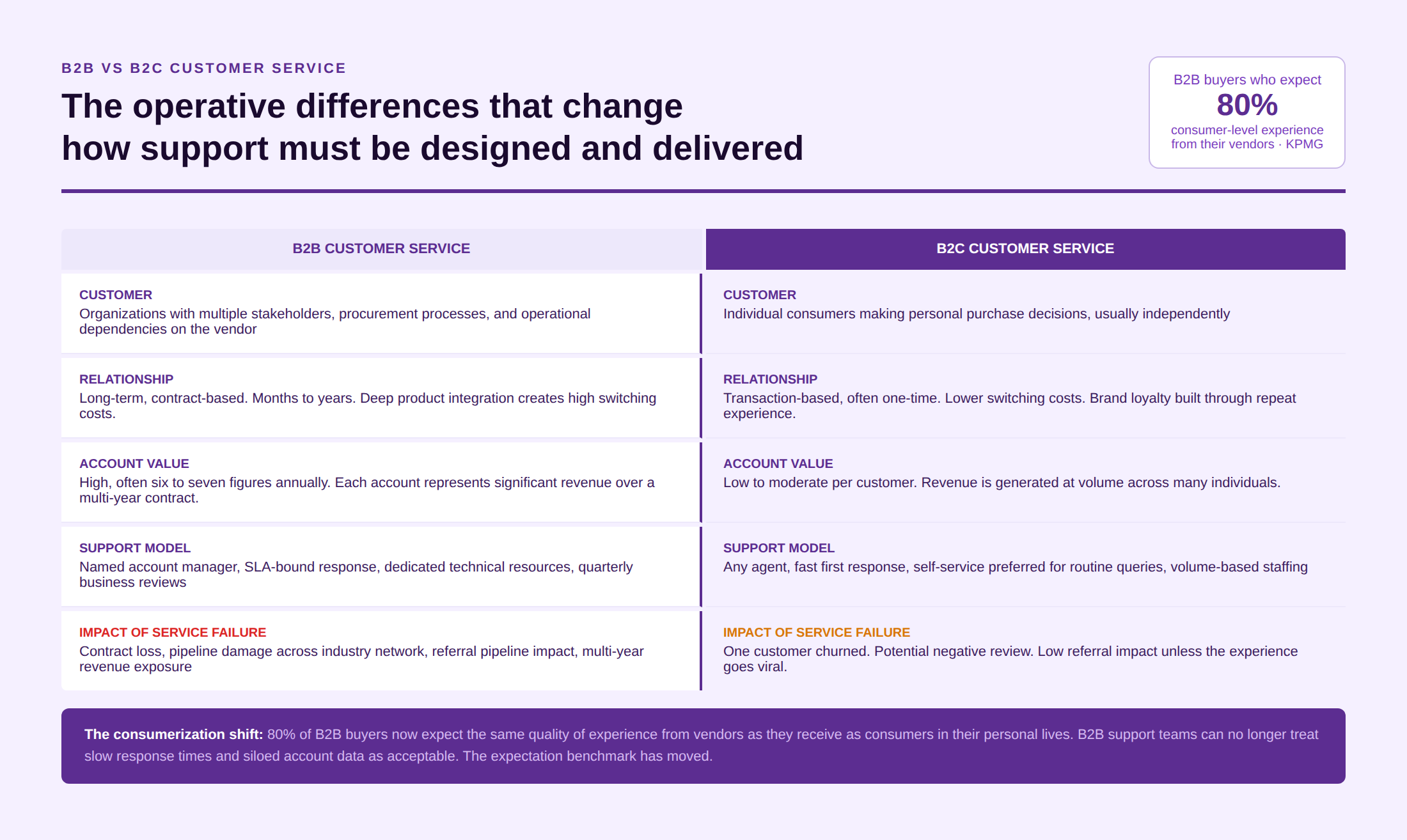
80% of B2B buyers now expect the same quality of experience from their vendors as they receive as consumers in their personal lives (KPMG B2B Customer Experience Report). The consumerization of B2B expectations is real and accelerating. B2B buyers are increasingly impatient with slow response times, siloed support, and the need to explain their account situation to a new agent every time they call.
See how Kayako gives B2B support teams the full account context they need before every interaction. Book a Demo
How B2B Customer Service Impacts Your Business
Revenue retention and contract renewal
Raising customer retention by just 2% delivers the same financial value as cutting costs by 10% (IndustrySelect, cited in Quality Incentive Company). And a Bain and Company study found that a 5% increase in retention can drive a profit increase of 25% to 95%. In B2B, where contracts are multi-year and account value is high, service quality is not just a support metric. It is a revenue preservation mechanism.
B2B firms that emphasize customer loyalty report a 10% to 20% rise in annual revenue (Alvarez and Marsal). Successful B2B loyalty programs increase upsell and cross-sell opportunities by 30%. Every satisfied client is a renewal, an expansion conversation, and a reference account.
Churn and its cascading cost
Annual loss from avoidable B2B customer switching in the US is $136.8 billion. That figure includes not just lost contract value but the cost of replacing those accounts through new sales cycles that are five to seven times more expensive than retaining existing ones. B2B churn is expensive, not because each individual customer is large, but because the replacement cost is disproportionately high.
Brand image in industry networks
B2B buyers operate in industry networks where reputation travels fast. A client who experienced poor service from a vendor does not just leave quietly. They discuss it in industry forums, analyst briefings, procurement roundtables, and reference calls. A single high-profile service failure at an enterprise account can close doors across an entire vertical before a sales team knows the door was there.
The inverse is equally powerful. A B2B customer whose issue was resolved quickly, competently, and without friction becomes a reference. Reference customers reduce sales cycle length, improve close rates, and lower customer acquisition costs in ways that no marketing budget can fully replicate.
Directly enabling sales and account expansion
In B2B, the service team often has more regular contact with the client than the account manager does. That contact creates expansion opportunities if the service team is equipped to recognize and act on them. An agent who resolves a billing issue and notices the client is using only 40% of their contracted seats is looking at a conversation, not a problem. Service and sales alignment, built on a shared customer record, converts support interactions into commercial intelligence.
Types of B2B Customer Service
B2B companies use a mix of traditional and modern service channels. The right combination depends on account size, product complexity, and the stage of the customer relationship.
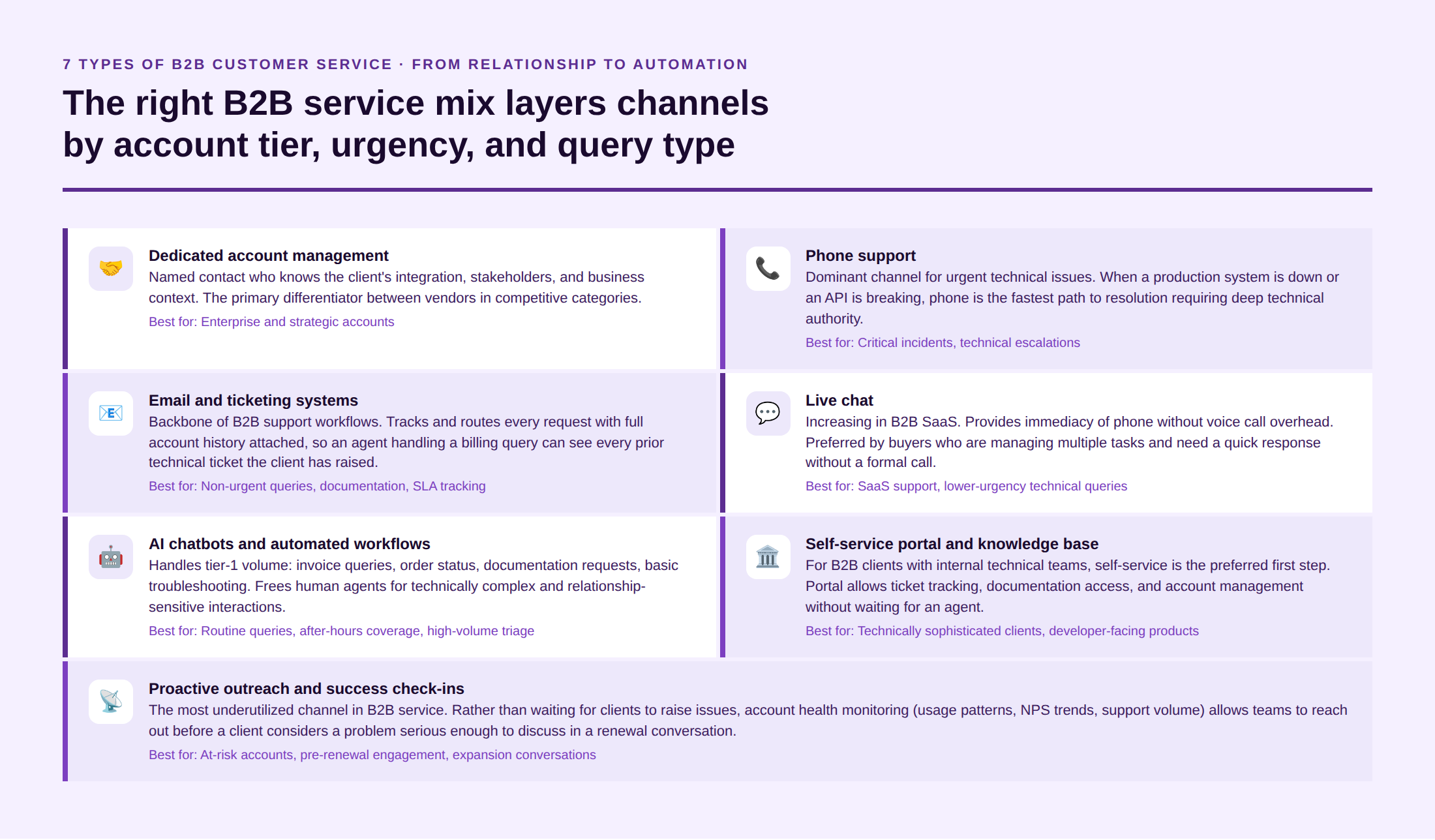
Dedicated account management
The most relationship-intensive channel in B2B. A named account manager serves as the primary point of contact for a client organization, handling escalations, proactive check-ins, business reviews, and renewal conversations. For enterprise accounts, this is often the primary differentiator between vendors in the same product category.
Phone support
Still the dominant channel for urgent technical issues in B2B. When a software system is down, a production line is affected, or an API integration is breaking, a phone call is the fastest path to resolution. Phone support in B2B requires deep technical knowledge and authority to escalate quickly.
Email and ticketing systems
The backbone of B2B support workflows. Email and helpdesk ticketing systems capture, track, and route every support request. In B2B, ticket history is a critical context: an agent handling a billing query should be able to see every previous technical ticket the client has raised. That cross-functional visibility is what separates a helpdesk from a shared inbox.
Live chat
Increasingly common in B2B, particularly for technical support in SaaS environments. Live chat provides the immediacy of a phone call without the overhead of a voice call. For lower-urgency queries, it is often the preferred channel for B2B buyers who are simultaneously managing other tasks.
AI chatbots and automated workflows
AI agents handle tier-1 volume in B2B support, freeing human agents for the technically complex and relationship-sensitive interactions that define the B2B service experience. When integrated with the client’s account data, AI can handle order status checks, invoice queries, documentation requests, and basic troubleshooting with the same accuracy as an experienced agent.
Self-service portals and knowledge bases
A customer self-service portal designed for B2B users allows clients to manage their own accounts, access documentation, track open tickets, and find answers to technical questions without waiting for an agent. For sophisticated B2B buyers with internal technical teams, self-service is often the preferred first step before escalating to vendor support.
Proactive outreach and success check-ins
The most underutilized channel in B2B service. Rather than waiting for clients to contact support, high-performing B2B teams monitor account health indicators (usage patterns, login frequency, support ticket volume, NPS trends) and reach out proactively when they see warning signs. Proactive engagement resolves issues before the client considers them serious enough to raise in a renewal conversation.
Best Practices for B2B Customer Service
Here are the top best practices if you’re serious about acing B2B customer service.
However, if you’re looking to dive deeper. this is the blog for you.
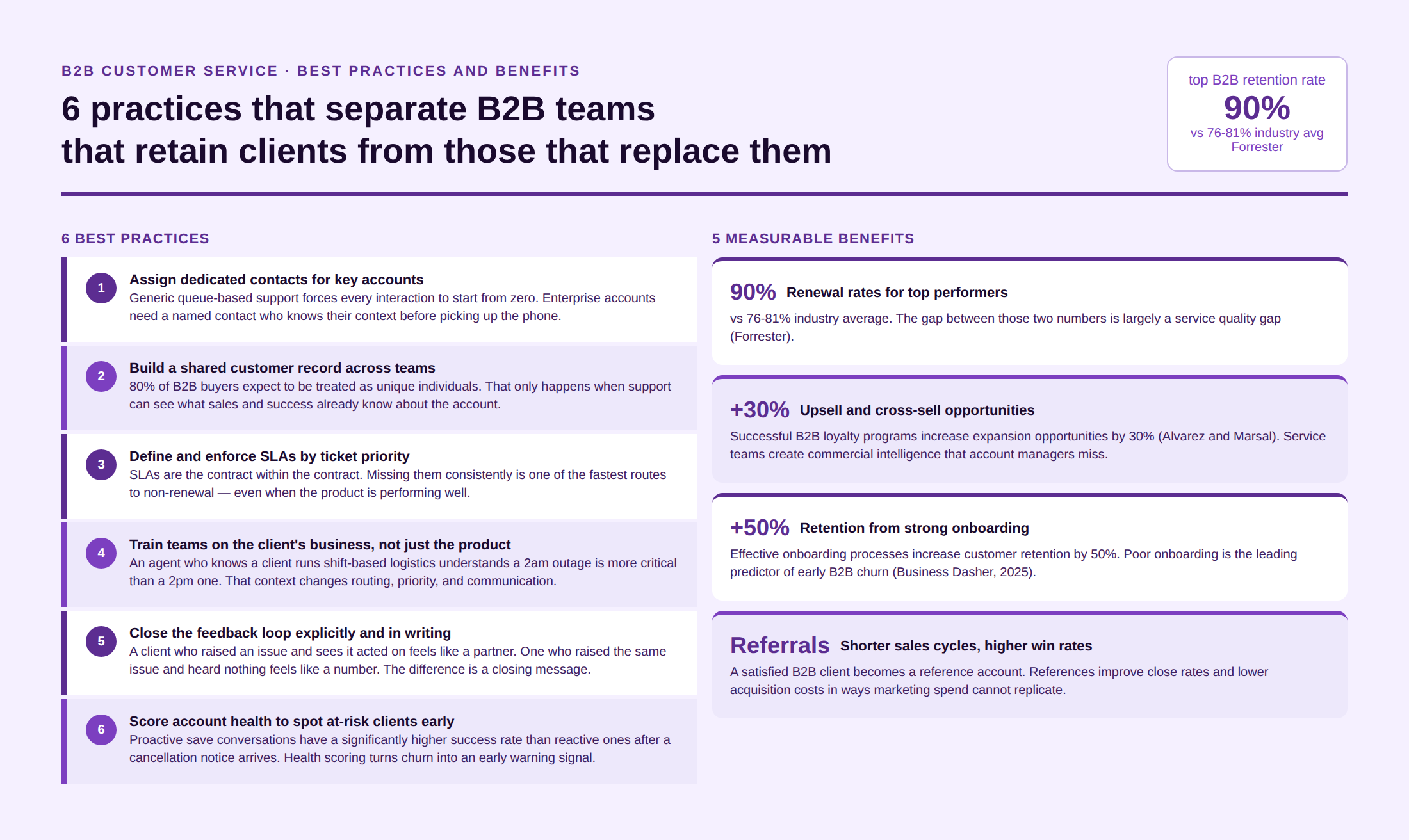
Assign dedicated points of contact for key accounts
The most impactful structural decision in B2B support is ensuring that enterprise and mid-market clients have a named point of contact who knows their account, their integration setup, and their business context. Generic queue-based support is appropriate for transactional B2B volume. For relationship-critical accounts, it creates a dangerous situation where every interaction starts from zero.
Build a shared customer record across sales, support, and success
B2B buyers say that being treated as a unique individual with specific needs is central to their service expectations. That expectation is only met when the agent handling a support ticket can see the same client history that the account manager sees. Siloed systems produce siloed service. A unified customer support platform that connects support, CRM, and account data is the infrastructure that makes this possible.
Define and enforce SLAs for every tier
B2B clients have operational dependencies on their vendors. When something breaks, they need to know exactly when to expect a response and a resolution. Service Level Agreements (SLAs) that specify response and resolution times by ticket priority are not bureaucratic formalities. They are the contract within the contract, and missing them consistently is one of the fastest paths to non-renewal.
Train support teams on the client’s business, not just the product
A support agent who understands that a client is a logistics company running shift-based operations knows that a system outage at 2 am is more critical than one at 2 pm. That contextual awareness is the difference between a ticket being routed correctly and a client being escalated to a regional director because the support team didn’t recognize the urgency.
Close the feedback loop proactively
B2B clients who have submitted feedback, flagged product issues, or raised complaints need to know that their input was acted on. Closing the feedback loop, explicitly and in writing, is one of the most underutilized tools in B2B customer retention. A client who raised an issue six months ago and sees it reflected in a product update feels like a partner. One who raised the same issue and heard nothing feels like a number.
Use data to spot at-risk accounts before they churn
Account health scoring, based on support ticket volume, response time trends, NPS movement, and product usage metrics, allows teams to identify clients who are likely to churn before they have made the decision. A proactive conversation with an at-risk client, conducted before the renewal cycle, has a significantly higher success rate than a reactive save attempt after the cancellation notice arrives.
The Benefits of B2B Customer Service Done Well
- Higher renewal rates. Clients who receive responsive, knowledgeable support are significantly more likely to renew and expand. B2B retention rates for top performers sit around 90%, compared to industry averages of 76% to 81% (Rivo). The gap between those two numbers is largely a service quality gap.
- Stronger referral pipelines. A satisfied B2B client is a reference. References reduce sales cycle length, improve win rates against competitors, and lower customer acquisition costs in ways that are difficult to replicate through marketing spend alone.
- More upsell and cross-sell revenue. Successful B2B loyalty programs lead to a 30% jump in upsell and cross-sell opportunities (Alvarez and Marsal). Support teams that are embedded in the client relationship are well-positioned to surface expansion opportunities that account managers may not have visibility into.
- Lower cost to serve over time. Well-designed B2B support operations, with strong self-service resources, proactive account management, and AI handling tier-1 volume, reduce the cost per interaction as the client base scales. The investment in structured support pays back in reduced ticket volume and reduced churn.
- Brand differentiation in competitive markets. In B2B markets where product parity is common, service quality becomes a primary differentiator. A vendor who is consistently excellent to work with retains clients even when a competitor offers a lower price, because the switching cost of changing a relationship that works well is higher than the marginal savings.
Kayako helps B2B support teams deliver account-aware service at scale, powered by AI. See Kayako in Action
How to Improve B2B Customer Service
B2B customer service is no longer just about resolving tickets. It directly impacts retention, renewals, expansion, and customer trust. Unlike B2C support, B2B customer service requires deeper account context, faster collaboration across teams, and a clear understanding of each customer’s business goals. To improve B2B customer service, companies need to move beyond reactive support and build systems that help teams respond faster, personalize every interaction, and solve issues before they affect the customer relationship.
Conduct regular business reviews with key accounts
A quarterly business review (QBR) with a client’s key stakeholders is one of the highest-leverage activities in B2B account management. It creates a structured forum for discussing satisfaction, upcoming needs, product feedback, and commercial expansion, outside the context of a support ticket or a renewal conversation. Teams that run QBRs consistently report better account health scores and longer retention than those that only engage reactively.
Measure the right metrics
B2B support metrics should reflect the complexity of the relationship. First response time and ticket closure rate are necessary but not sufficient. Customer Effort Score (CES) measures how hard clients have to work to get support. Net Promoter Score (NPS) measured at the account level reveals relationship health. Time to resolution on critical-priority tickets is often the metric clients care most about.
Integrate your support platform with your CRM
The single most impactful technical improvement most B2B support operations can make is connecting the support ticketing system to the CRM. When a support agent can see the client’s contract value, renewal date, account health score, and open opportunities alongside their ticket history, every interaction becomes more informed. This is not a nice-to-have feature. It is the infrastructure that enables account-aware service at scale.
Invest in onboarding as a service quality lever
Effective onboarding processes increase customer retention by 50% (HubSpot). Poor onboarding is the leading predictor of early churn in B2B. A client who is not using the product effectively within the first 90 days is a client who will not renew. Treating onboarding as a service delivery problem, not just a sales handoff, is one of the highest-ROI investments a B2B team can make.
Examples of B2B Customer Service in Practice
B2B customer service looks different across industries.
However, the goal is always the same: help customers solve problems faster, get more value from the product, and trust the company as a long-term partner. The best B2B service examples go beyond answering support tickets. They show how businesses use proactive communication, account context, self-service, automation, and personalized support to improve customer satisfaction and retention.
If you’re looking for a deeper dive into B2B Customer Service examples, head here.
Salesforce: account-centric support at scale
Salesforce segments its support model by account tier. Enterprise clients receive dedicated technical account managers, 24/7 critical support, and priority queue routing. Mid-market clients access a tiered self-service portal, live chat support, and named customer success managers. Every support interaction writes to the shared account record, giving both the support and sales teams visibility into client health. The result is one of the most studied B2B support models in the technology industry.
Slack: proactive issue communication
When Slack experiences a service degradation, its communication team notifies affected clients proactively, with real-time status updates and specific timelines for resolution. Clients are not waiting on hold to find out what’s happening. They receive structured, transparent communication that reduces support ticket volume during incidents and protects the trust that makes the commercial relationship durable.
HubSpot: tiered support with structured escalation
HubSpot’s support model mirrors its pricing tiers. Starter clients access the knowledge base and community forum. Professional clients access live chat and email. Enterprise clients access a dedicated support team with SLA-backed response times. The tiered model aligns support investment with account value, concentrates relationship-intensive resources where they generate the most retention impact, and creates a clear upgrade path.
Kayako customer result: Aurea
Challenge: High agent turnover disrupting client relationships. Each departure costs the equivalent of $20,000 and three months of recovery time.
Solution: Kayako’s unified platform with automated workflows and AI triage, ensuring account context was preserved regardless of agent turnover.
Result: “$20,000 saved per agent turnover event. Since we brought in Kayako, that’s changed.” — Balaji Jayaraman, VP Customer Support, Aurea
B2B relations are primed to change dynamics due to bad customer experiences. A company that has signed a service-level agreement with its client expects high-quality service and faster resolution channels if a challenge arises. It is up to an enterprise to ensure that the highest level of relations is maintained across services and the customer experience. Failing to do so will hurt not only the bottom-line revenue but also the standing in the market.
FAQs
1. What is the difference between B2B and B2C customer service?
A. B2B customer service operates across long-term, contract-based relationships with organizational buyers who have multiple stakeholders, high account values, and technical integration dependencies. Service failures carry significant commercial consequences, including contract loss and referral impact. B2C customer service is typically transactional, individual-focused, and volume-intensive. A poor experience in B2C costs one customer. In B2B, it can cost a contract, a reference, and a pipeline.
2. What are the most important B2B customer service best practices?
A. The practices with the highest impact: assign dedicated points of contact for enterprise accounts; build a shared customer record across support, CRM, and success; define and enforce SLAs by ticket priority; train support teams on client business context, not just product knowledge; close the feedback loop proactively after issues are resolved; and use account health scoring to identify at-risk clients before they make a churn decision.
3. How does B2B customer service directly impact revenue?
A. Through four direct mechanisms. First, retention: 89% of B2B clients cite service as a primary factor in staying with a vendor. Second, expansion: strong service relationships produce 30% more upsell and cross-sell opportunities. Third, referrals: satisfied B2B clients become reference accounts that reduce sales cycle length and improve close rates. Fourth, avoidance of replacement cost: B2B customer acquisition costs are five to seven times higher than retention costs, making every retained account a meaningful financial outcome.
4. What channels are most effective for B2B customer service?
A. The most effective B2B service model layers multiple channels based on account tier and query type. Dedicated account management for enterprise clients. Phone and live chat for urgent technical issues. A helpdesk ticketing system for tracking and routing all support requests with full account history attached. AI chatbots for tier-1 volume. A self-service portal for clients with internal technical teams. Proactive outreach for at-risk accounts. The specific mix should reflect account value, product complexity, and the escalation paths most relevant to your client base.
Kayako’s AI helpdesk gives B2B support teams full account context, smart routing, and unified client history. Try Kayako