
Learn 10 effective strategies to deal with rude customers in 2025. Boost your customer service skills with proven techniques to stay calm, resolve issues, and build lasting relationships.
Ah, here we go again!
Talking about how customers are the best thing that can ever happen to a business.
Or how can the market ever dream of evolving without their presence?
Or how customer just keeps on giving and giving to their favourite brand (read: feedback).
But here’s a little thing that each of us knows.
Customers can be rude. Very Rude at times!!!
And in that moment, your company’s customer service representative has to pull in all the smarts and skills at their disposal to avoid any potential damage that the situation might present.
And this can have a very serious impact not only on your company or a brand’s standing, but on your representatives’ mental health state too, because let’s face it, human emotions sometimes can be a bit much.
So, what can a company do to ensure that it strikes a balance between pacifying a customer while also achieving its ultimate objective of retaining them, without harming the brand, and also prioritizing the well-being of its own employees?
For that, we need first to understand what leads to such a situation.
Why do customers complain?
While most companies try to avoid any bad days in the office, the truth is, customer complaints or their feedback are what make the organization’s offerings better.
So, when you see an irate customer, the first step is to know the root cause behind the situation.
It could be because of either one of the reasons:
- Misaligned expectations
- Previous unsavoury and miffed experience
- When they feel undervalued or unattended
- Longer wait times/unresponsiveness
- Lack of self-service options
- They just had a stressful day and are not at their most eloquent self
When a company can find the origin of all the frustration, it becomes easier for them to come up with a response that is constructive for both parties.
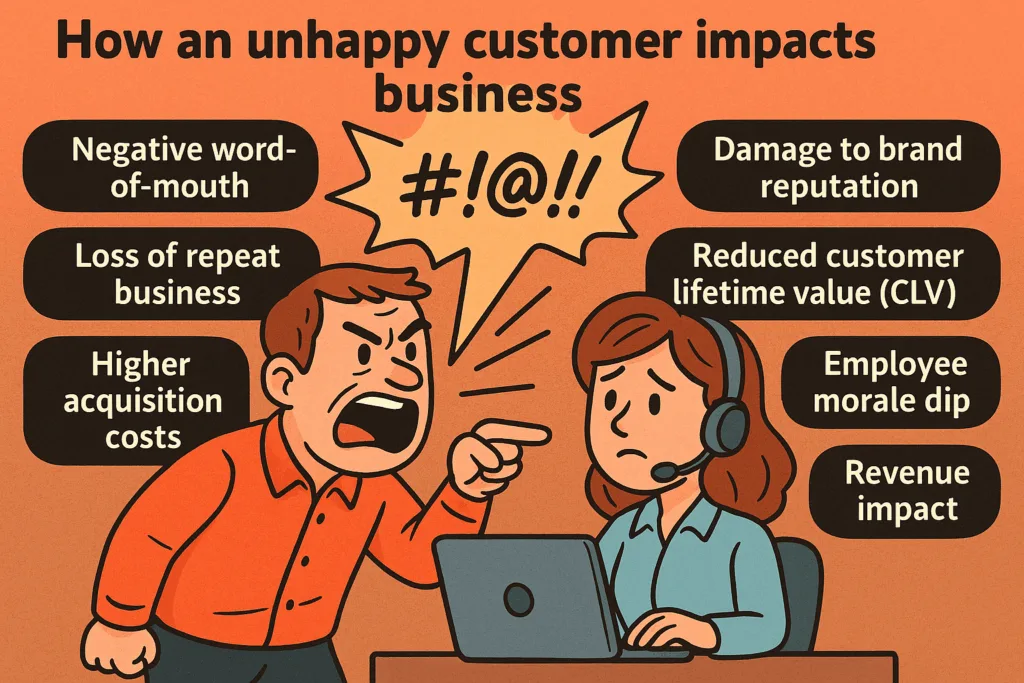
How can a miffed customer impact your business?
Every company stakeholder dreads harm to their bottom-line revenue. And, if it somehow relates to a bad customer experience, then the situation becomes a bit more of a curveball, as 78% of customers have been reported to end a business with a brand citing poor customer service.
Such massive numbers are why companies can experience high churn rates, and after a while, simply stop doing business with you.
Keeping calm under fire is the best way forward to ensure that you always stay in the good rating zone of your customers and constantly keep your brand awareness and average order value safe.
This brings us to the core of the write-up, highlighting the best strategies for dealing with a rude customer.
Strategy #1: Stay Calm & Emotionally Lean
Your first line of defense when you immediately hear a loud voice at the other end is to remain calm. It is at this initiating point that you can start setting the tone for how the conversation will shape out.
Often when you are faced with a barrage of expletive words and an aggressive tone upfront, you can set yourself up with a clear set of thinking.
You can start with a neutral tone and follow a structured script that can help you navigate the initial challenging phase. Listen with patience and then respond in a calm and composed manner. You can also practise deep breathing so that you stay away from any reactionary measure.
Strategy #2: Listen Actively & Acknowledge Emotions
So, whenever you find yourself stuck in a trial by fire, just simply let the user speak out. Echo their sentiments and let them know that you do feel what they went through.
Whether it’s a payment that’s not going through or a wishlist product whose delivery is taking a bit longer than usual, the next time you face a scenario like this, simply say, “I can hear how upset you are, and I’m committed to helping.”
Strategy #3: Set Clear Boundaries with Professional Language
Once you are done setting the marker for the conversation, be sure to let the customer know that both parties in the conversation will be respectful to each other.
This is essential as it keeps the user and the representative under a pact where each one respects the other’s moral code.
It also helps in consolidating a base where a customer representative can find a solution to the problem in a much calmer manner without any further obstruction from the user end.

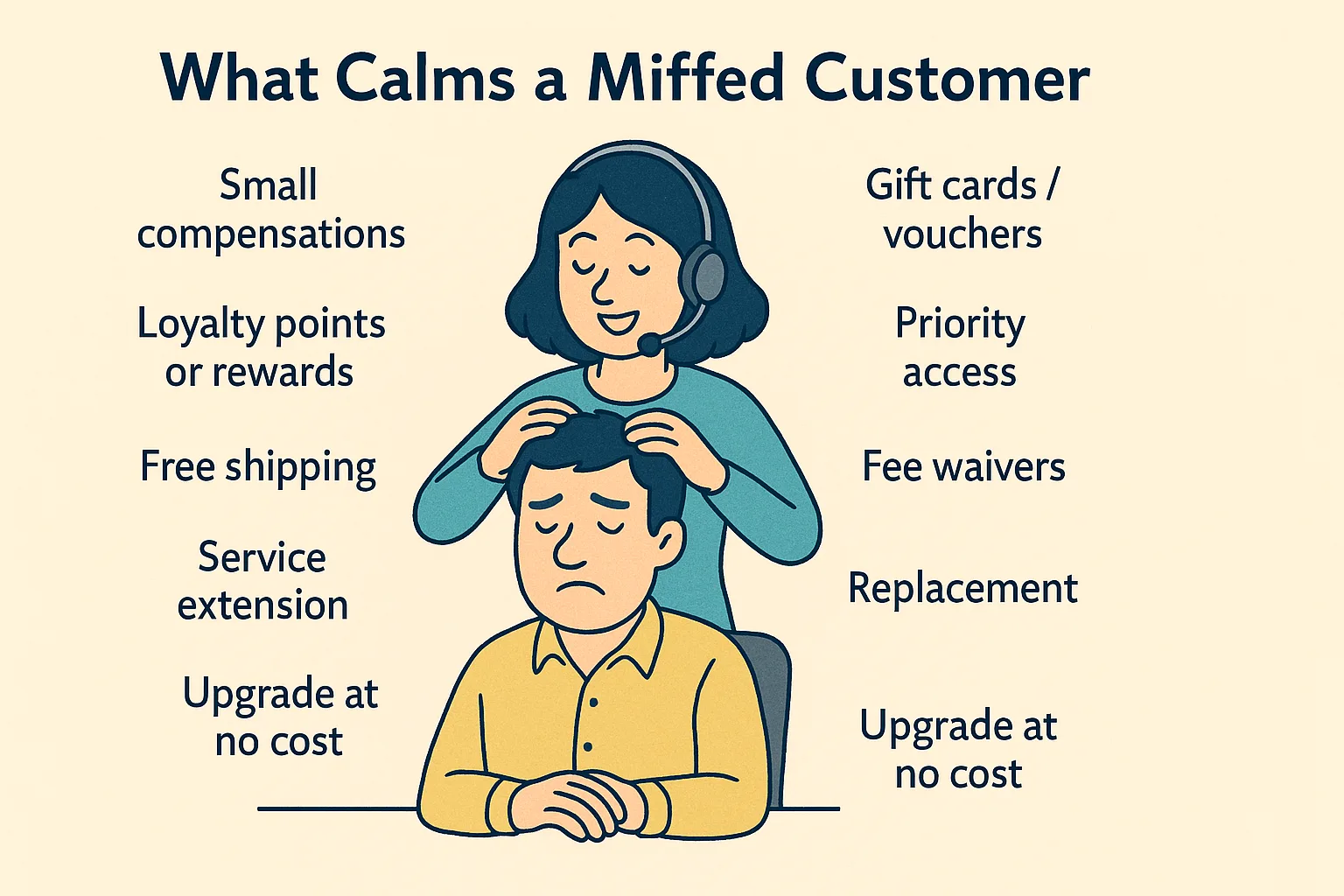
Strategy #4: Offer a Path to Resolution
Up until now, you focused on how effectively you can channel the emotions from getting out of hand. Once you have the shift from emotional to problem-solving mindset, you can then switch your attention to finding a peaceful resolution.
This could involve issuing a temporary solution until you can commit to a final resolution to the problem.
You can start by saying “Here’s what I can do for you right now…”, and then offer a short-term resolution in line with your management’s approval.
Strategy #5: Know When to Escalate or Exit the Conversation
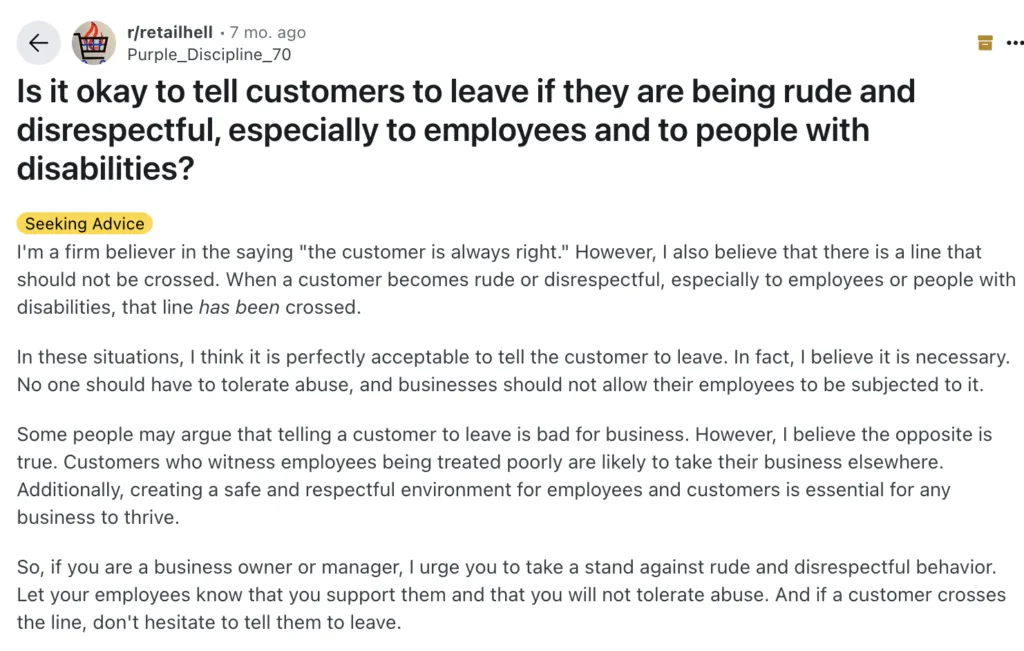
You might find in a few instances that not all customers deserve continued engagement if they continue to disrespect the employee.
It’s a clear sign that they don’t want or aren’t even looking for a resolution to begin with.
In such cases, when you see the whole conversation spiralling out of control, simply follow the company’s protocol by involving your manager while documenting the entire conversation word-for-word. This will help you in managing escalation if there’s a review for a particular scenario.
Here are some of the reasons when it is OK to hang up on a customer:
- The caller makes personal insults against you.
- The caller is arrogant and refuses to listen to your reasoning.
- The caller makes physical threats against you.
- The caller constantly yells or screams at you.
Strategy #6: Take Care of Your Team
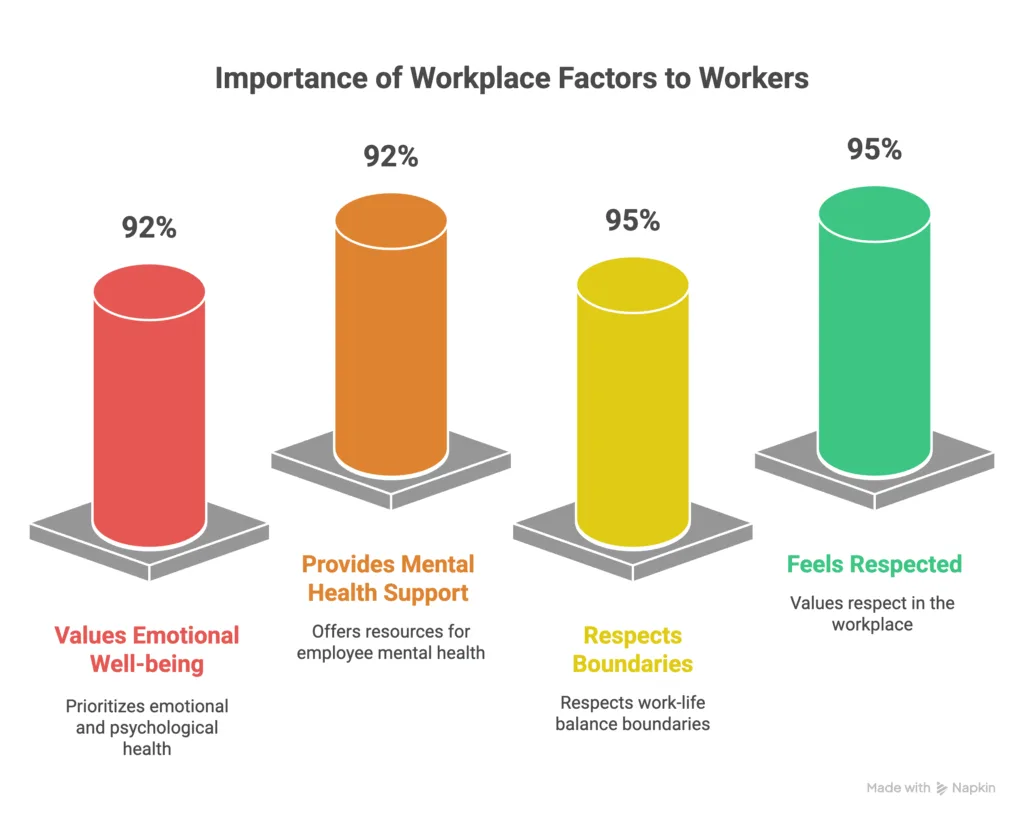
It’s not just personal remarks that can take a toll on the employee’s well-being.
A workplace that constantly involves handling rude customers takes the drive away from an employee to give their best.
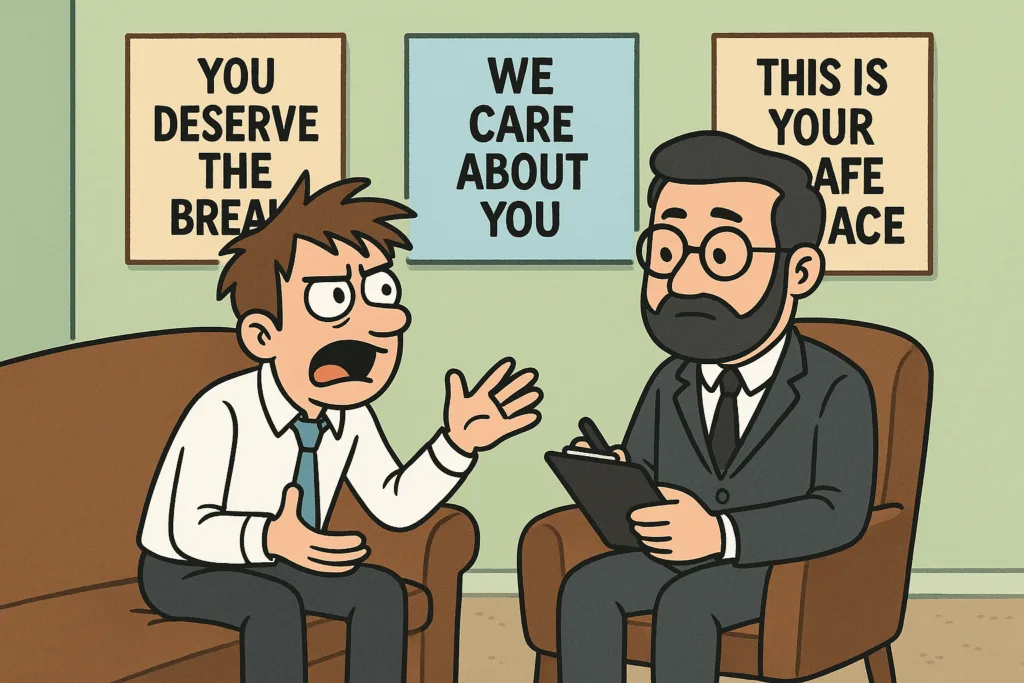
Over time, it can be quite a lot for employees to babysit rude customers, and in such situations, letting them have a bit of space is the most ideal thing that managers should allow.
Once they have gathered their thoughts, get a complete debrief about their situation and learn what you, as a company, can do to avoid such incidents from occurring again.
Because it’s important to remember one central fact, your employees (read: happy employees) are the ones who fuel your company’s success.
This makes them your most important asset, and looking after their well-being becomes your priority.
Related Read: How to improve customer service agent productivity?
Strategy #7: Debrief and Learn
An extension of the point mentioned above, stakeholders should make arrangements for internal coaching sessions that cover what went well during a conversation and provide information about the areas where improvements can be made.
This is where constructive actions are planned out, and employees also feel valued when they actively share their work experience.
Investing in a Debrief & Learning session yields many rewards for a company, too, like:
- Increased employee engagement
- Feedback culture
- Better job satisfaction
- Better performance
- Leadership development
- Improved problem-solving
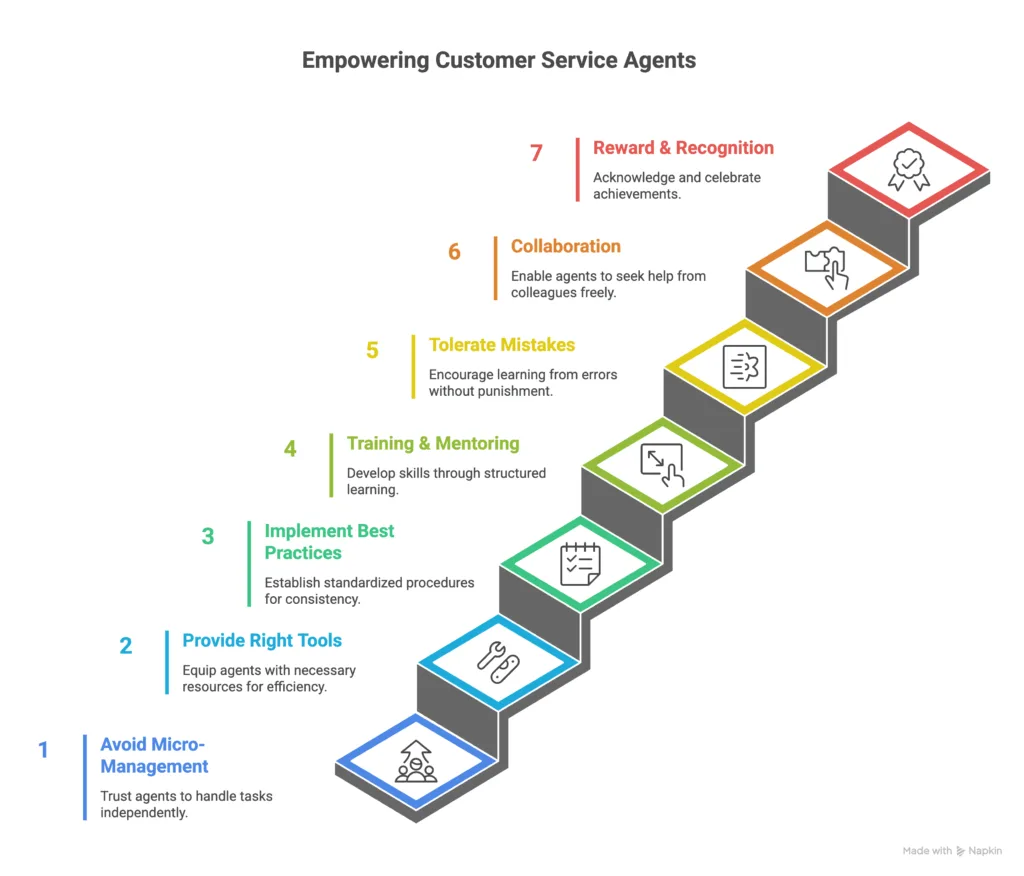
Strategy #8: Empower Agents with Clear Policies & Authority
It’s good if you make your agent feel empowered.
Customer service representatives need a certain degree of agency that allows them to make decisions on setting boundaries during a conversation and take some quick resolution management calls, like showcasing a goodwill gesture to a customer and employing the escalation protocol when they feel it is required.
Such clarity avoids confusion, removes guesswork, and improves the quality of the outcome.
Strategy #9: Fuel the Right Mindset
“Kill them with kindness, not conflict.”
While it may be just a phrase, its cerebral impact goes a long way in helping customer service representatives tackle the numerous challenges that come their way.
Its positive chain reaction includes higher employee satisfaction and morale, which directly powers your brand reputation, too.
Your employees also appreciate the autonomy you provide them, and it becomes even more effective if the company’s policies are clear from the outset. Such clarity is essential for agents to back their own actions, which keep both the company and its relationship with the company intact.
Strategy #10: Reinforce a Positive Culture That Prevents Rudeness
“One should practice what one preaches.”
This age-old adage continues to hold ground even today, as the most marketed principles need to be lived and breathed by everyone, and that includes even the leadership.
When a company talks about harboring a positive work culture, it starts from internal revamping of the thought process. This could include celebrating small but memorable interactions where your agents have actually delivered when it matters the most.
The focus shouldn’t be on the volume of tickets handled, but on the quality of interaction your employees have been a part of.
Management should consistently reinforce a zero-tolerance policy to ensure that rude customers are handled with equal seriousness, regardless of the level of the customer representative handling the issue.
After all, it’s all about inner peace for every individual.

It is essential to remember that customer interactions, even those that are rude, are an opportunity for your company to make a lasting impression. It’s an opportunity to bring your brand values to life and strengthen an emotional bond with customers.
If done right, your customers end up associating with your brand for life and become your most prominent advocates, where word-of-mouth remains the biggest currency, as 88% of customers ultimately choose the most user-recommended product.
An organization’s journey to peak customer service requires time and, most importantly, conviction towards its own principles.
For agents, a company should continue to re-emphasize key tactics of empathy, belief in tried and tested processes, transparent support, and a calm and collaborative journey, which includes the user, towards a final resolution.
Rest assured, your employees will continue to feel empowered if you treat them with equal reverence, just like your customers. Because no matter how much you invest in technology, learning, upskilling, and even leadership, your greatest ally in your business is your happy employees.
The happier they are, the more effective your customer support.
FAQ
- How should you respond to a rude customer in a professional manner?
When handling a rude customer, the first thing to keep in mind is to stay calm and composed. Try to understand the frustration and pinpoint the root cause of the issue. Use phrases like “I understand how you feel” and gradually shift the conversation towards a more rational approach once the customer is calmed down. Work towards finding a resolution and keep your seniors aware of any unwanted developments. - What are the best strategies for handling angry or rude customers in customer service?
Some of the best strategies used to handle rude customers are:
– Staying calm and emotionally neutral.
– Actively listening and acknowledging the customer’s feelings.
– Setting respectful boundaries.
– Offering a clear path to resolution.
– Knowing when to escalate or exit the conversation.
These methods reduce churn rate and preserve employee well-being while keeping customers satisfied. - How can rude customers affect your business?
A rude customer is still a customer at the end of the day, and that means, even if there’s a slight under-par experience a user feels, there’s a good chance they may switch to another brand.
And it doesn’t just stop there, as with the powers of social media, one bad review can get your PR team to do damage control, as it easily influences other customers. All this combines to pose a challenge to your revenue and your standing in the market. - Why do customers act rude or disrespectful?
There can be many reasons why a customer starts using an angry tone.
It can be because they received below-par services or products than they were promised. It could also be owing to long wait times, unresponsive support, or a lack of self-service options. In some, although few, customers have also been reported to lash out simply because they were having a bad day. - When is it okay to refuse service to a rude or abusive customer? It’s completely acceptable to disengage with a rude customer if he/she:
- Uses personal insults or offensive language.
- Makes physical threats.
- Refuses to listen or acknowledge solutions.
- Repeatedly yells or escalates aggressively.
Companies should train agents with clear escalation policies and a zero-tolerance framework for abusive behavior. Stakeholders should also give some degree of autonomous power to employees so that they can make the right decision on their own.