A single bad interaction used to stay between the customer and the business. Today, it becomes a Google review, a Twitter thread, or a TikTok reenactment within minutes. The percentage of customers seeking revenge after a poor service experience has tripled since 2020, according to the 2025 National Customer Rage Study by CCMC. The same study found that 64% of customers with a problem feel rage, and 77% reported a product or service problem in the past year, more than double the rate recorded in 1976.
The good news: how you handle an angry customer matters more than the original problem. Customers whose complaints are resolved with genuine care often become more loyal than those who never had a problem at all. That outcome, however, requires the right approach, using not a script, but a set of skills that are both teachable and transferable. This guide covers the psychology, the steps, and the templates.
Why Do Customers Get Angry?
Anger in customer service is rarely about the surface issue. It’s almost always about something deeper, such as a violated expectation, a perceived slight, or a feeling of powerlessness that the service process has amplified rather than resolved.
The psychology: unmet expectations and fight-or-flight
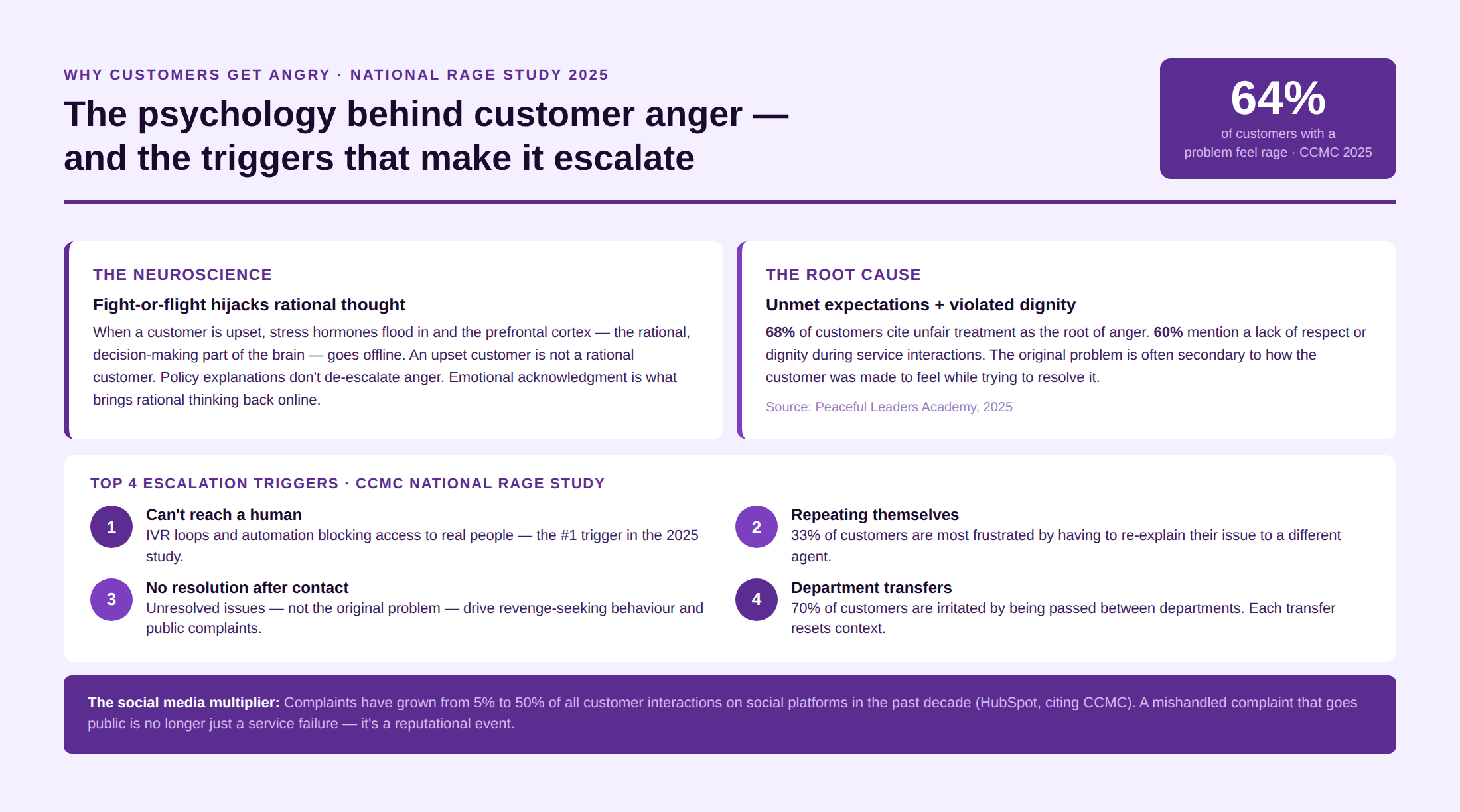
68% of customers cite unfair treatment as the root of their anger, while 60% mention a lack of respect or dignity during service interactions (Peaceful Leaders Academy, 2025). The original problem — a late delivery, a billing error — is often secondary to how the customer was made to feel while trying to resolve it.
When a customer is upset, something neurological happens: stress hormones kick in, the rational prefrontal cortex goes offline, and the fight-or-flight response takes over. This is why logical explanations and policy quotes don’t calm anyone down. An upset customer is not a rational customer. Emotional acknowledgment before any attempt at resolution is what brings rational thinking back online. Every step in this guide is built around that premise.
The most common triggers
- Inability to reach a human. The number one trigger in the CCMC 2025 Rage Study. IVR systems and automated loops that block access to real people are the leading cause of escalating anger.
- Having to repeat information. 33% of customers report being most frustrated by repeating themselves across agents or channels. Each retelling feels like a step backward, not forward.
- No resolution after contact. Customers who raise a complaint and still leave without resolution are primed for public reaction. Unresolved issues, not the original problem, drive revenge-seeking behavior.
- Being transferred repeatedly. 70% of customers are irritated by department-to-department transfers. Each transfer resets context and signals that no one is taking ownership.
“An upset customer is not a rational customer. When you encounter more frustration after already being upset, you stop thinking clearly.” — CCMC National Customer Rage Study, 2024
Social media has raised the stakes further. Complaints have grown from 5% to 50% of all customer interactions happening on social platforms in the past decade (HubSpot, citing National Customer Rage Survey). A mishandled complaint that goes public is no longer just a service failure; it’s a reputational event visible to every future potential customer who searches your brand.
How to Handle an Angry Customer: 8 Psychology-Backed Steps
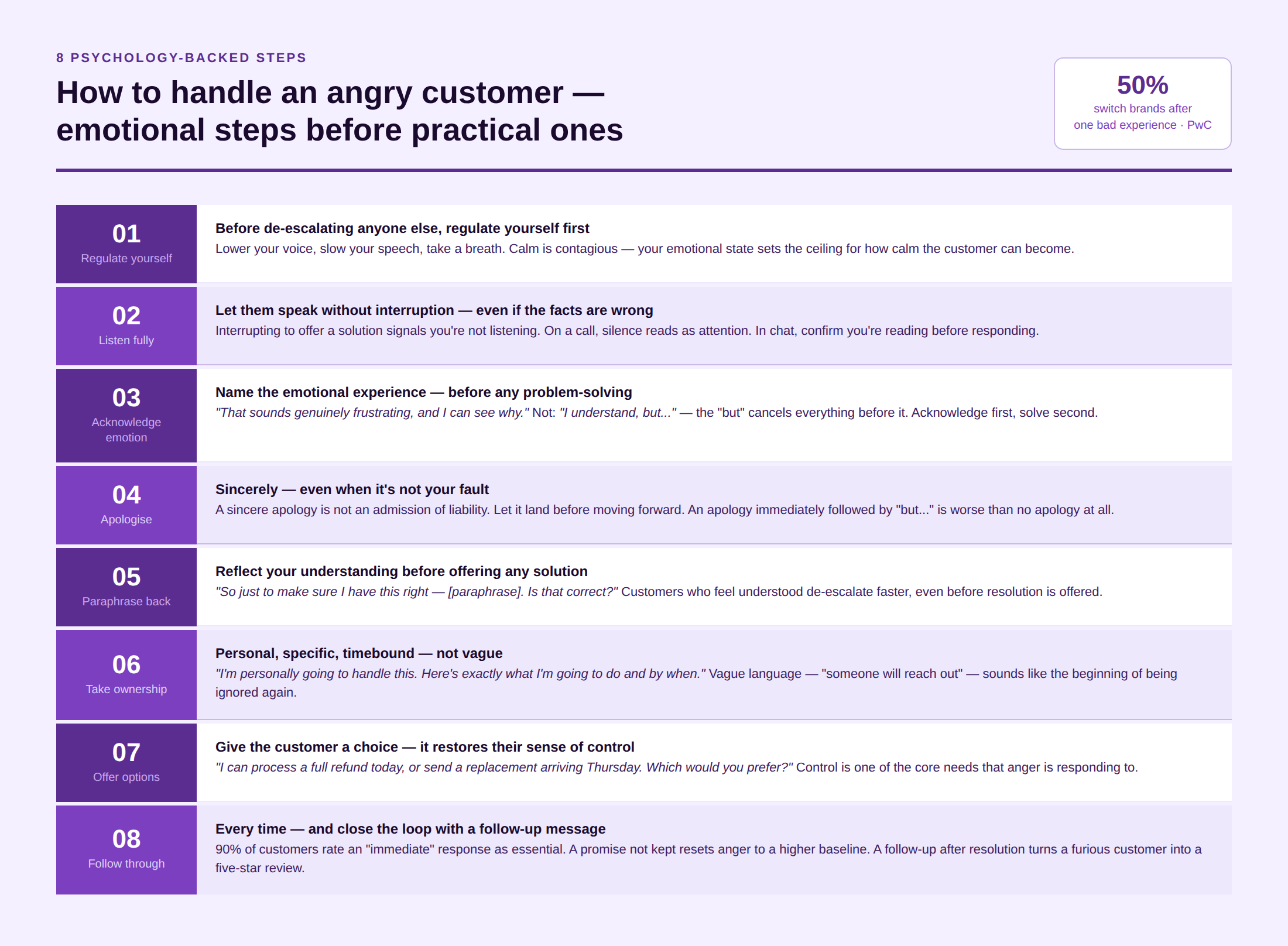
The first four steps are about emotional management: yours and the customers’. The remaining four move toward resolution. Do not skip the emotional steps to reach the practical ones. Customers who don’t feel heard will reject even the right solution.
1. Regulate yourself first
Before you can de-escalate anyone else, you need to be regulated. Take a slow breath, lower your voice slightly, and slow your speech. Calm is contagious in exactly the same way panic is. Your emotional state sets the ceiling for how calm the customer can become. You cannot calm an angry customer while being activated yourself. This is not passivity; it’s the technique.
2. Let them speak without interruption
Resist the instinct to explain, correct, or defend. Let the customer say everything they need to, even if the facts are wrong, even if they’re being unfair. Interrupting, even to offer a solution, signals you’re not listening. On a call, silence reads as attention. In chat, a brief “I’m reading through what you’ve shared” prevents the customer from assuming they’ve been ignored and escalating further.
3. Acknowledge the emotion before the issue
This is the step most agents skip, and the most consequential one. Before any problem-solving, name and validate the emotional experience:
“That sounds genuinely frustrating, and I can see why this situation would feel that way. I want to make sure we get this sorted.”
Not: “I understand your frustration, but our policy states…” — the “but” cancels the acknowledgment entirely. 50% of customers switch brands after just one bad experience (PwC, 2025). Making the customer feel genuinely acknowledged and not processed is the single most effective lever available before any solution is offered.
4. Apologize, even when it’s not your fault
A sincere apology is not an admission of liability. It’s an acknowledgment that the customer’s experience has been poor, and that matters regardless of who caused it:
“I’m sorry this has happened. That’s not the experience we want you to have, and I’m going to do everything I can to fix it.”
Let the apology land before moving forward. An apology immediately followed by a policy explanation — “I’m sorry, but we can’t…” — is perceived as no apology at all. Pause. Let it register. Then move.
5. Paraphrase back what you’ve understood
Before offering any solution, reflect your understanding back to the customer:
“So just to make sure I have this right — your order arrived on Tuesday, but the wrong item was included, and you’ve already sent photos but haven’t heard back in five days. Is that correct?”
This confirms accuracy and prevents you from solving the wrong problem. More importantly, it powerfully signals that the customer has been genuinely heard. Customers who feel understood de-escalate faster, even before any resolution has been offered. This step costs nothing and changes the trajectory of the entire interaction.
6. Take clear ownership
Vague language — “we’ll look into that” or “someone will reach out” — sounds like the beginning of being ignored again to a customer who is already angry. Ownership sounds like:
“I’m personally going to handle this. Here’s exactly what I’m going to do and by when.”
If escalation is needed, frame it as a resource, not a handoff: “I’m bringing in our specialist team because I want to make sure you get the best possible answer — and I’ll stay across it until you hear back.” The customer stays anchored to you, not floating to whoever answers next.
7. Offer a concrete resolution with options where possible
“I can process a full refund to your original payment method by the end of today, or I can send a replacement with expedited shipping arriving Thursday. Which would you prefer?”
Giving the customer a choice restores their sense of control, which, as the psychology section showed, is one of the core needs that anger responds to. Specificity matters: “by the end of today” and “arriving Thursday” are far more reassuring than “as soon as possible.”
8. Follow through and close the loop
A promise not kept after a complaint resets the anger to a higher baseline than before the complaint was raised. If you say you’ll call back in two hours, call back in two hours. 90% of customers rate an “immediate” response as essential, and 60% define “immediate” as 10 minutes or less (HubSpot Research). After resolution, follow up briefly by confirming the issue is closed and checking that the customer is satisfied. This is rare enough to be memorable, and memorable enough to generate a positive review from someone who came in furious.
What good handling looks like in practice
Customer: furious that a birthday gift arrived damaged after two weeks of waiting.
→ The agent lets her speak fully without interrupting.
→ “A damaged birthday gift after two weeks — I’m really sorry. That’s a terrible experience.”
→ “I’m going to sort this personally right now.”
→ “I can refund you in full today, or send a replacement arriving tomorrow — your choice.”
→ Follows up the next day to confirm delivery arrived.
Result: a five-star review mentioning the agent by name. A resolved complaint created more loyalty than if the original order had arrived on time.
De-escalation by Channel: What Changes and What Doesn’t
The emotional steps: acknowledge, apologize, confirm understanding, never change. The delivery changes significantly depending on where the interaction is happening.
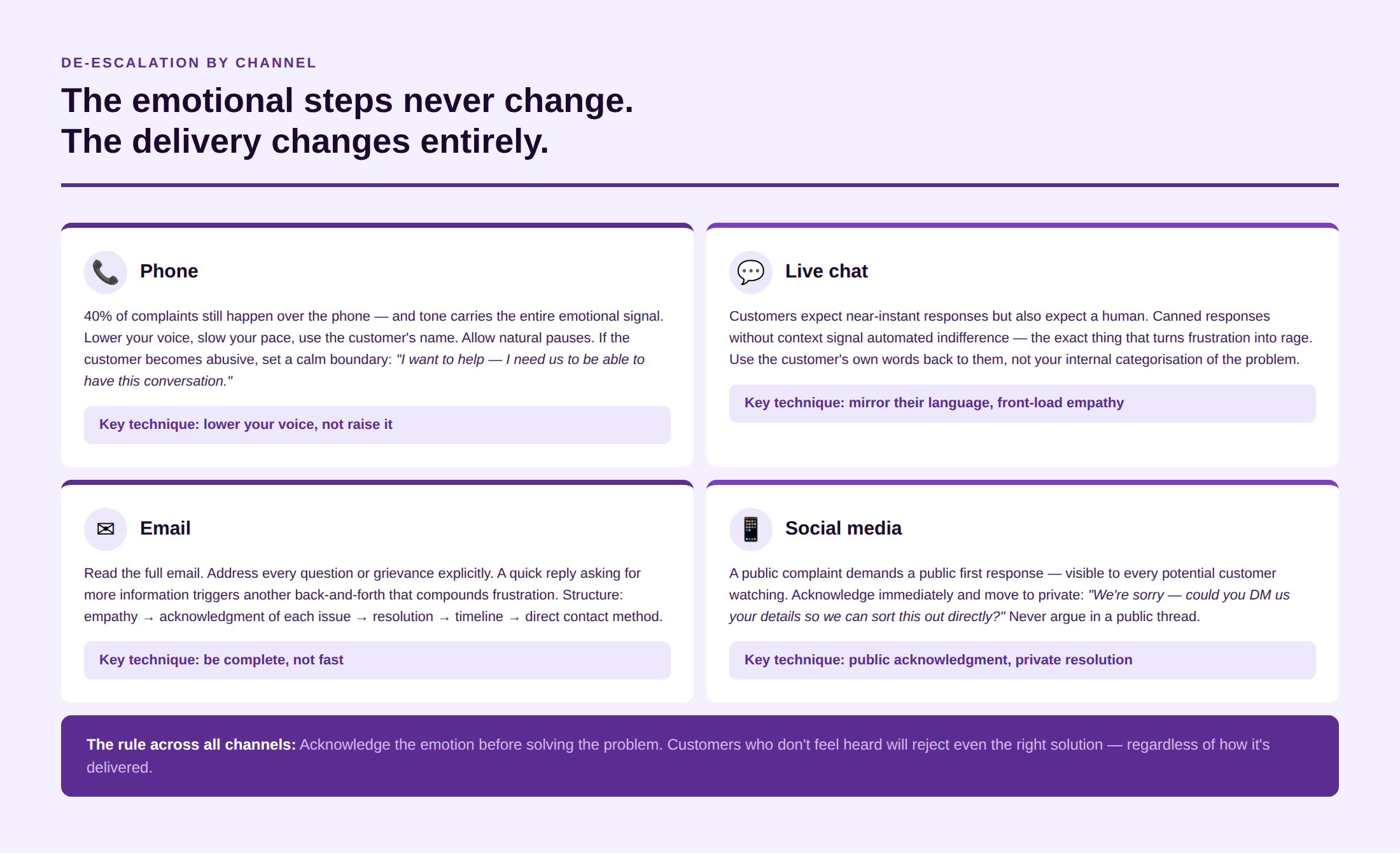
Phone: tone carries everything
40% of customer complaints still happen over the phone, and on a voice call, tone is the primary signal. Lower your voice, slow your pace, and use the customer’s name. Allow natural pauses rather than filling every silence. During a call, silence reads as attention, not indifference. If the customer becomes abusive, you can set a boundary calmly: “I want to help resolve this, and I need us to be able to have a conversation. Can we do that?”
Live chat: speed and empathy in the same message
Live chat customers expect near-instant responses, but also expect a human on the other side. Canned responses without context signal the automated indifference that turns frustration into rage. In a live chat context, use the customer’s own words and not your internal categorization of the problem. Front-load acknowledgment before resolution, even if the fix is one message away.
Email: be complete, not fast
Read the full email before responding. Identify every question or grievance raised and address each one explicitly. An angry customer email resolved with a quick reply that asks for more information triggers another round of back-and-forth that compounds the original frustration. Structure: empathy → specific acknowledgment of each issue → concrete resolution → timeline → direct contact method. See customer service email templates for ready-to-use formats.
Social media: public acknowledgment, private resolution
A public complaint demands a public first response — visible to every potential customer following the thread. Acknowledge immediately and move to a private channel:
“Hi [Name], we’re really sorry to hear this — could you DM us your details so we can sort this out directly?”
Never argue, justify, or quote policy in a public thread. The audience is not just the angry customer; it’s everyone watching how you handle it.
Why Handling Angry Customers Is Good for Business
Complaints are free product intelligence
Every angry customer is telling you exactly where your product, process, or service broke down. It’s intelligence you’d otherwise pay for through user research or consultants. The customers who don’t complain and simply leave are the expensive ones. High complaint volume can look alarming, but low complaint volume can be even more dangerous, as it often means customers are churning silently rather than giving you a chance to fix the problem.
Resolved complaints create stronger loyalty than smooth experiences
When a complaint is resolved with genuine care and speed, customers often become more loyal than customers who never had a problem. You proved you can be trusted when things go wrong; it’s a more powerful signal than a product that simply worked. Word-of-mouth from a resolved complaint is qualitatively different from word-of-mouth from a forgettable positive experience. The person whose problem you solved with humanity is the one who tells their friends about you.
How AI Helps When Dealing with Angry Customers
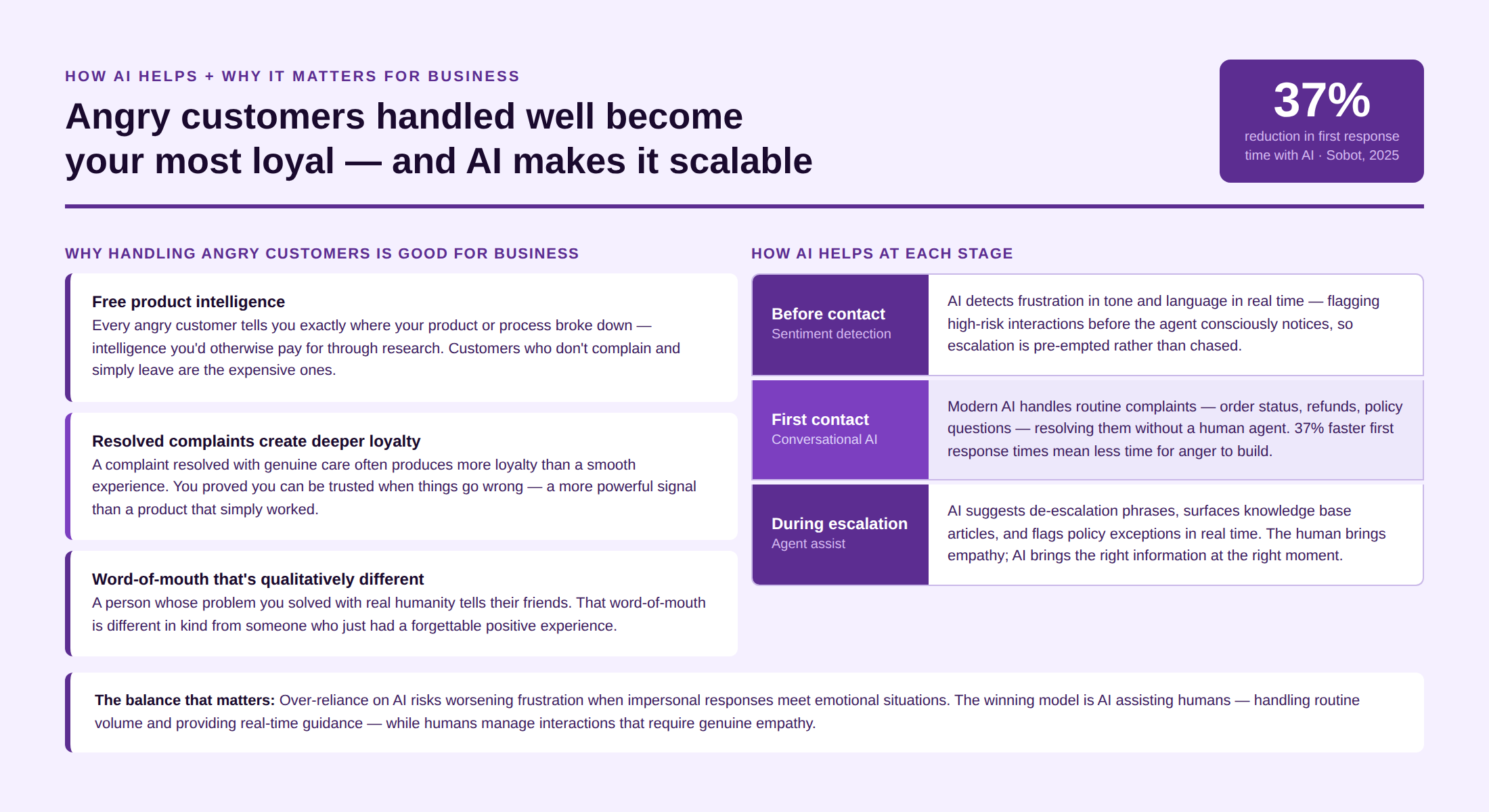
Real-time sentiment detection
AI detects frustration in tone and word choice in real time, often before the agent consciously registers the shift. Sentiment analysis tools flag high-risk interactions immediately, allowing supervisors to monitor or intervene and giving agents a prompt to switch into de-escalation mode. AI systems for complaint handling now include emotion detection that prioritizes urgent interactions and mitigates escalation before it peaks.
Conversational AI for first-line resolution
Modern conversational AI handles routine complaints like order status, straightforward refunds, and policy questions without requiring a human agent. Companies using AI report a 37% reduction in first response times, directly reducing the escalation risk that builds when customers wait. Critically, when AI escalates to a human, it must pass a complete summary covering issue type, sentiment, steps already tried, and account context, so the customer never has to repeat themselves. That handoff, done well, is one of the highest-leverage interventions in angry customer management.
Agent assist: real-time guidance in hard conversations
AI tools running alongside human agents during live interactions can suggest de-escalation phrases, surface relevant knowledge base articles, and flag policy exceptions, all in real time, without breaking the conversation. The agent maintains the human connection; the AI ensures they have the right information at the right moment. The balance matters: over-reliance on AI risks worsening frustration when impersonal responses meet emotional situations. The winning model is AI assisting humans and not replacing them, especially in emotionally complex interactions. See how AI in customer service creates this compound effect across the full support operation.
Kayako’s AI agents handle routine volume so your team focuses on the moments that need real empathy. See Kayako AI
Response Templates for Angry Customers
Template 1: General angry customer (chat or email)
General response
Hi [Name],
Thank you for reaching out — and I’m genuinely sorry you’re having this experience. That’s not what we want for you at all.
I’ve read through what you’ve shared and want to make sure I’ve understood correctly: [paraphrase of issue]. Is that right?
I’m going to sort this out for you directly. [Specific action + timeline].
If you need anything in the meantime, please reply here, and I’ll pick it up personally.
[Your name]
Template 2: Late or missing delivery
Late delivery response
Hi [Name],
I’m so sorry your order hasn’t arrived — especially after waiting this long. I completely understand how frustrating that is.
I’ve looked into order #[XXXX] and here’s what I can see: [current status].
I’d like to offer you two options: [Option A — replacement arriving by date] or [Option B — full refund processed by date]. Which would you prefer?
Whichever you choose, I’ll confirm it and follow up with you by [time].
[Your name]
Template 3: Billing or payment dispute
Billing dispute response
Hi [Name],
I can absolutely see why this would be alarming — an unexpected charge is never okay, and I’m sorry this happened.
I’ve pulled up your account and can see [what you can see about the charge]. Here’s what I’m going to do: [refund/credit/correction + timeline].
You’ll see this reflected by [date], and I’ll send a confirmation as soon as it’s processed.
[Your name]
Phrases to use — and Avoid
| Say this | Not this |
| “I completely understand why you’re frustrated” | “I understand your frustration, but…” |
| “I’m going to handle this personally” | “Someone will get back to you” |
| “That’s not the experience we want for you” | “That’s our policy” |
| “I’d like to offer you a choice…” | “I can’t help you with that” |
| “Let me make sure I’ve understood correctly…” | “As per our terms and conditions…” |
| “I’m sorry — please don’t worry, I’ve got this” | “Calm down” |
An angry customer is still a customer. Irrespective of their current tone or escalation, they still stand to impact your business in real-time with consequences that can have a domino effect. So, it’s better to equip yourself with tech, phrases, and a lovely vocabulary to ensure that churn is minimal while conversion remains maximum.
FAQs
1. What is the best first response to an angry customer?
A. Acknowledge the emotion before solving the problem. Customers who don’t feel heard will reject even the right solution. Listen fully, name their emotional experience, apologize sincerely, then move to resolution. Jumping straight to solutions without emotional acknowledgment is the most common mistake in complaint handling.
2. How do you handle an angry customer on the phone?
A. Lower your voice, slow your speech, and use their name. Let them speak without interruption. Reflect back on what you’ve heard before offering solutions. Tone carries the entire emotional signal on a call. Stay calm and unhurried even when the customer is neither. If the customer becomes abusive, set a boundary calmly and professionally.
3. What’s a de-escalation matrix for an angry customer?
A. Have a clear de-escalation protocol every agent knows: listen → acknowledge → apologize → confirm understanding → offer resolution → follow through. Train agents on when to set firm but respectful boundaries with abusive callers, and when to escalate to a supervisor. AI-assist tools that suggest de-escalation language in real time are increasingly standard in high-volume call center environments.
4. What should you never say to an angry customer?
A. “Calm down.” Also avoid: “As per our policy,” “There’s nothing I can do,” “That’s not our fault,” and any version of an apology immediately followed by “but.” These phrases signal the customer’s experience is being dismissed — and will escalate, not resolve, the interaction.
5. Can an angry customer become a loyal one?
A. Yes, and reliably so. A complaint resolved with genuine care often produces more loyalty than a smooth experience that never presented a challenge. You proved you can be trusted when things go wrong. That’s a more powerful loyalty signal than a product that simply worked the first time.