Your customer started on your website. Then emailed. Then called. By the time they reached the third agent, they’d re-explained the same issue from the beginning — three times. That experience has a name: multichannel friction. And it drives customer churn at a rate that most businesses significantly underestimate.
Companies with strong omnichannel customer service strategies retain 89% of their customers, compared to just 33% for those with weak omnichannel engagement (Invesp, cited in Kodif, 2025). That 56-percentage-point gap is not a marginal operational improvement. It is a compounding revenue advantage that separates businesses that scale from those that plateau.
This guide explains what omnichannel customer service actually is, how it differs from what most businesses are already doing, how to implement it, the platforms that make it possible, and the examples that show what great looks like in practice.
What Is Omnichannel Customer Service and Why Does It Matter in 2026?
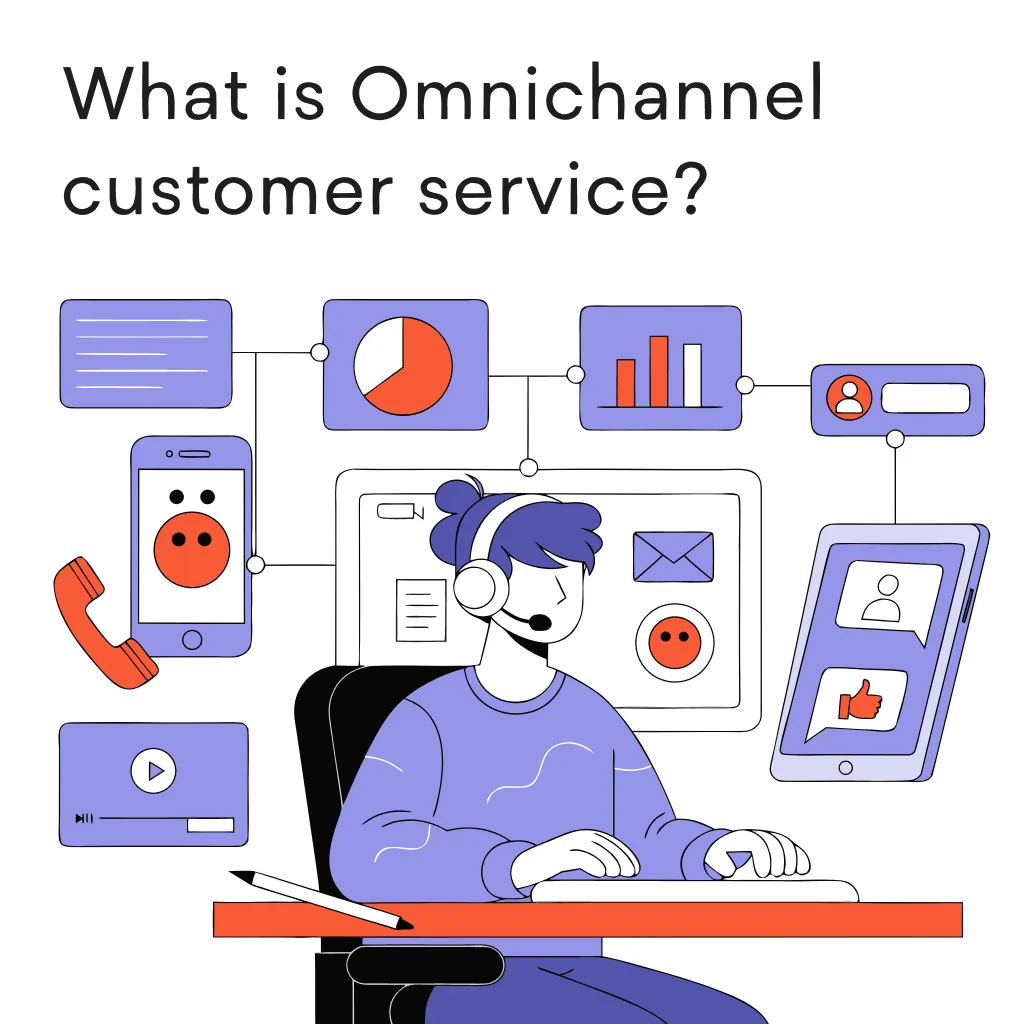
Omnichannel customer service is a strategy that integrates all customer communication channels, be it email, phone, live chat, social media, SMS, in-app messaging, and in-person, into a single, unified experience. The defining characteristic is not how many channels you offer, but whether the context and conversation history follow the customer across all of them.
When a customer who emailed yesterday calls today, an omnichannel support operation means the phone agent already sees that email with its content, any response, and the customer’s full interaction history, before saying hello. No re-explanation required. No “let me pull up your account.” Just a conversation that continues where the last one left off.
78% of consumers expect consistent service across all channels (RethinkCX, 2025). Yet only 29% say they actually receive it (Kodif, 2025). That gap — 78% expecting, 29% experiencing — is the business opportunity and the competitive risk simultaneously.
In a market where customers have more choices than ever and switching costs are lower than ever, inconsistent support is one of the fastest paths to churn. A customer who has to repeat themselves once is frustrated. A customer who has to repeat themselves across channels actively looks for alternatives. The brands that retain customers long-term are the ones that make every interaction feel continuous, regardless of how many channels that interaction spans.
See how Kayako’s unified platform gives every agent the full customer conversation history — across every channel. Book a Demo
How Omnichannel Customer Support Differs from Multichannel Support
This is the most important distinction in modern customer service strategy and the most commonly confused one.
Multichannel support: many channels, no shared brain
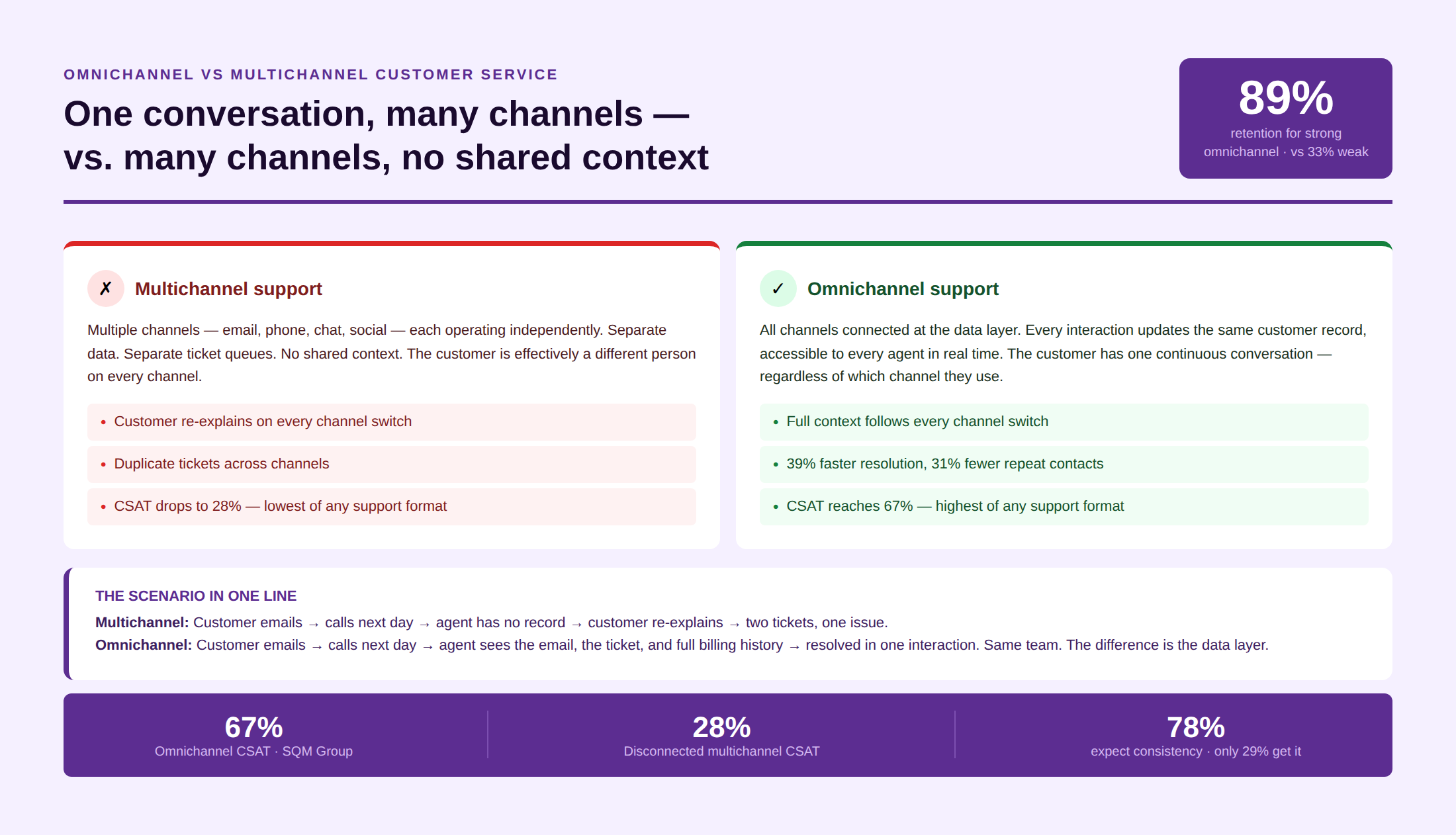
A multichannel support operation offers multiple ways for customers to reach out: email, phone, chat, and social. But each channel operates independently. The email team doesn’t see the phone call. The chat agent doesn’t know about the social media complaint. Tickets are channel-specific. Context is channel-specific. The customer is, in effect, a different customer on every channel.
Most businesses operate multichannel support. It is better than single-channel. But it creates exactly the scenario described in the introduction — customers re-explaining, agents duplicating work, and every channel escalation feeling like starting over.
Omnichannel support: one conversation, many channels
An omnichannel operation connects those channels at the data layer. Customer history, conversation threads, ticket status, account information, and interaction notes are accessible across every channel in real time. The customer is one customer, everywhere.
CSAT reaches 67% with smooth omnichannel support, compared to just 28% for disconnected multichannel support, the lowest score among all support experience types (SQM Group, cited in Plivo, 2025). The operational difference creates a satisfaction differential that is almost impossible to close through other means.
The cost difference
Companies that adopt omnichannel strategies reduce service delivery costs by 3–7%. Integrated tools cut wait times by 39% and lower service costs by up to 35% (Plivo, 2025). These savings come from eliminating duplicated work, reducing handle time through context, and deflecting repeat contacts that only exist because the previous interaction’s context was lost.
The operative difference in one scenario
Multichannel: Customer emails about a billing error → gets a ticket number → calls the next day → agent has no record of the email → customer re-explains → agent creates a new ticket → issue now appears as two separate cases.
Omnichannel: Customer emails about a billing error → gets a ticket number → calls the next day → agent sees the email, the ticket, and the customer’s full billing history → issue resolved in one interaction.
Same problem. Same team size. The difference is the data layer.
Strategies to Achieve Omnichannel Customer Service
1. Audit your current channel landscape before building anything
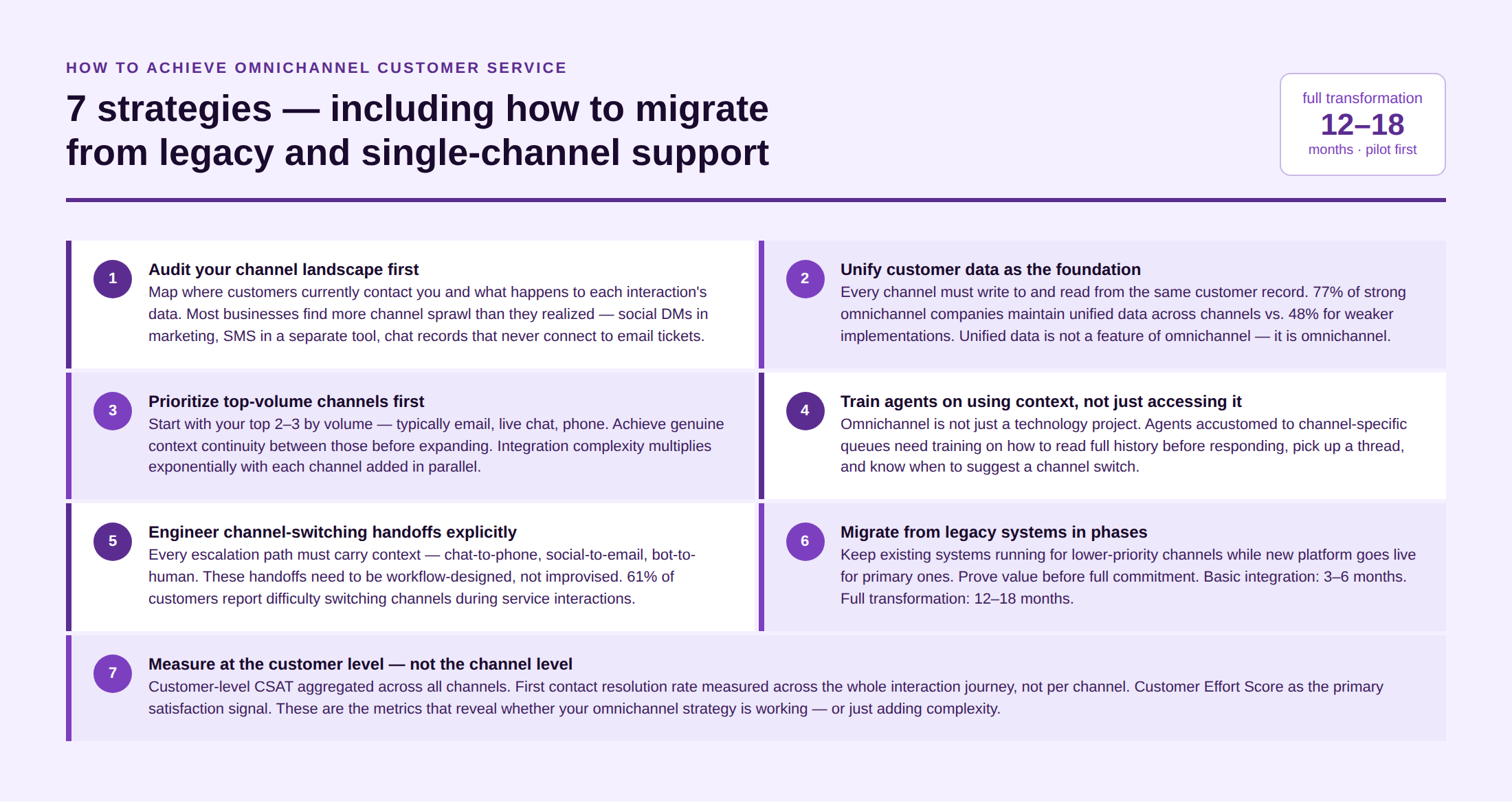
Before selecting a platform or integrating channels, map exactly where your customers currently contact you, how frequently, and what happens to the data from each interaction. Most businesses discover more channel sprawl than they realized, social DMs handled by marketing, SMS handled by a separate tool, and email tickets that never connect to live chat records.
2. Unify customer data as the foundation
The technical core of omnichannel is a unified customer record. Every channel, every interaction, every transaction must write to and read from the same customer profile. This requires CRM integration, and, typically, a single platform that natively connects those data sources rather than relying on manual API connections that break.
77% of strong omnichannel companies maintain unified customer data across channels, compared to just 48% for weaker implementations. Unified data is not a feature of omnichannel — it is omnichannel.
3. Prioritize your highest-volume channels first
A common implementation failure is attempting to go fully omnichannel across all channels simultaneously. The integration complexity multiplies exponentially with each channel added in parallel. Start with your top two or three by volume, typically email, live chat, and phone, and achieve seamless context sharing between those, then expand.
4. Train agents on context, not just channel skills
Omnichannel implementation is not just a technology project. Agents who have always operated in channel-specific queues need training on how to use the context they now have access to. Reading a full customer history before responding, picking up the thread rather than starting fresh, and knowing when to suggest a channel switch are skills, not defaults.
5. Build channel-switching protocols into your workflows
Customers switch channels mid-interaction, from chat to phone, from email to social. The escalation path must be designed, not improvised. When a customer moves from a chatbot to a human agent, the agent receives the full chat transcript. When a chat moves to a phone call, the agent already has the issue context. These handoffs need to be workflow-engineered, not hoped for.
6. Migrate from legacy systems in phases, not in one lift
Moving from a single-channel or fragmented multichannel operation to a true omnichannel platform is a multi-phase project. Basic integration may take 3–6 months; comprehensive transformations often require 12–18 months. The migration approach that works: keep the existing system running for lower-priority channels while the new platform goes live for primary channels. Prove value before full commitment. Kayako’s 90-day pilot model applies exactly this logic: one queue, one channel, measurable results before full rollout.
7. Measure channel-agnostic outcomes, not channel-specific metrics
Omnichannel success is measured differently from multichannel. Instead of email CSAT and chat CSAT being tracked separately, you need customer-level satisfaction scores that aggregate across all channels in the customer’s journey. First contact resolution rate, measured across the whole interaction, not just one channel, and then Customer Effort Score are the most meaningful omnichannel metrics.
Related read: How to scale your omnichannel customer support
Kayako connects email, live chat, and AI into a single customer view — without a 12-month implementation project. See Kayako in Action
Top 7 Omnichannel Customer Service Platforms in 2026
Here is the list of top omnichannel customer support softwares.
These platforms are evaluated on channel breadth, data unification depth, AI capability, and implementation complexity.
1. Kayako
Best for: Growing businesses and enterprises seeking true omnichannel unification with AI-native capabilities and expert implementation. Kayako’s SingleView™ unifies conversation history, customer account data, and ticket status across email, live chat, and all connected channels. Kay (the AI agent) handles tier-1 volume across channels, while the omnichannel contact center workflow connects every touchpoint to the same customer record. Outcome-based pricing at $1 per resolved ticket. Trilogy cut ticket age from 18 hours to under 5; 68% of tickets auto-resolved.
2. Zendesk
Best for: Large enterprises with complex, multi-channel support operations. Strong analytics, an AI layer (Zendesk AI), and a broad integration marketplace. Best fit for established support operations with stable headcount; per-seat pricing compounds at scale.
3. Freshdesk
Best for: Mid-market companies needing omnichannel coverage at accessible pricing. Freddy AI handles cross-channel routing and response drafting. Good fit for e-commerce, SaaS, and retail support operations with email, chat, and social volume.
4. Intercom
Best for: SaaS companies prioritizing proactive omnichannel engagement. Fin AI chatbot handles complex queries across web, mobile, and email. Strong in-app messaging capabilities; better for customer success workflows than high-volume reactive support.
5. Salesforce Service Cloud
Best for: Enterprises already invested in the Salesforce ecosystem. Einstein AI delivers cross-channel case routing, response drafting, and predictive analytics. The most powerful CRM-integrated omnichannel platform available — and the most complex to configure.
6. HubSpot Service Hub
Best for: Companies using HubSpot CRM. Native CRM integration provides full customer context across support channels automatically. Strong for teams where sales and support share a customer data layer; limited at high-volume enterprise scale.
7. Zoho Desk
Best for: SMBs and international operations. Zia AI provides sentiment analysis, anomaly detection, and cross-channel response suggestions. Strong multi-language support makes it the best fit for businesses serving global customers across multiple languages and regions.
The Benefits of Omnichannel Customer Service
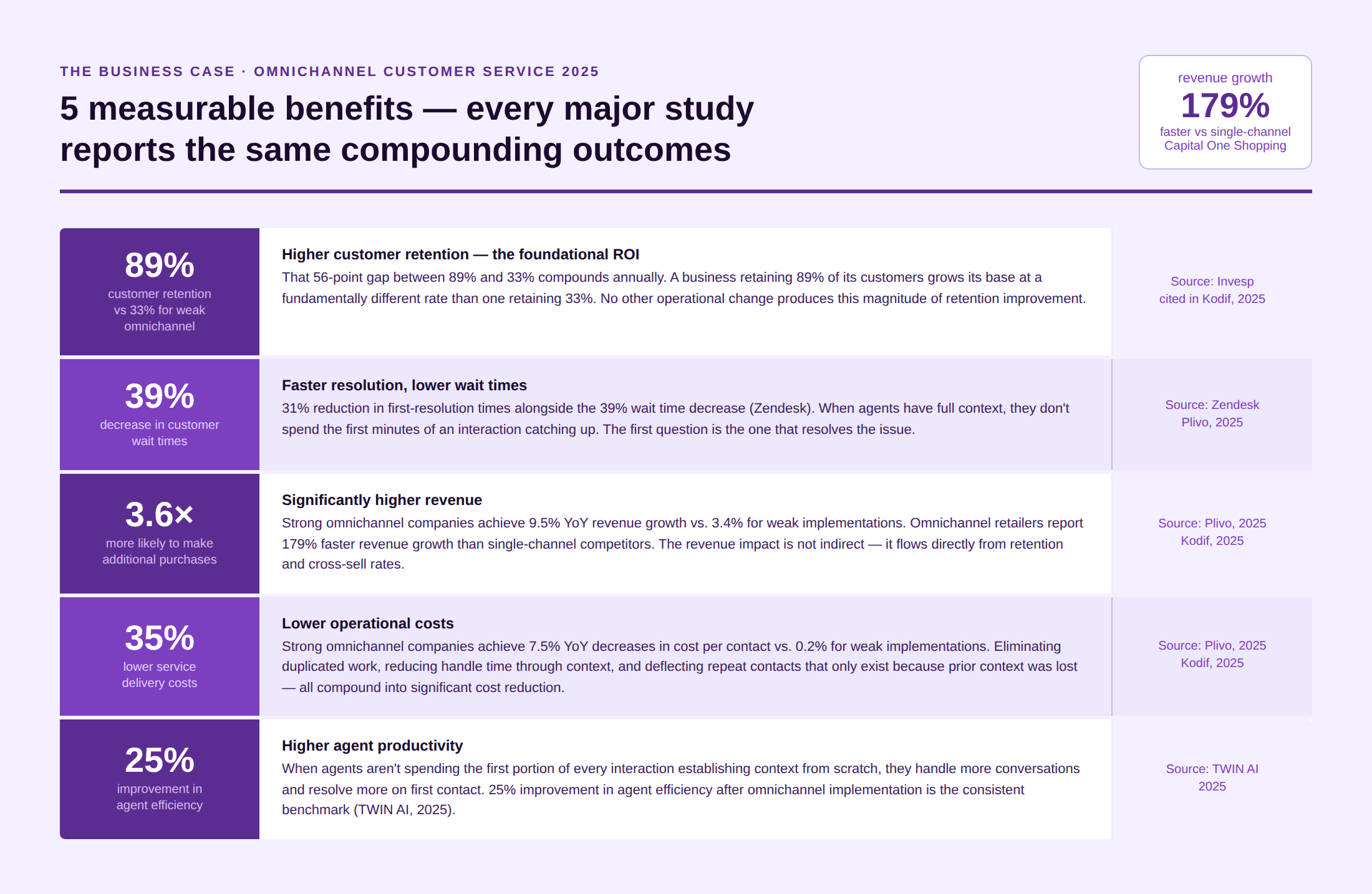
The data on omnichannel outcomes is unusually consistent. Across independent studies, the same effects repeat.
Higher customer retention
89% customer retention for strong omnichannel companies, vs. 33% for weak implementations (Invesp). That 56-point gap compounds annually with a business retaining 89% of its customers, growing its base at a fundamentally different rate than one retaining 33%.
Faster resolution and lower wait times
31% reduction in first-resolution times and 39% decrease in customer wait times for companies using integrated omnichannel solutions compared to siloed operations (eDesk). When agents have full context, they don’t spend the first minutes of an interaction catching up.
Significantly higher revenue
Omnichannel retailers report 179% faster revenue growth than single-channel competitors (Deloitte). Strong omnichannel companies achieve 9.5% year-over-year revenue increase compared to 3.4% for weak implementations. Customers who receive high-quality omnichannel experiences are 3.6× more likely to make additional purchases (Plivo, 2025).
Lower service costs
Strong omnichannel companies achieve 7.5% year-over-year decreases in cost per contact compared to just 0.2% for weak implementations (Kodif, 2025). Digitizing customer service through omnichannel interactions can cut costs by 25–35%. The mechanism is clear: context reduces handle time, deflects repeat contacts, and enables AI to handle tier-1 volume without agent intervention.
Higher agent productivity
When agents aren’t spending the first portion of every interaction establishing context from scratch, they handle more conversations and resolve more on first contact. 25% improvement in agent efficiency and performance is consistently reported after omnichannel implementation (Zendesk). See how agent productivity improves when context is built into the workflow rather than searched for at the start of each conversation.
Omnichannel Customer Service Examples and Use Cases
Retail: Starbucks
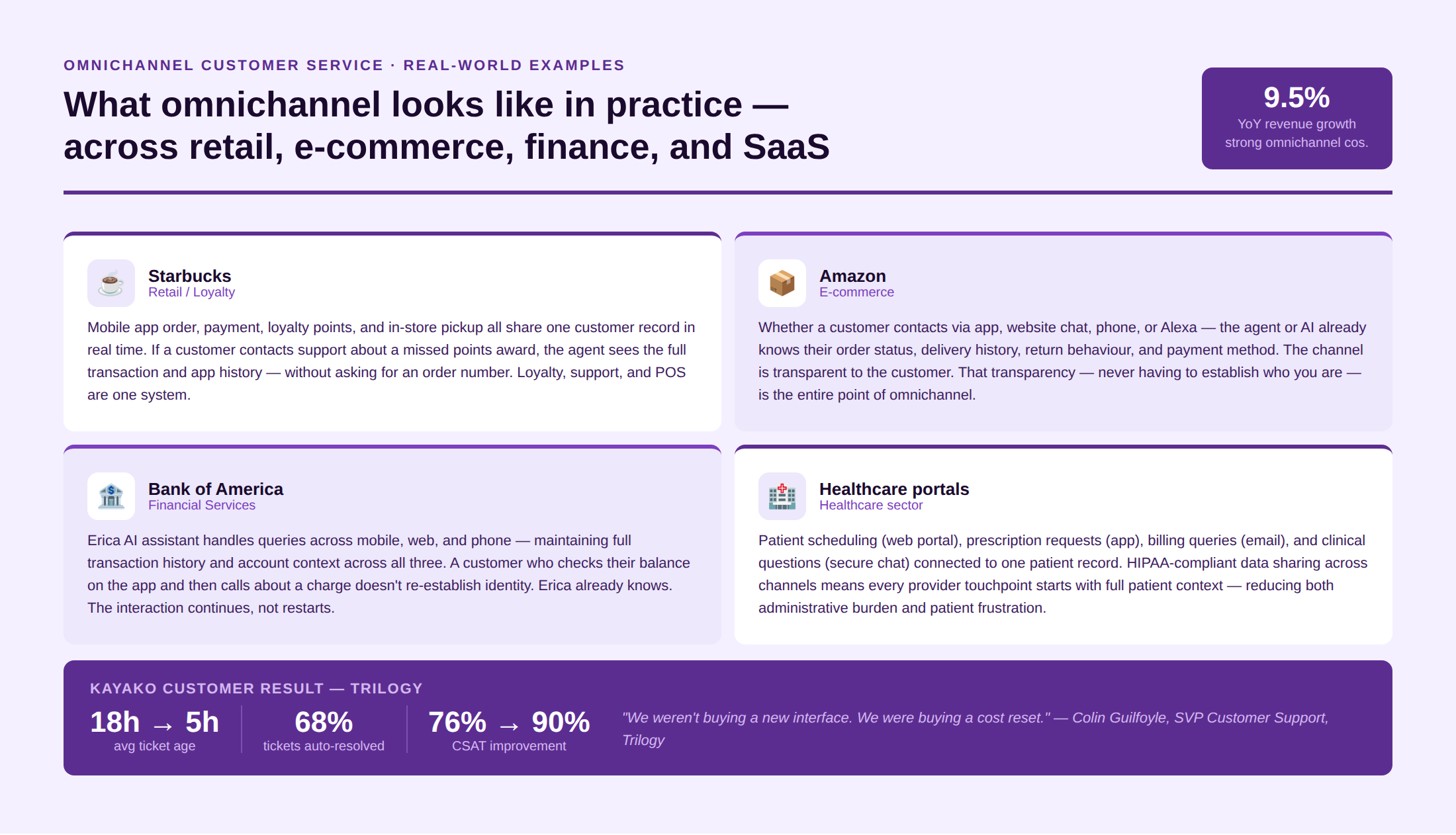
Starbucks’ omnichannel strategy is one of the most studied in business. A customer can order on the mobile app, pay through it, earn loyalty points, and pick up in-store, with the in-store experience aware of the mobile order in real time. If a customer contacts support about a missed points award, the agent sees the full transaction and app history without asking. The loyalty program, the app, the in-store POS, and support all share one customer record.
E-commerce: Amazon
Amazon’s customer service knows your order status, delivery history, return behavior, and payment method before you finish describing your issue. Whether the contact comes via the app, the website chat, phone, or Alexa — the context is the same. The channel is transparent to the customer. That transparency is the entire point.
Financial services: Bank of America
Bank of America’s Erica AI assistant handles customer queries across the mobile app, web, and phone, maintaining full transaction context and account history across channels. A customer who checks their balance on the app and then calls about a charge doesn’t re-establish who they are. Erica already knows.
Healthcare: Patient communication portals
Healthcare providers using omnichannel platforms connect appointment scheduling (web portal), prescription requests (app), billing queries (email), and clinical questions (secure chat) into a single patient record. HIPAA-compliant data sharing across these channels means the provider has the same patient context regardless of how the patient reaches out, reducing both administrative burden and patient frustration.
SaaS: Kayako customer — Trilogy
Trilogy case study
Challenge: Ticket age averaging 18 hours; fragmented channel handling; no unified customer view.
Solution: Kayako omnichannel platform with SingleView™ and AI triage.
Result: Ticket age reduced from 18 hours to under 5 hours. 68% of tickets were resolved automatically. CSAT increased from 76% to 90%.
“We weren’t buying a new interface. We were buying a cost reset.” — Colin Guilfoyle, SVP Customer Support, Trilogy
Best Practices for Omnichannel Customer Service Implementation
Map the customer journey before mapping the channels
The most common implementation mistake is starting with the technology rather than the customer experience. Before selecting a platform, map the actual journey your customers take, what channels they use, in what order, and where the handoffs currently break. The platform choice should follow the journey, not precede it.
Prioritize context continuity above channel parity
It is better to have seamless context sharing between two channels than broken context sharing between six. 61% of customers report difficulty switching channels during service interactions (Kodif, 2025). That friction is the problem omnichannel solves, but only if the integration is deep, not just connected.
Implement AI on your highest-volume, lowest-complexity queries first
AI in an omnichannel environment works best as a tier-1 layer — handling the repetitive, well-defined queries (order status, password reset, policy questions) across all channels before routing complexity to humans. 40% of initial support interactions are now handled by AI. Building that AI layer on top of a unified customer record is what makes it contextual rather than generic.
Define your escalation protocols explicitly
Every channel needs a defined escalation path to a human, with a specified context handoff format. The chatbot-to-human handoff, the social-to-email handoff, the chat-to-phone handoff: each needs to be designed, documented, and trained on before go-live. Undesigned handoffs become context loss events. See the live chat best practices guide for detailed escalation design principles.
Set channel-agnostic SLAs from day one
In an omnichannel environment, SLAs should be defined at the customer level, not the channel level. A customer who has been waiting for 24 hours across email and chat combined should trigger an escalation, regardless of which channel they most recently used. Most legacy SLA frameworks don’t support this; it requires deliberate configuration in the new platform.
Run a time-bounded pilot before full rollout
Full omnichannel transformation is a significant organizational change. A 90-day pilot on one channel or one customer segment with clear KPIs defined in advance generates the internal evidence needed to justify full investment and identifies integration gaps before they affect all customers.
A company’s customer base has a preferred channel for reaching out. In such cases, you can’t look away from the fact that customer support across channels needs to be prompt and effective. We hope that our omnichannel support guide lays out the perfect starting point for you to enhance your customer service experience.
FAQs
1. What is the difference between omnichannel and multichannel customer service?
A. Multichannel support offers multiple channels — email, phone, chat, social — but each operates independently, with separate data, separate ticket queues, and no shared context. A customer who emails and then calls is treated as a different case by both agents.
Omnichannel support connects those channels at the data layer. Every interaction, regardless of channel, updates the same customer record, which is accessible to every agent on every channel in real time. The customer has one continuous conversation with the brand, not a series of disconnected interactions. The outcome difference is stark: 67% CSAT with omnichannel vs. 28% with disconnected multichannel (SQM Group).
2. What is the best strategy for omnichannel customer service?
A. The strategies that consistently produce results: (1) Unify customer data first — a unified customer record is the foundation of everything else. (2) Start with two or three channels and achieve genuine context continuity before expanding. (3) Train agents on how to use context, not just how to access it. (4) Implement AI on tier-1 volume to free human agents for complexity. (5) Measure at the customer level — satisfaction, effort score, and lifetime value — not at the channel level. (6) Run a time-bounded pilot before committing to full rollout. See the full omnichannel contact center guide for implementation frameworks.
3. What are the best omnichannel customer service platforms?
A. The top platforms for 2026 are Kayako (AI-native, SingleView™, outcome-based pricing), Zendesk (enterprise, broad integrations), Freshdesk (mid-market, accessible pricing), Intercom (SaaS, proactive engagement), Salesforce Service Cloud (enterprise Salesforce ecosystem), HubSpot Service Hub (HubSpot CRM teams), and Zoho Desk (SMBs, international operations). The right choice depends on your team size, existing technology stack, channel mix, and whether you need live chat, AI, phone, or social media as primary channels.
4. How long does omnichannel customer service implementation take?
A. Basic integration: 3–6 months. Comprehensive transformation: 12–18 months (TWIN AI, 2025). The most effective approach is phased: start with primary channels, prove value, then expand. Platforms like Kayako offer a 90-day pilot model that generates measurable ROI in one queue before full rollout, significantly reducing the time to first value and the risk of a failed large-scale implementation.