Discover the latest social media customer service statistics, trends, and insights. Learn how consumers use social platforms for support and why fast, effective social customer service is essential for business success.
Social media customer service is the only support channel where your response or your silence is a public record. Every unreplied complaint, every empathetic resolution, every brand-voice moment is visible to future customers searching your name. As social CS has moved from a nice-to-have to an operational expectation, the data underpinning it has proliferated across dozens of reports, surveys, and vendor studies.
This article curates the freshest social media customer service statistics in one place. Useful for anyone building a business case for social CS investment, benchmarking response-time performance, or simply trying to understand where customer expectations actually sit in 2026. See how social media customer support platforms connect these channels to a unified customer record so that every interaction, public or private, feeds the same support workflow.
Consumer Behavior: How Customers Actually Use Social for Service
Adoption and preference
67% of customers find contacting customer support on social media convenient, according to Zendesk CX Trends. That convenience preference is driving a structural shift away from phone and email as the default contact channel for routine queries.
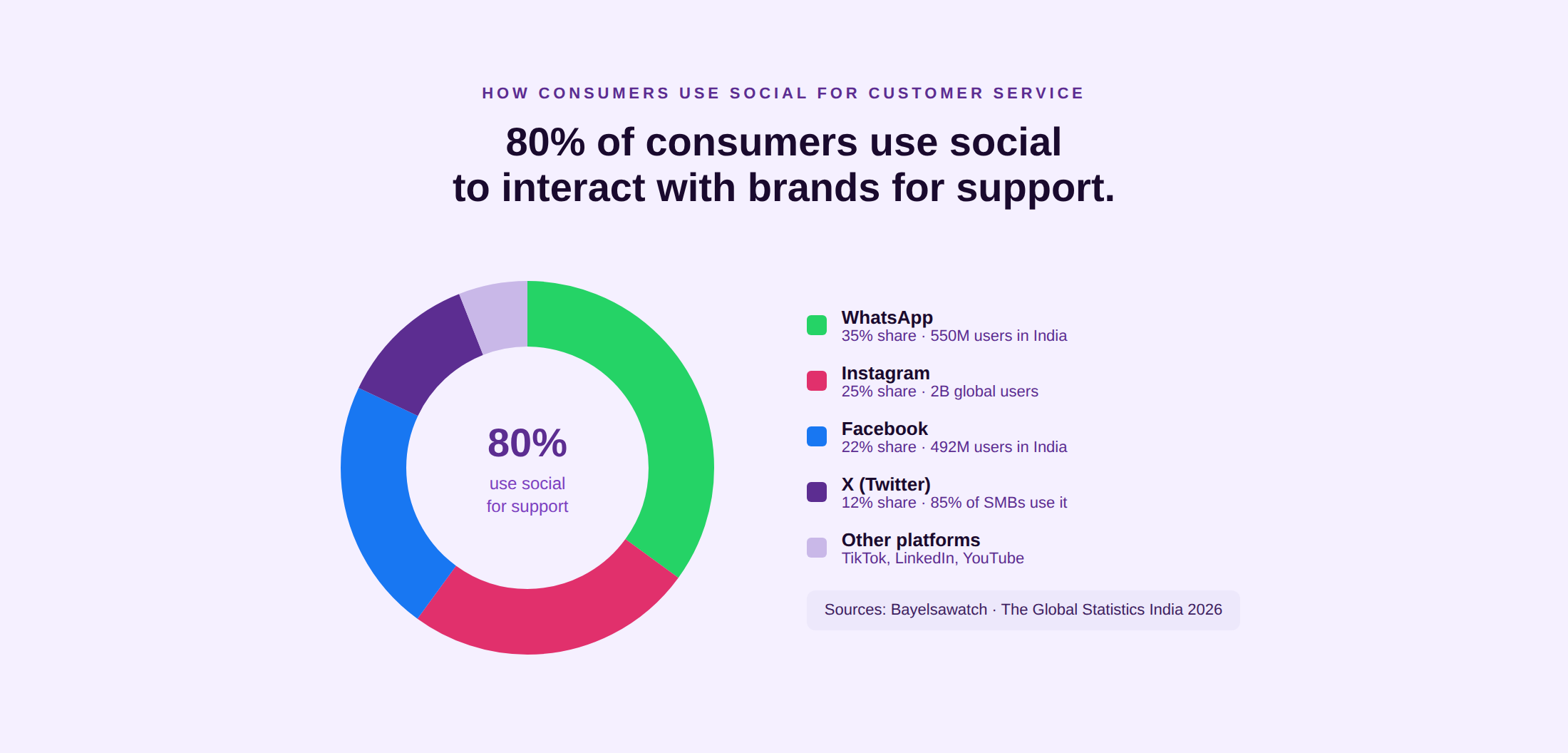
80% of consumers use social media to interact with brands for support and feedback (Bayelsawatch). That number reflects both proactive outreach (asking questions before purchase) and reactive support (complaints and issues after purchase). Social media has become the ambient contact layer that runs alongside every other support channel.
56% of businesses plan to invest in social media for customer engagement in 2025 and beyond (Nextiva). The investment signal reflects where customer contact volume is growing, not just where it currently sits.
Public vs. private contact
69% of US consumers feel more confident in brands that respond through direct messages, while 51% say brands that reply publicly are more memorable and trustworthy (Bayelsawatch). The two stats are not contradictory: customers want resolution in private (DMs) and visibility of care in public (comment replies). The best social CS operations do both.
India: WhatsApp as the primary social CS channel
India has over 550 million monthly active WhatsApp users, making it the world’s largest WhatsApp market (Meta and Statista, cited in The Global Statistics). WhatsApp grew 314% in India between 2021 and 2025, with 21% growth in 2025 alone, and conversational use cases are primarily focused on customer support (Infobip Messaging Trends). Major Indian brands including Flipkart, Myntra, HDFC Bank, and ICICI Bank have integrated WhatsApp Business API for order tracking, account management, and customer support (Chatondesk India WhatsApp API).
Response Time Stats: What Customers Actually Expect
The expectation gap
Only 37% of companies are currently meeting customer response time expectations across channels. That 63% gap between expectation and delivery is the single most important operational number in social CS because it is both a competitive differentiator and a churn risk signal.
Platform-specific expectations
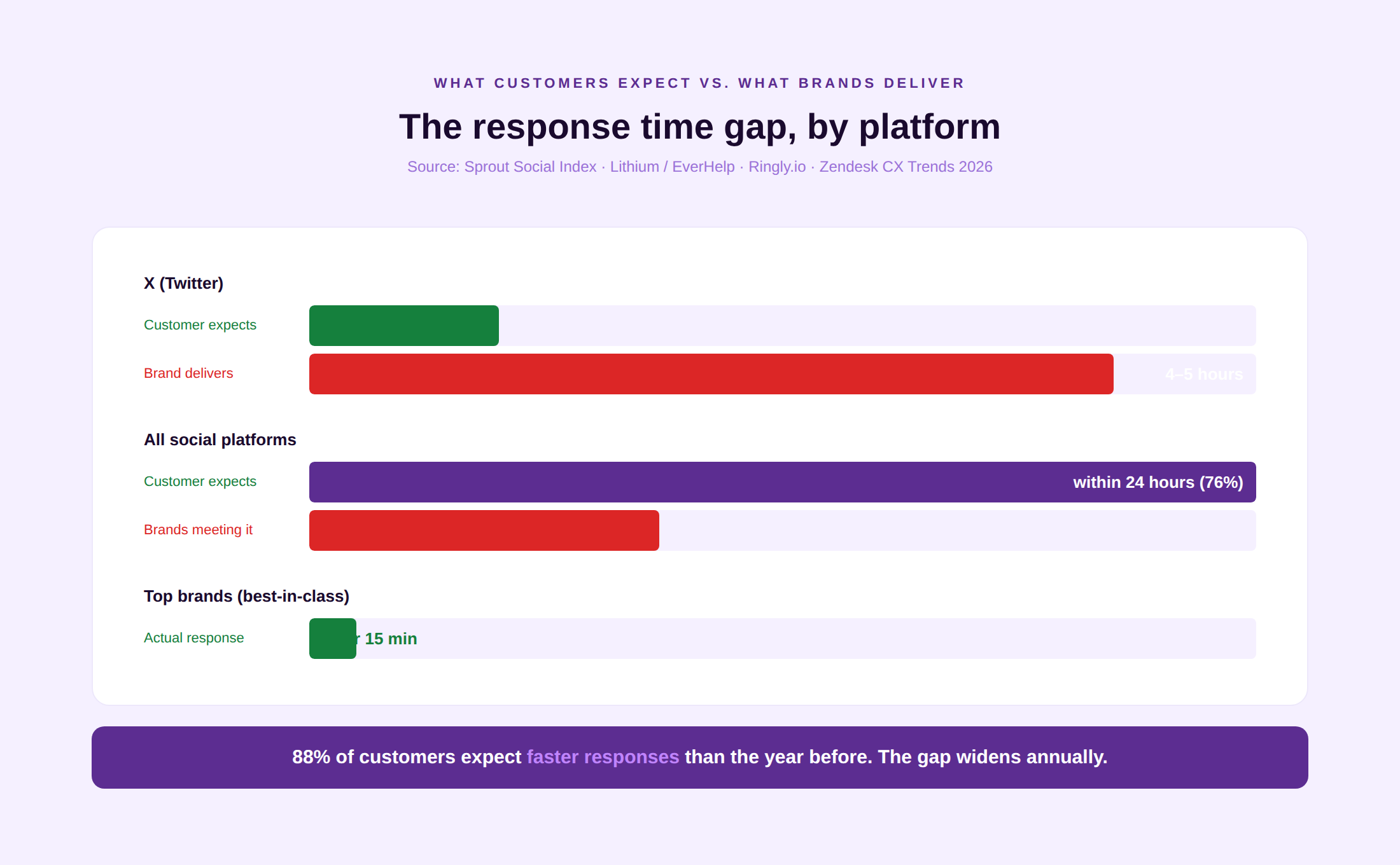
- X (Twitter): 53% of customers expect a response within one hour, rising to 72% for complaints (Lithium, cited in EverHelp).
- All social platforms: 76% expect a response within 24 hours (Sprout Social Index). Near-three-quarters want same-day responses as a baseline, not a premium.
- General cross-channel: 90% of customers rate an “immediate” response as important, and 60% define “immediate” as 10 minutes or less (HubSpot).
What brands actually deliver
The average brand takes four to five hours to respond on social media, against a customer expectation of under one hour. Top brands on X respond within 15 minutes during business hours (Ringly.io). 88% of customers say they expect faster responses than the year prior, meaning the expectation floor rises year over year, not year over year.
63% of customers rank speed of response as the number one factor in a support experience, ahead of speed of resolution (57%) and channel availability (49%).
Kayako’s shared inbox surfaces every social mention and DM in one queue with full customer context so your team hits sub-hour response times without extra headcount. See How It Works
Generational Stats: Platform and Channel Preference by Age Group
Gen Z (born 1997 to 2012)
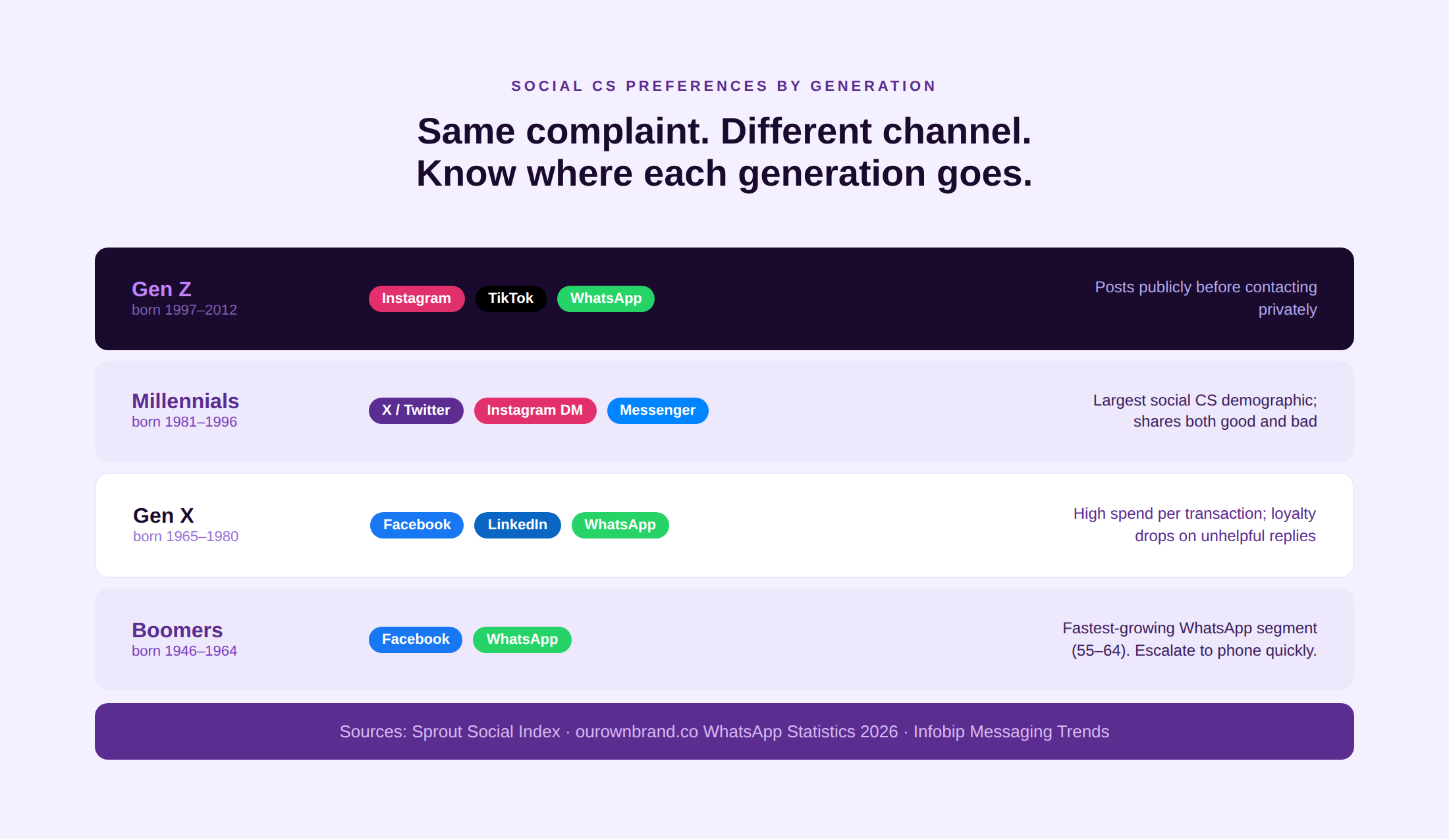
Gen Z is the first generation for whom social media contact is the default rather than the exception. Instagram and TikTok are the primary discovery and complaint channels. Gen Z customers are significantly more likely to post a public complaint before attempting a private contact, which means social monitoring for this demographic is not optional. The proof is in the fact that Instagram is the top-downloaded app in India for Gen Z, followed by Meesho and Facebook (The Global Statistics India 2026).
Millennials (born 1981 to 1996)
Millennials are the largest active social media demographic and the most likely to use social for customer service. They use X, Instagram DMs, and Facebook Messenger for service contacts, and are the demographic most likely to share both positive and negative brand experiences publicly. They expect a response within one to two hours and are the cohort most likely to switch brands after a single unresolved social interaction.
Gen X (born 1965 to 1980)
Gen X uses social media for customer service at lower rates than younger cohorts but has significantly higher average spend per transaction, making their social CS interactions disproportionately high-value. They are more likely to use Facebook and LinkedIn than Instagram or TikTok for service contacts, and they tolerate longer response windows than Gen Z or Millennials, but their loyalty drops sharply when responses are unhelpful rather than just slow.
Baby Boomers (born 1946 to 1964)
Boomers are the fastest-growing social media demographic, driven by Facebook adoption. They use social for service primarily on Facebook and are the cohort most likely to escalate from social to phone when a social contact does not resolve quickly. The fastest growth in WhatsApp users globally is among users aged 55 to 64 (ourownbrand.co WhatsApp Statistics 2026), reflecting Boomer adoption of messaging as a preferred contact channel in markets where WhatsApp has high penetration.
Platform-Specific Statistics
WhatsApp Business
Over 200 million businesses use WhatsApp Business globally. WhatsApp Business messages achieve approximately 98% open rates versus 22% for email (Chatarmin). In India, 78% of SMBs already use WhatsApp for business, and 65% report increased sales after adoption (IAMAI Digital India Report 2026, cited in Hyperleap). WhatsApp reduces customer service workload by up to 54% through automation and chatbot integration.
Instagram has 516.92 million active users in India, making it the country’s second-largest social platform after WhatsApp. Globally, Instagram is used by over 2 billion monthly active users. For customer service, Instagram DMs and comment replies are the primary contact surface. Brands in fashion, beauty, food, and DTC e-commerce receive the highest proportion of their social CS volume on Instagram.
X (Twitter)
85% of small and medium businesses use X for customer service support. X remains the dominant channel for real-time public complaint and crisis communication. The platform’s character limit and public threading structure make it the channel where response speed matters most and where unanswered complaints are most visibly damaging to brand perception.
Facebook has 492.70 million active users in India and remains the third-largest social platform in the country (The Global Statistics 2026). In fact, Facebook Messenger handles over 20 billion messages per day between businesses and customers globally (Meta). For customer service, Facebook is particularly strong for older demographics and for businesses in sectors with an established Facebook presence: retail, healthcare, real estate, and local services.
TikTok
TikTok has grown into a significant product discovery and complaint platform. Customers increasingly post product complaints as TikTok videos, which can reach millions of views before a brand responds. The platform requires a different response posture than text-based social: a comment reply or creator response video, rather than a DM resolution. Brands in fashion, beauty, and food have the highest TikTok CS exposure.
AI and Automation in Social Customer Service
Adoption and projection
80% of customer service and support organizations will integrate generative AI technologies by 2026 (Zendesk). That represents the most significant structural change in social CS operations since the first social platforms launched.
41.2% median tier-1 AI deflection across enterprise CX programs, with top-quartile teams reaching 58.7% (Zendesk CX Trends and Salesforce State of Service, cited in Digital Applied). These are not social-specific figures, but they reflect the deflection potential available when AI is deployed on structured, high-volume social query types.
The Klarna benchmark
Klarna’s AI assistant handled 2.3 million customer service chats in its first month, equivalent to 700 full-time agents, with CSAT on par with human agents and repeat inquiries dropping by 25% (Klarna press release). This is the most-cited single AI customer service data point in 2025 and 2026 because it demonstrates autonomous resolution at consumer scale.
India: conversational AI on WhatsApp
91% of all conversational AI interactions on the Infobip platform took place on WhatsApp in 2025 (Infobip Messaging Trends Report 2026). In India specifically, 60% of WhatsApp Business API users plan to add AI automation within 12 months (Hyperleap India WhatsApp Statistics 2026). This reflects how WhatsApp has become the primary AI customer service deployment surface in markets outside North America and Western Europe.
Business Impact and ROI of Social Customer Service
The loyalty dividend
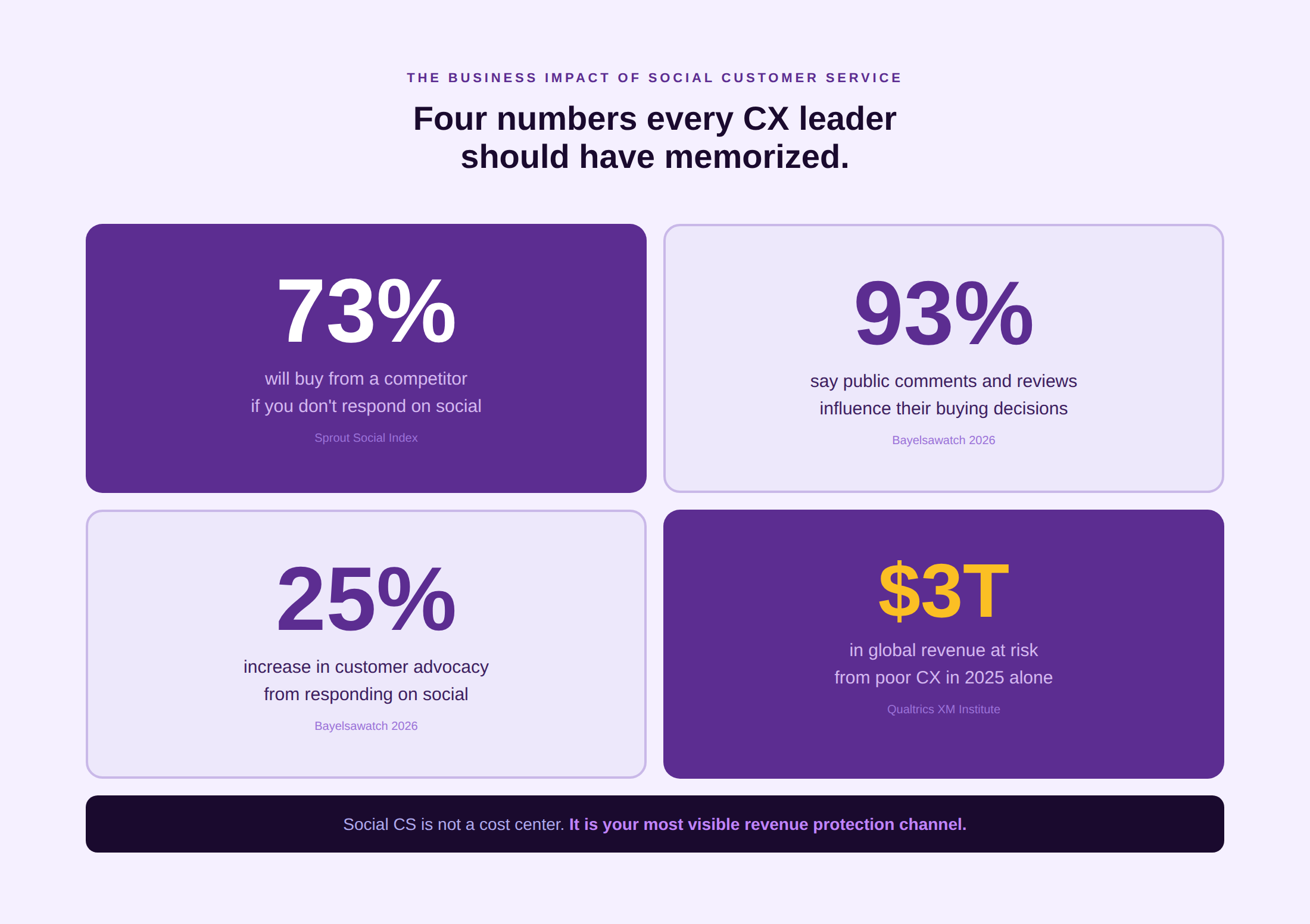
Responding to complaints on social media can increase customer advocacy by up to 25% (Bayelsawatch). That advocacy increase is the revenue multiplier that makes the investment in a dedicated social CS operation justifiable beyond cost reduction.
73% of social media users say they will buy from a competitor if a brand does not respond (Sprout Social Index, cited in Shopify). This number is the single most powerful case for social CS investment because it converts an operational gap into a direct revenue risk: every unanswered social complaint has a 73% probability of driving the customer to a competitor.
The cost of poor social CS
Qualtrics XM Institute estimated approximately $3 trillion in global revenue was at risk from poor customer experience in 2025 (cited in EverHelp). 78% of consumers changed their purchasing decisions after a single bad experience, and 73% switched to a competitor. Social media amplifies both figures because bad experiences that are publicly visible are shared, not just experienced.
93% of customers say online reviews and public comments influence their buying decisions (Bayelsawatch). The public record of how a brand handles social complaints is itself a purchasing signal for future customers who have never contacted the brand.
The cost efficiency argument
Social media support costs approximately $1 per interaction versus more than $6 for voice call-center support. At scale, that cost difference produces significant operational savings without degrading the quality of the customer experience, provided response times and resolution rates meet the expectations documented above. See Kayako’s guide to improving average handle time for the operational levers that improve social CS efficiency alongside cost.
The Brand Response Gap: What Brands Say vs. What Customers Experience
The gap between what brands claim about their social CS and what customers actually experience is among the most under-covered clusters in the data. The headline: most brands believe they are more responsive than their customers report them to be.
- Only 22% of businesses report completely unified customer data across customer service touchpoints, while 62% of CS leaders acknowledge their messaging does not match across channels (CCW Digital and Sprinklr, cited in Shopify).
- Only 37% of companies meet response time expectations despite the majority claiming to prioritize social CS (Zendesk CX Trends 2026, cited in Stealthagents). The gap between self-reported priority and measurable performance is the defining operational challenge in social CS in 2026.
- Only 12% of businesses achieve sub-five-minute first response times across all channels.
Kayako’s unified inbox and AI triage close the response gap before it becomes a competitor’s advantage. Book a Demo
Cost and Efficiency Statistics
- $1 per social media interaction versus more than $6 for voice call-center support (Bayelsawatch). Social is the most cost-efficient synchronous support channel available.
- 54% reduction in customer service workload achievable through WhatsApp automation integration (Chatarmin WhatsApp Statistics 2026). The workload reduction comes from deflecting routine queries before they reach human agents.
- Agents using AI assistance resolve 15% more issues per shift (Gartner, cited in DevRev). The productivity multiplier compounds across a team: 10 agents with AI assistance produce the output of 11.5.
- AI cost per resolved ticket is $0.62 versus $7.40 for human-handled tickets (McKinsey AI in Customer Service, cited in Digital Applied). The 12x cost differential is the financial case for AI deflection in social CS.
- The omnichannel customer service CSAT improvement from 28% (disconnected multichannel) to 67% (connected omnichannel) (SQM Group, cited in DevRev) demonstrates that tooling quality, not just headcount, determines social CS performance.
Future Predictions: Gartner, McKinsey, and Forrester
- 80% of CS interactions will be handled by AI by 2026, per Gartner’s projection (cited in desk365). The majority of tier-1 social queries (account queries, order status, FAQ-type questions) fall within the automation boundary that enables this projection.
- Agentic AI will autonomously resolve approximately 80% of standard customer service queries by 2029 (Gartner, cited in Kayako’s customer self-service guide). Social media tier-1 queries will be among the first fully automated categories.
- The social commerce market is projected to reach $1.2 trillion by 2025 (Accenture, cited in multiple sources). As social commerce grows, the line between social marketing and social customer service will dissolve. Every product post becomes a potential service touchpoint.
- 58% of customer service managers see AI as the primary driver of change in support operations (Freshworks Customer Service Statistics 2026, cited in Freshworks). AI adoption in social CS is no longer a future investment decision; it is a present operational requirement for teams handling volume above roughly 500 contacts per month.
- Voice and visual AI on TikTok and Instagram are the next frontier: automated video reply capability, visual sentiment analysis on image-based complaints, and voice-to-ticket conversion on short-form video platforms are in early deployment at enterprise scale in 2026.
While we have done our best to sort out the numbers game for you, we still implore you to verify each statistic against the latest version of its source report before citing it in press releases, sales materials, or investor presentations. Figures may be updated in annual report cycles. Where the primary source is a third-party aggregator, the original research organization is named in the citation.
FAQs
How quickly do customers expect a response on social media?
76% of customers expect a response within 24 hours across social platforms (Sprout Social Index). On X (Twitter), expectations are tighter: 53% expect a response within one hour, rising to 72% for complaints (Lithium via EverHelp). 90% of customers across all channels rate an “immediate” response as important or very important, and 60% define “immediate” as 10 minutes or less (HubSpot and Forrester). The average brand takes four to five hours to respond on social, creating a significant gap between expectation and delivery.
What percentage of customers use social media for customer service?
80% of consumers use social media to interact with brands for support and feedback (Bayelsawatch). 67% of customers find contacting customer support on social media convenient (Zendesk). These figures have grown consistently year over year as social platforms have embedded messaging, comment replies, and DM contact into standard consumer behavior. In India, the figure is driven significantly by WhatsApp, which has over 550 million monthly active users and is the primary customer service channel for most consumer-facing brands.
What is the cost of a poor social media customer service interaction?
73% of social media users say they will buy from a competitor if a brand does not respond (Sprout Social Index). 78% of consumers changed purchasing decisions after a single bad experience (desk365). 93% of customers say online reviews and public comments influence buying decisions (Bayelsawatch). Qualtrics XM Institute estimated $3 trillion in global revenue was at risk from poor CX in 2025 alone. The specific financial impact varies by brand and industry, but the directional data is consistent: unresolved social CS interactions convert directly into competitor revenue.
Is WhatsApp considered social media for customer service?
Operationally, yes. WhatsApp Business is used by over 200 million businesses globally and is the dominant customer service channel in India, Brazil, Indonesia, the MENA region, and most of sub-Saharan Africa. 91% of all conversational AI interactions on the Infobip platform in 2025 took place on WhatsApp. The distinction from public social media is that WhatsApp conversations are private by default, which changes the brand-visibility dimension but not the tooling, SLA, or operational requirements.
How much of social customer service will AI handle by 2026 and 2027?
Gartner projects that 80% of customer service interactions will be handled by AI by 2026. Gartner’s further projection is that agentic AI will autonomously resolve approximately 80% of standard customer queries by 2029. Current median enterprise AI deflection for tier-1 queries sits at 41.2%, with top-quartile teams at 58.7% (Zendesk and Salesforce 2026). The 80% figure is achievable for routine, high-volume, low-complexity social queries. Complex, product-specific, and emotionally sensitive interactions will continue to require human agents for the foreseeable future.