You know that moment when your support team is drowning in tickets, switching between seventeen different tools, and customers are getting increasingly frustrated with fragmented conversations?
That's exactly why the Intercom vs Freshdesk decision matters more than most people realize. This isn't just about picking software; it's about choosing the foundation that will either streamline your team's daily reality or turn it into a productivity nightmare.
Here's what makes this choice fascinating: both platforms aim to streamline support, accelerate resolutions, and deepen customer engagement, but they take completely different approaches to getting there. Intercom built its reputation on unified context and intelligent automation that keeps everything connected. Freshdesk earned its stripes with high-performance chat capabilities and sophisticated behavioral targeting that drives real business outcomes.
This breakdown synthesizes real-world feedback, hands-on testing insights, and feature-by-feature analysis to help you decide which solution fits your organization's goals without the usual marketing fluff.
Research Methodology
To create the most honest Intercom vs Freshdesk comparison possible, we took a multi-pronged approach designed to reflect the practical realities teams actually face:
Hands-on exploration: We tested core features in both platforms, focusing on workflows agents use daily: ticket creation, email forwarding, CC/BCC handling, automation setup, SLA rules, knowledge base management, chat response, and omnichannel routing.
Total cost analysis: We modeled common usage scenarios and compared plan tiers, add-ons, and potential integration costs to estimate long-term total cost of ownership, including how each platform's pricing scales with headcount, channels, and advanced features.
Review mining: We combed through user reviews, professional forums, and customer success groups to identify consistent pain points and standout strengths, plus studied how each platform behaves under high load and complex collaboration scenarios.
Use case mapping: We compared workflows across different business types: startups prioritizing speed and lean budgets; mid-market companies with growing teams; and enterprises needing multi-brand portals, strict SLAs, and deep automation.
Cross-functional perspective: We considered viewpoints from support leaders SLA adherence, routing, agents usability, context, operations/IT integrations, governance, and marketing/product teams onboarding, lifecycle messaging.
Choose an AI Customer support that doesn’t eat your whole budget
Try Kayako at $1 per resolution
Pricing: The Decision That Actually Shapes Everything
Let's cut straight to what determines most Intercom vs Freshdesk decisions—the budget reality that influences every other choice you'll make.
Intercom's approach: More predictable and tailored pricing structure with tiered plans that scale with clear boundaries, minimizing surprises and avoiding abrupt cost jumps. Teams appreciate the ability to align feature sets closely to their needs without overpaying for unused capabilities.
Freshdesk's model: Can be cost-efficient for teams leveraging robust free/entry tiers and marketplace options to compose exactly what they need, though advanced features and add-ons can stack up depending on your requirements.
The reality check: Intercom often wins on pricing transparency and operational consolidation when its unified messaging replaces multiple tools. Freshdesk can provide better value for teams that need specific advanced features at entry levels.
Before committing to either pricing structure, consider platforms that deliver comprehensive support capabilities and behavioral targeting without the complexity tax or feature gaps that force expensive add-ons.
Main Platform Comparison: Intercom vs Freshdesk
Intercom wins at Pricing and total cost of ownership
ntercom stands out for many teams with a more predictable and tailored pricing structure that doesn't surprise you with hidden costs later. Its tiered approach lets businesses select plans that scale with clear boundaries, minimizing surprises and avoiding abrupt cost jumps that kill budgets.
A G2 customer puts it in plain words:

Teams focused on targeted growth appreciate the ability to align feature sets closely to their needs without overpaying for unused capabilities that make CFOs unhappy. In scenarios where Intercom consolidates automation and messaging tools into a single platform, organizations can reduce reliance on multiple third-party apps.
Try Kayako for predictable pricing without feature limitations.
Try for free
This lowers long-term operational spend and simplifies vendor management that usually creates administrative headaches. Intercom's interface is also known for shortening training curves, meaning fewer hidden costs from extended onboarding periods.
The cumulative impact is often a lower total cost of ownership when you account for software, integrations, admin time, and ramp-up costs that organizations frequently underestimate.
Freshdesk wins at Product tours and in-app onboarding
Freshdesk's approach to product tours emphasizes structure and adaptability that goes beyond basic tooltips. Advanced checklists and behavior-aware guidance adjust based on user actions and progress, delivering help at precisely the right moment.
A G2 reviewer expressed it clearly:
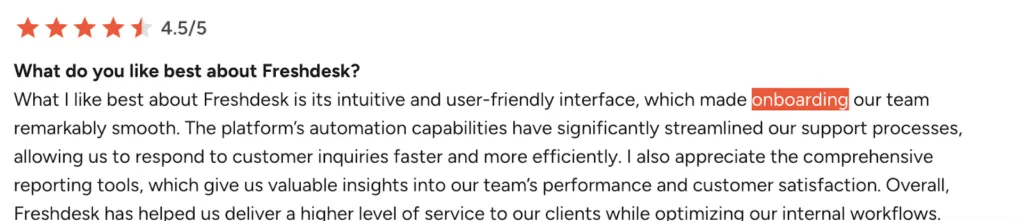
Its modular design allows for segmentation by role, plan, or account type, enabling tailored onboarding for different user cohorts. This granular targeting often proves more precise than generic, one-size-fits-all messaging strategies that annoy users.
Additionally, onboarding insights flow back to support teams, creating a closed loop between self-serve education and live support. The handoff is smooth, ensuring agents have context when a user needs human help.
Intercom wins at Built-in voice and call center capabilities
For teams that want calling tightly woven into the same workspace without juggling multiple tools, Intercom's built-in voice capabilities provide a seamless experience that actually works. Agents can initiate, receive, and log calls without leaving the platform, which reduces toggling and speeds up response times.
As one Capterra reviewer highlights:

Crucially, voice interactions are coupled with customer data and conversation history in real time, giving agents the context they need for more personalized support mid-call instead of asking customers to repeat their entire story.
This unification of call handling and customer context is particularly valuable for high-velocity support teams handling urgent issues or high-touch accounts where context switching kills productivity.
Freshdesk wins at Outbound lifecycle messaging
For orchestrating multi-step, multi-channel campaigns that actually work, Freshdesk offers robust automation with branching logic and precise timing controls. This flexibility supports complex customer journeys where different behaviors trigger tailored paths.
Analytics are another strength. Freshdesk provides granular performance metrics across channels so marketers can optimize campaigns in real time rather than guessing what works. By blending data from support tickets, usage patterns, and purchase history, teams gain a fuller picture.
The net effect is coherent, high-impact outbound journeys that drive retention and growth. If lifecycle messaging is central to your strategy, Freshdesk gives you the control and insight needed to execute at scale.
Intercom wins at Out-of-the-box SLAs and deep automation/routing
Intercom makes getting started with SLAs straightforward without requiring a computer science degree. Its pre-built SLA frameworks are easy to tailor to different teams and priorities, allowing support leaders to enforce response and resolution targets quickly.
One G2 testimonial makes it clear:

The acceleration from setup to enforcement can translate into measurable improvements in SLA adherence and customer satisfaction that actually move business metrics.
On automation and routing, Intercom shines with behavior-based triggers and customer attributes that enable more granular decisioning than static, rule-only approaches. Conversations can be assigned by skill, workload, or real-time data, which leads to faster resolution and better prioritization.
Freshdesk wins at In-app messenger and real-time chat performance
Freshdesk's in-app messenger is designed for speed and clarity without the usual bloat. It integrates real-time chat with a highly intuitive ticketing system so agents can transition from chat to ticket workflows without losing context or customer patience.
The interface avoids clutter and keeps the focus on the conversation, which improves agent concentration and accelerates problem-solving. Freshdesk also brings multi-channel messaging into the same interface, helping teams unify customer interactions.
One Capterra customer testimonial says it simply:
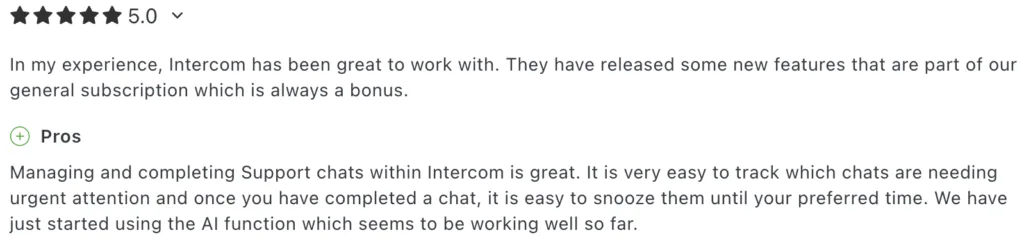
On the performance side, Freshdesk is recognized for its low latency and reliable message delivery—even under peak loads—ensuring a consistent real-time experience that doesn't break when you need it most.
Customization is another standout. Freshdesk offers flexible chatbots and automated responses that plug into knowledge bases and CRM data, enabling context-aware answers and proactive guidance.
Intercom wins at Email-first ticketing and shared inbox reliability
Intercom's email-first ticketing is engineered to preserve integrity in complex email flows that usually break other platforms. When recipients are added via CC or BCC, or when emails are forwarded across multiple stakeholders, Intercom intelligently tracks the conversation without creating the usual chaos.
A G2 review lays it out simply:

This helps teams avoid the common pitfalls of fragmented threads, manual merges, and lost history that drive everyone crazy. Because Intercom integrates messaging history and customer data into the same view, agents can switch contexts—forwarded email, CC'd reply, chat handoff—without losing the thread.
The result is fewer fractured conversations, less administrative cleanup, and smoother collaboration across a shared inbox. Support leaders who prioritize clean threading and reliable email workflows will likely find Intercom's approach both robust and time-saving.
Freshdesk wins at Behavioral targeting and personalization
Freshdesk excels at behavioral segmentation across channels and touchpoints in ways that actually drive business outcomes. Teams can track detailed customer actions and craft complex workflows that trigger personalized messaging at the ideal moment.
A G2 reviewer’s words sum it up:
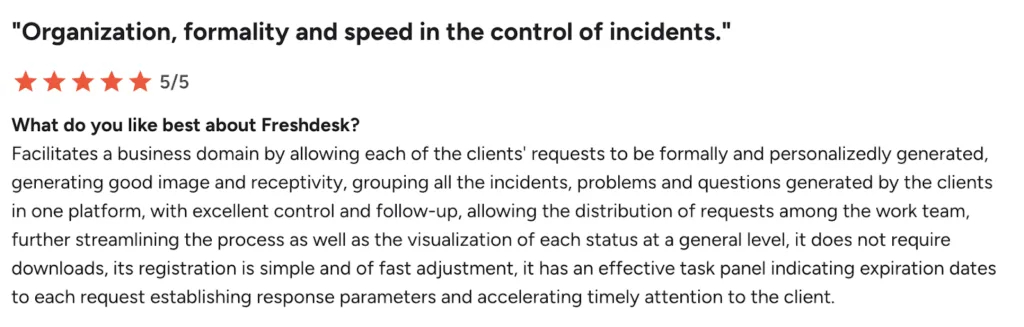
The platform's depth helps teams move beyond superficial segmentation to orchestrate targeted interactions that markedly improve conversions and satisfaction. Freshdesk's AI-driven insights also recommend relevant responses and next-best actions for agents.
Explore Kayako for behavioral targeting without platform complexity.
Try Now
Because Freshdesk unifies data from email, chat, social, and voice, it builds a broader, 360-degree customer view. This comprehensive understanding empowers smarter segmentation and helps deliver interactions that resonate with users across their lifecycle.
Intercom wins at Omnichannel coverage
Intercom's omnichannel execution emphasizes cohesion over feature sprawl. Chat, email, social, and apps can be managed from a unified inbox, which limits channel silos and reduces the need to switch between separate views that fragment the customer experience.
As one user explained:

Automation and AI-driven routing help triage incoming inquiries, dynamically assign the right specialist, and prioritize work based on urgency and context rather than arbitrary rules. This dynamic routing helps reduce wait times, cut agent overload, and maintain consistent experiences.
Consider Kayako for omnichannel without the learning curve
Try for free.
Freshdesk's omnichannel capabilities are extensive, but teams sometimes report that the experience can feel more segmented depending on configuration. If your priority is one unified, highly cohesive view of conversations with intelligent, data-informed routing, Intercom often delivers a simpler experience.
Freshdesk wins at Agent workspace usability
Freshdesk is known for a highly intuitive, customizable agent workspace that scales to complex operations without overwhelming users. Its ticketing system centralizes omnichannel interactions so agents can view the conversation in context without flipping between tabs.
As one Capterra feedback shows:
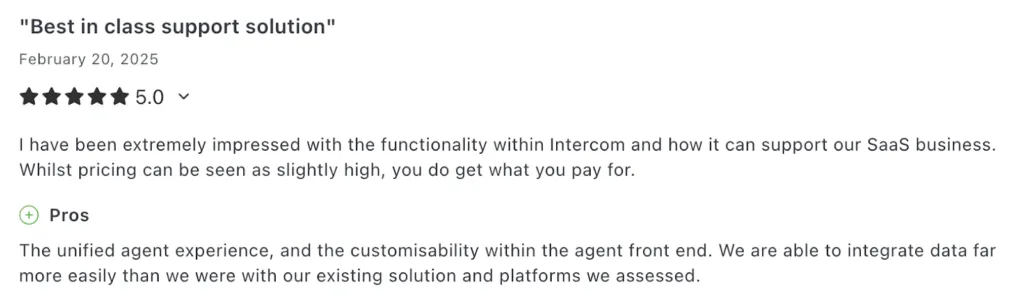
Built-in automation streamlines repetitive tasks, freeing agents for higher-value work and improving throughput. Collaboration features—internal notes, SLA tracking, shared inboxes—are first-class citizens in the agent experience.
While Intercom is excellent for chat-forward workflows, Freshdesk's balance across channels and emphasis on structured ticketing makes it well-suited for diverse support teams that handle a wide variety of request types daily.
Intercom wins at Multi-brand portals and knowledge base customization
Intercom offers intuitive support for multi-brand environments without forcing you to manage separate accounts. Within a single interface, teams can tailor messaging, routing, and workflows per brand or product line, which eliminates the usual complexity.
One G2 customer sums it up:
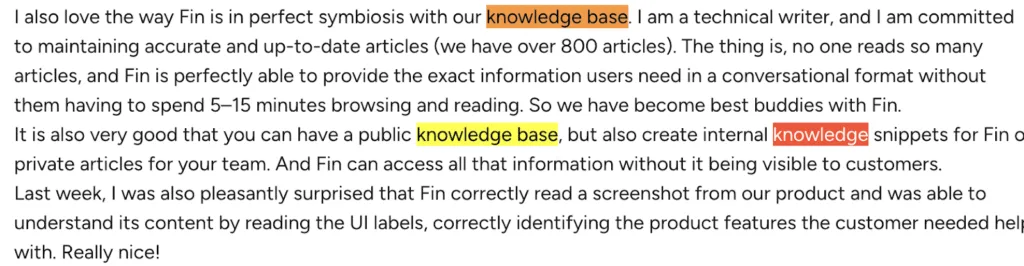
Flexible tagging and smart routing rules get inquiries to the right team based on brand, product, or issue type. This leads to shorter response times and a more consistent brand experience across diverse customer bases.
On the knowledge base front, Intercom enables highly customized help centers that mirror each brand's identity and content needs, while keeping a unified backend. Intercom's context-aware content recommendations surface articles based on the user's journey or past interactions, driving higher self-service deflection.
Freshdesk wins at In-messenger app ecosystem
Freshdesk offers a versatile, developer-friendly app ecosystem inside the messenger that goes beyond basic integrations. Agents can access CRM lookups, knowledge base searches, payment flows, and more without leaving the conversation.
The marketplace includes a broad array of apps designed for analytics, customer feedback, e-commerce, and other specialized needs that most platforms can't match. With an open API and modular framework, Freshdesk empowers teams to build custom extensions.
This extensibility is especially valuable for complex environments where support teams need to act across multiple systems quickly. While Intercom's app ecosystem is solid, Freshdesk's breadth and developer tooling give it an edge in more intricate support landscapes.
How to Choose Between Intercom vs Freshdesk
The best choice depends on your priorities, internal processes, and growth stage. Use these considerations to map your needs to each platform's strengths:
Prioritize Predictable Budgeting and Consolidation
- Choose Intercom if you value a pricing structure that scales cleanly with your needs and reduces TCO by consolidating tools, especially if your team can leverage Intercom's integrated automation and unified messaging
- Validate current plan details and model long-term costs based on your expected channel mix and agent count
Emphasize Email-First Ticketing and Conversation Integrity
- Choose Intercom if your support model is email-heavy with lots of forwarding, CCs, and BCCs. Its threading and context preservation will likely cut manual cleanup and create smoother collaboration
Need Voice Workflows Embedded in the Same Workspace
- Choose Intercom if agents regularly jump between chat, email, and voice and you want calling built into the same interface with immediate access to history and context
Want Cohesive Omnichannel Management and Dynamic Routing
- Choose Intercom if you prefer a unified inbox across channels and highly dynamic, behavior-informed routing that gets customers to the right specialist quickly
Require Fast SLA Rollout with Deep Automation
- Choose Intercom if you want to implement and enforce SLAs quickly and benefit from adaptive routing using behavioral triggers and real-time agent capacity
Run Multiple Brands with Tailored Content and Workflows
- Choose Intercom for managing multi-brand experiences within one interface and for context-aware knowledge base recommendations that adapt to each user's journey
Live Chat at Scale Is Mission-Critical
- Choose Freshdesk if low-latency chat, a streamlined agent interface, and a strong bridge between chat and ticketing are top priorities
Need Sophisticated In-App Onboarding and Product Tours
- Choose Freshdesk if you want advanced, behavior-driven onboarding flows, checklists, and tooltips that adapt by role or plan and feed directly into support insights
Focused on Behavioral Targeting and Lifecycle Campaigns
- Choose Freshdesk if your growth strategy depends on granular behavioral segments, AI-assisted personalization, and multi-step, multi-branch lifecycle orchestration with deep analytics
Operate Complex Support Workflows with Many Integrations
- Choose Freshdesk if your agents rely on a wide array of third-party apps and you need a developer-friendly, in-messenger app ecosystem and open APIs to tailor the workspace
Balancing Operations and Team Ramp-Up
- Intercom often leads on faster training and lower overhead for teams that want a clean, unified interface across email, chat, voice, and knowledge
- Freshdesk's structured workspace benefits operations that need granular ticket controls, SLA rigor, and customization at scale across many tools and processes
Budget and Total Cost of Ownership
- Intercom can be more cost-effective when its unification of messaging, automation, and context replaces a patchwork of tools
- Freshdesk can be cost-efficient for teams leveraging its robust free/entry tiers and marketplace to compose exactly what they need
The Bottom Line
The Intercom vs Freshdesk decision isn't one-size-fits-all, and both platforms are genuine leaders with different strengths that matter to different organizations.
Intercom wins where unified context, intelligent email-first ticketing, integrated voice, cohesive omnichannel views, rapid SLA deployment, deep automation, and multi-brand customization matter most. Its emphasis on predictable scaling and operational consolidation can reduce total cost of ownership and speed up team ramp-up significantly.
Freshdesk wins where real-time chat performance, structured agent workflows, behavior-driven onboarding, granular personalization, sophisticated outbound journeys, and a broad in-messenger app ecosystem are critical. Its streamlined chat-to-ticket experience, robust marketplace, and data-rich segmentation make it powerful for teams orchestrating complex, multi-channel operations.
Your best fit depends on the interplay of channel strategy, operational complexity, data needs, and budget constraints. If you prioritize cohesive customer context and automation-led efficiency, Intercom is likely your match. If you need high-performance chat, advanced onboarding, deep lifecycle orchestration, and extensive extensibility, Freshdesk may be the better option.
Whichever you choose, run a proof of concept with your real data, workflows, and SLAs. Validate pricing against your volume projections, test critical integrations, and involve both agents and admins in the evaluation. By anchoring the decision in your team's day-to-day realities, you'll select the platform that not only looks great in demos but also delivers sustained value when your team actually needs it to work.