|
Key takeaways
|
In B2B outreach, the subject line is the entire pitch in a two-second window. A buyer scans the inbox and decides what to open and what to skip before reading a word of your body copy, and 47% of recipients decide based on the subject line alone (OptinMonster, via Cleanlist). This guide covers the rules of high-performing B2B sales copywriting for subject lines, six proven formulas, more than 30 examples by use case, the data behind what works, and the mistakes that send you to spam.
What makes a good B2B sales subject line?
A good B2B sales subject line is short, specific, and relevant. Keep it to 6 to 10 words, write in plain lowercase so it looks like internal mail, lead with the recipient’s world rather than your pitch, and include one concrete detail such as a company name or a number. Above all, avoid spam trigger words that stop the email from reaching the inbox.
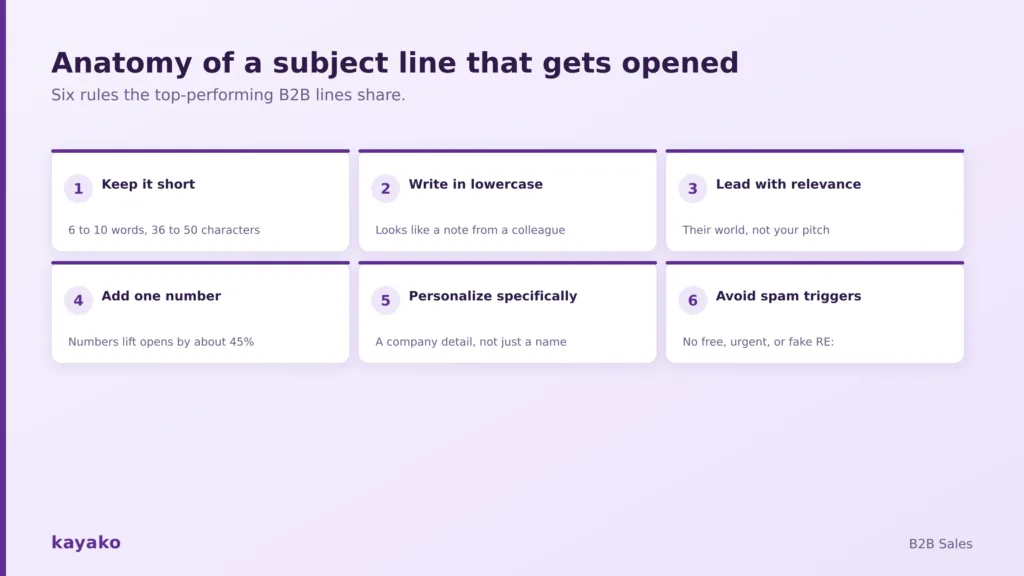
Six rules the top-performing B2B lines share.
- Keep it short. Aim for 6 to 10 words, or 36 to 50 characters. Most mobile clients truncate past about 43 characters, and more than 60% of B2B email is opened on mobile first.
- Write in lowercase. All-lowercase lines outperform title case by around 21%, because they read like a note from a colleague, not a broadcast.
- Lead with relevance. Reference the recipient’s company, role, or a specific problem, not your product.
- Add one number. A specific figure lifts opens by roughly 45%. Place it early where it is most visible.
- Personalize specifically. A company detail or recent event beats a first name, which on its own has lost most of its effect.
- Avoid spam triggers. Words like free, urgent, and guarantee, plus ALL CAPS and fake RE: prefixes, hurt deliverability and trust.
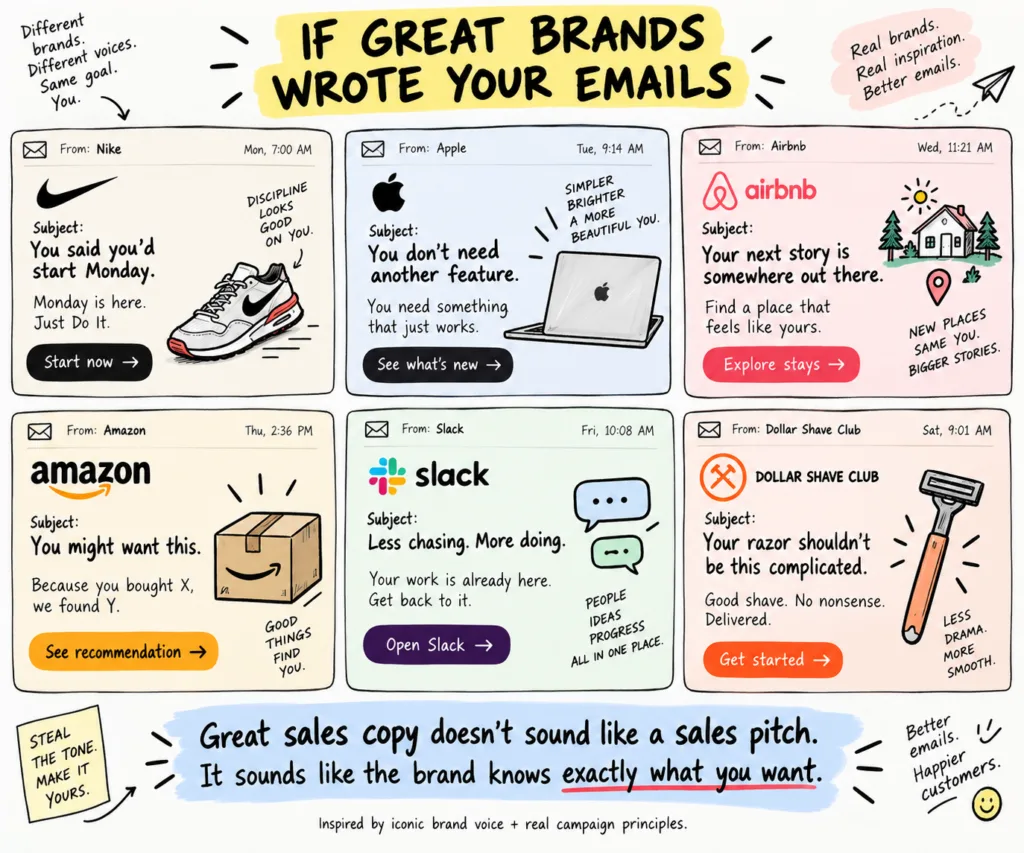
Those rules become easier to apply with a set of repeatable formulas.
6 proven B2B subject line formulas
Six subject line formats consistently outperform generic ones in B2B outreach: the curiosity gap, the number formula, the direct benefit, the question, the personalized detail, and the referral. Each gives you a repeatable structure to adapt, rather than a template to paste.
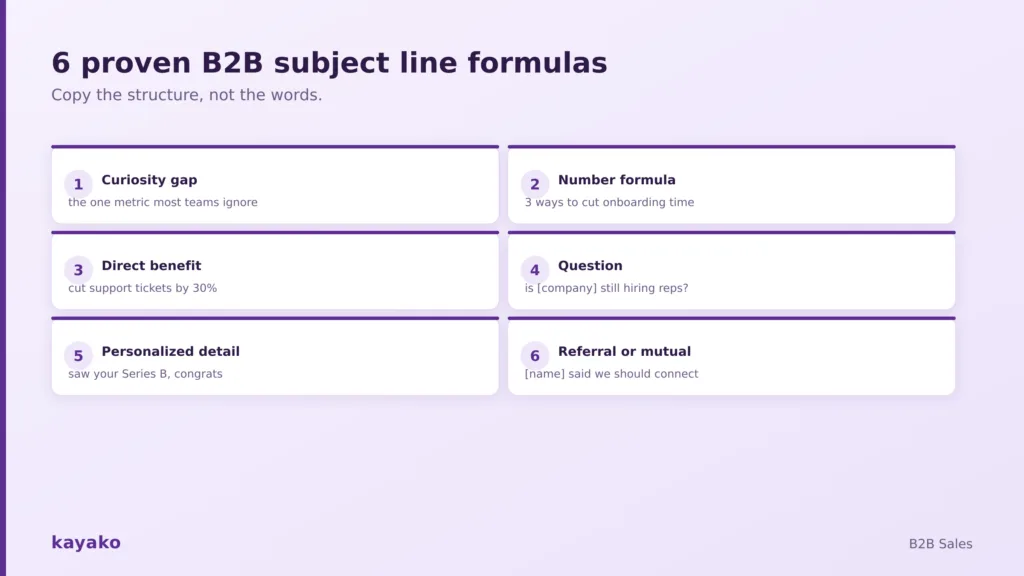
Copy the structure, not the words.
- Curiosity gap. Hint at value without giving it away: “the one metric most support teams ignore.”
- Number formula. Lead with a specific figure: “3 ways [company] can cut response time.”
- Direct benefit. State the outcome plainly: “cut onboarding time by 30%.”
- Question. Ask something relevant: question-based lines lift opens 10 to 15%. “Is [company] still hiring support reps?”
- Personalized detail. Reference a real event: “Saw your Series B, congrats.”
- Referral or mutual connection. Borrow trust: “[name] suggested I reach out.”
Here is what those formulas look like across the stages of a real outreach sequence.
30+ B2B sales subject line examples by use case
Use these as starting points to tailor, not templates to paste, since a line stops working the moment it is reused at scale. Each group notes when to use it.
Cold prospecting subject lines
Use for a first-touch email to a new prospect. Lead with relevance and keep it low-key.
- quick question about [company]’s onboarding
- idea for your support team
- [competitor] switched last quarter, worth a look?
- 3 ways to cut [company]’s ticket backlog
- Noticed [company] is hiring support reps
- The metric most [industry] teams miss
Follow-up subject lines
Use after no reply. The first follow-up drives the biggest lift, so keep it short and add a new angle.
- re: your support tickets
- One more thought, [first name]
- Did this get buried?
- Closing the loop on [company]
- Still worth a 15-minute look?
- Should I stop reaching out?
Meeting request subject lines
Use when you want time on the calendar. Be direct about the ask and the value.
- 15 minutes on [company]’s CSAT?
- Worth a quick call next week?
- Free Tuesday or Thursday, [first name]?
- A walkthrough built for [company]
- 2 times that work for you
Re-engagement subject lines
Use to revive a cold or stalled thread. Reset with a fresh reason to reply.
- Has anything changed on [company]’s roadmap?
- Still the right person for this?
- New for [company] since we last spoke
- Picking this back up, [first name]
- Timing better this quarter?
Referral and warm-intro subject lines
Use when you have a mutual connection or a trigger event. These earn the highest open rates because they carry built-in trust.
- [name] said we should connect
- [mutual] thought this would help [company]
- Congrats on the [company] launch
- Following up from [event]
- Saw your post on [topic]
|
What the subject-line data says
Across studies covering millions of B2B emails, the data is consistent: personalization roughly doubles reply rates, numbers lift opens by about 45%, lowercase beats title case by 21%, and question-based lines add 10 to 15% more opens. The average B2B cold email open rate sits around 27.7%, with top performers reaching 60% and above.
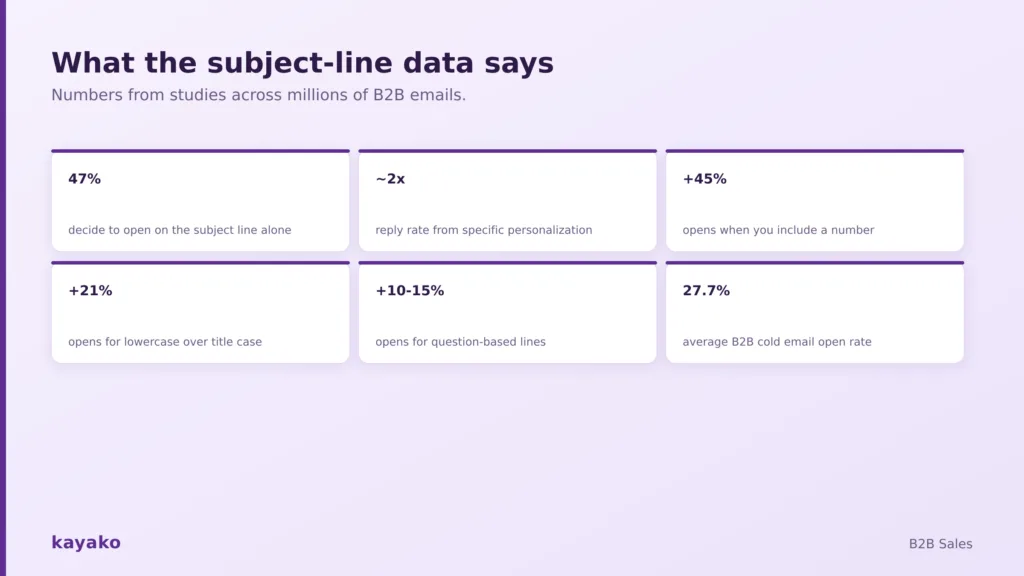
Numbers from studies across millions of B2B emails.
| Tactic | Effect on performance |
|---|---|
| Specific personalization (company detail) | Roughly doubles reply rate |
| Including a number | About 45% more opens |
| Lowercase over title case | About 21% more opens |
| Question-based line | 10 to 15% more opens |
| A/B testing the subject line | Around 49% higher open rate |
| ALL CAPS | About 73% fewer opens |
One caveat: since Apple’s Mail Privacy Protection pre-loads tracking pixels, reported open rates are inflated. Reply rate, where 5 to 10% is good and 15% or more is excellent, is the more reliable measure of a subject line’s real quality.
Subject line mistakes to avoid
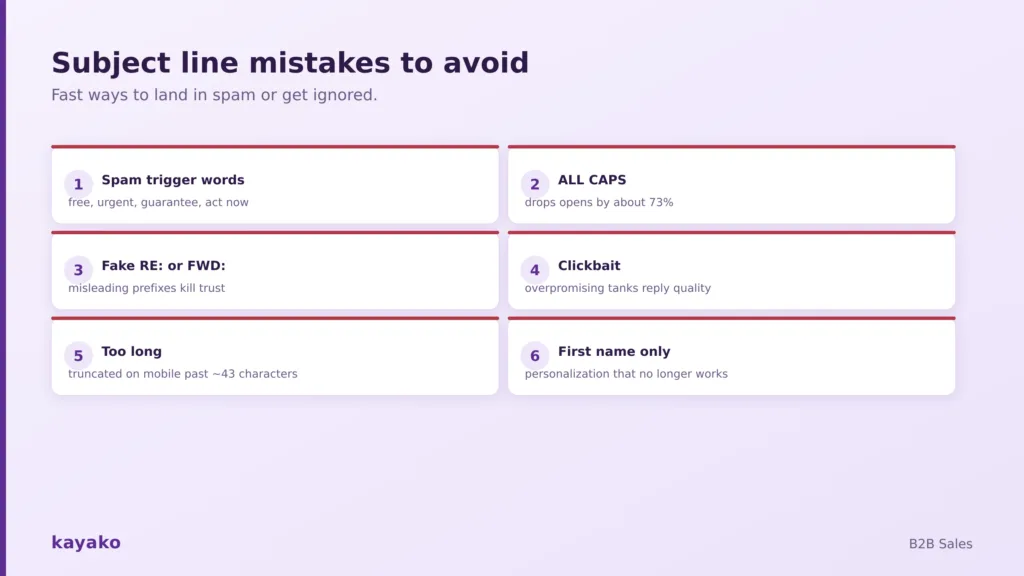
Fast ways to land in spam or get ignored.
- Spam trigger words. Words like free, urgent, guarantee, and act now hurt deliverability. Roughly 17% of cold emails never reach the inbox.
- ALL CAPS. Shouting drops open rates by about 73% and trips spam filters.
- Fake RE: or FWD: prefixes. Pretending a thread exists erodes trust the moment the email is opened.
- Clickbait. Overpromising gets the open, but tanks reply quality and your sender reputation.
- Lines too long. Anything past about 43 characters is cut off on mobile, hiding your point.
- First-name-only personalization. “Hi [first name]” in the subject no longer moves the needle. Reference something specific instead.
Avoiding these is half the battle. The other half is testing, because subject lines decay as more senders copy the same patterns.
How to test your subject lines
To improve subject lines, A/B test one variable at a time, such as length, personalization, or format, with enough volume per variant to be meaningful. Testing lifts open rates by around 49% over sending a single untested line. Track reply rate, not just open rate, since it is the more reliable signal of quality.
- Test one variable at a time. Change only length, or only the personalization field, so you know what moved the result.
- Use meaningful volume. Give each variant enough sends to trust the difference.
- Measure reply rate. Opens are inflated by privacy protection, so judge on replies and meetings booked.
- Refresh regularly. A line that works this quarter feels stale next quarter as others copy it.
Even a perfect subject line, though, only earns the open. What happens after the reply is what decides whether a prospect becomes a lasting customer.
The subject line gets the open. The relationship keeps the customer.
Sharp copywriting is what wins the reply and books the meeting at the top of the B2B sales funnel. But once a prospect becomes a customer, the emails that matter are no longer cold outreach; they are support conversations, and the quality of those decides whether the account renews and grows.
That post-sale experience is where a support platform earns its place. Kayako gives your team the full history of every customer on one screen and an AI agent that resolves routine issues fast, so the deals your copy helped open turn into customers who stay. See our approach to AI customer support. The best B2B revenue teams write copy that earns attention and back it with support that earns loyalty.
|
Frequently asked questions
What is the best length for a B2B sales subject line?
The best B2B sales subject lines are 6 to 10 words, or roughly 36 to 50 characters. This is long enough to communicate a specific value and short enough to display fully on mobile, where most B2B email is first seen. Lines past about 43 characters get truncated on smartphones, hiding the part that would earn the open.
Do personalized subject lines actually work in B2B?
Yes, but only specific personalization. Referencing a company detail, a recent funding round, or a concrete problem roughly doubles reply rates compared with generic lines. First-name-only personalization, such as “Hi [name],” has lost most of its effect because it is now expected and easy to automate. Personalize with something a competitor could not have guessed.
What subject line words should I avoid in cold email?
Avoid classic spam triggers such as free, urgent, guarantee, and act now, along with ALL CAPS and misleading RE: or FWD: prefixes. These hurt deliverability, and roughly 17% of cold emails never reach the inbox. They also erode trust the moment the email is opened, which lowers reply rates even when the message does land.
What is a good open rate for a B2B cold email?
The average B2B cold email open rate in 2026 is around 27.7%, though some studies report figures near 44% because Apple’s Mail Privacy Protection inflates the numbers. A genuinely good campaign lands between 40 and 60% reported opens, but reply rate is the truer measure: 5 to 10% is good and 15% or more is excellent.
Should B2B subject lines be questions?
Often, yes. Question-based subject lines generate roughly 10 to 15% higher open rates than statements, because a relevant question invites the reader to answer it in their head and then in their reply. Keep the question specific to the recipient, such as “Is [company] still hiring support reps?”, rather than a vague or rhetorical one.