What Are the Advantages and Disadvantages of Live Chat?
Every support channel comes with trade-offs. But live chat’s trade-offs are worth knowing, precisely because the gap between a well-implemented live chat and a poorly-implemented one is one of the widest in customer service.
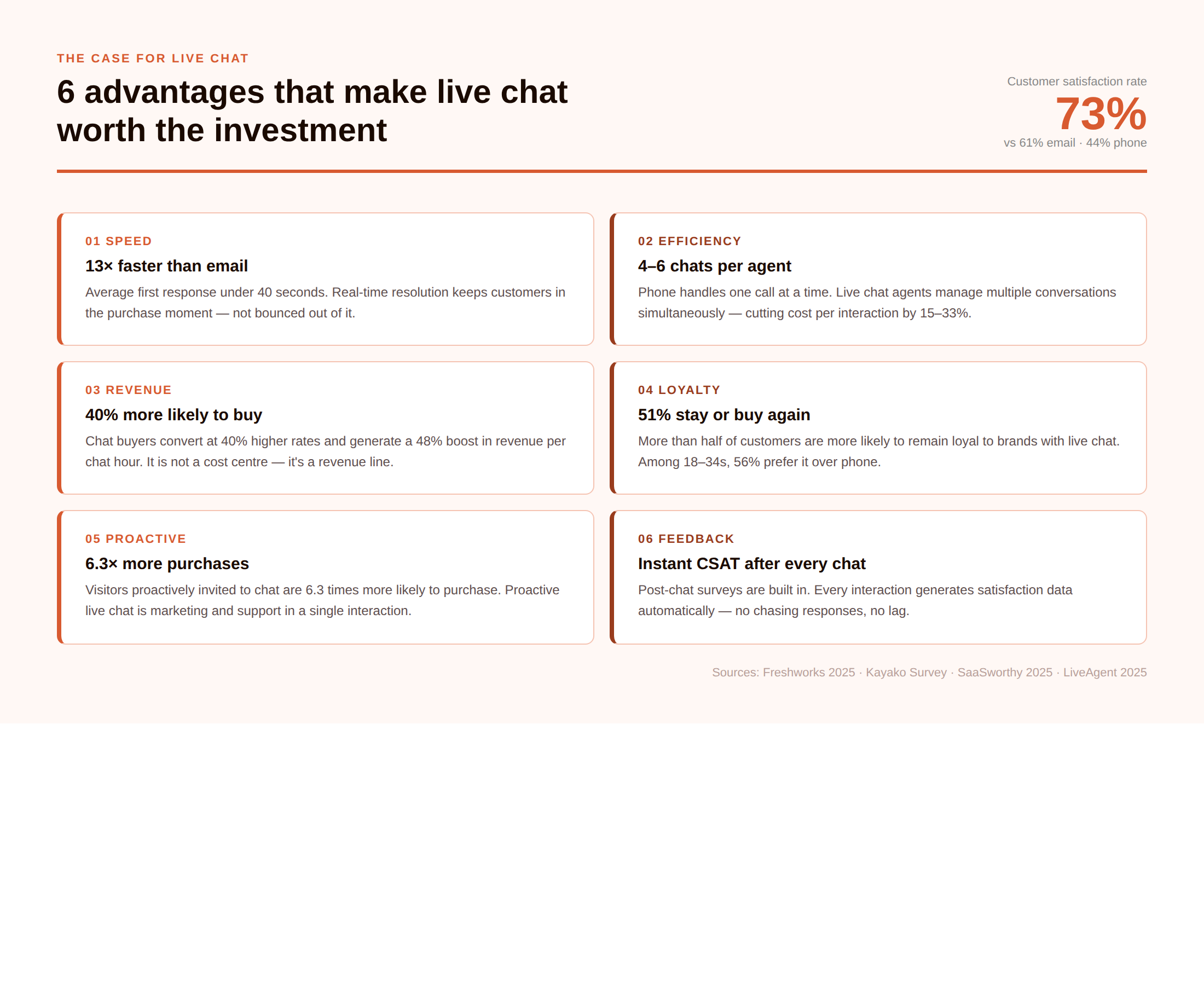
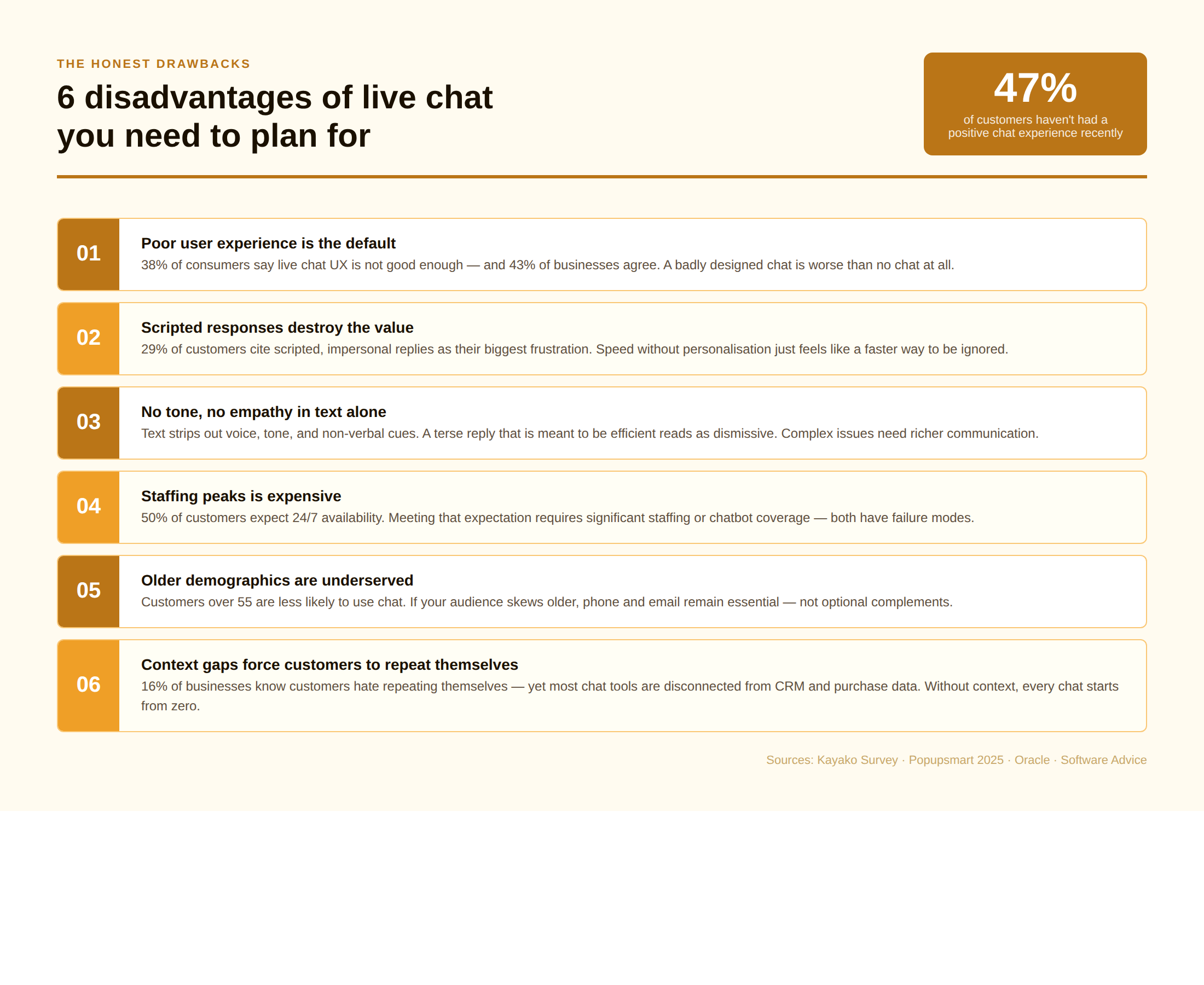
The numbers set the scene: live chat delivers a 73% customer satisfaction rate, compared to 61% for email and 44% for phone support (Freshworks, 2025). And yet 47% of customers haven’t had a positive live chat experience in the past month (Kayako survey). That gap is not a channel problem; it’s an implementation problem.
This guide covers the full picture: the real live chat advantages and disadvantages, how it compares to other channels, what goes wrong, and whether it’s worth the investment for your business.
The Advantages of Live Chat
When live chat is built right, it doesn’t just support customers, it converts them, retains them, and turns them into advocates. Here’s what the data shows.
Real-time resolution keeps customers in the moment
Live chat resolves issues 13 times faster than email and online forms (Freshworks, 2025). The average first response time is under 40 seconds. For a customer mid-checkout hitting a payment error, that speed is the difference between completing the purchase and abandoning the cart.
44% of online shoppers say having access to a live agent during a purchase is one of the most important features a website can offer. Real-time support removes the single biggest conversion killer: uncertainty.
Agents handle multiple conversations simultaneously
An experienced live chat agent can handle between 4 and 6 conversations at once. A phone agent handles one call. This operational leverage is one of the most significant live chat advantages for support teams managing volume on a tight budget.
The result: companies using live chat pay 15–33% less per interaction than those relying on phone support. That cost difference compounds significantly at scale.
Live chat directly drives revenue
38% of consumers are more likely to buy from a company that offers live chat (Kayako survey). Buyers who use live chat are 40% more likely to complete a purchase (SaaSworthy, 2025), and live chat generates a 48% boost in revenue per chat hour. For e-commerce, especially, live chat is not a cost center; it’s their most important revenue line.
It builds loyalty, particularly with younger customers
51% of consumers are more likely to stay with or buy again from a company that offers live chat (Kayako survey). Among customers aged 18–34, 56% prefer live chat over phone support (LiveChat, 2025). Millennials are 60% more likely to choose chat over any other support channel. If your customer base skews young, live chat is table stakes.
Proactive chat converts passive visitors into active buyers
Visitors who are proactively invited to chat are 6.3 times more likely to make a purchase than those who never engage. And 94% of customers who were proactively reached out to reported being satisfied. Proactive live chat is marketing and support in a single interaction.
It captures real-time feedback automatically
Post-chat surveys are built into most platforms. The result: instant CSAT data after every interaction, without chasing responses. That feedback loop directly generating satisfaction data is genuinely valuable for both product and service improvement.
The Disadvantages of Live Chat
The case for live chat is strong. But the disadvantages of live chat are real and specific. Ignoring them is how companies end up with a channel that frustrates more customers than it helps.
Poor user experience is the default, not the exception
38% of consumers say the live chat user experience is not good enough, and 43% of businesses agree. Clunky interfaces, slow load times, and chat widgets that obscure content are endemic in the category. A poorly designed chat experience is worse than no chat at all.
Scripted responses destroy the channel’s biggest advantage
29% of customers say scripted, impersonal responses are their biggest frustration with live chat. Live chat’s value proposition is speed, and personal context and scripted responses undermine both simultaneously. 29% of businesses confirm their customers feel exactly this way.
No text-based channel conveys tone reliably
Unlike phone support, live chat strips out voice, tone, and non-verbal cues. An abridged response that’s meant to be efficient can read as dismissive. A customer asking a simple question may interpret a brief reply as indifference. Complex or emotionally sensitive issues require a channel with richer communication bandwidth.
Staffing is expensive and difficult
Live chat creates a real-time availability expectation. 50% of customers expect businesses to be open 24/7 (Oracle). Meeting that expectation requires either significant staffing investment or chatbot coverage, both of which have their own costs and failure modes. Understaffing means queues; queues mean frustrated customers.
Older demographics remain underserved
Customers over 55 are significantly less likely to use live chat than younger cohorts. If your customer base skews older, live chat alone is insufficient. Phone and email remain essential complements, not optional extras.
Customers hate repeating themselves, and context gaps make it inevitable
16% of businesses acknowledge their customers are most frustrated by having to repeat themselves. When live chat tools operate as isolated channels by being disconnected from CRM, ticketing, and purchase history, agents then lack the context to resolve issues on first contact. The result is precisely the experience customers find most galling.
Live Chat vs Other Customer Support Channels
No channel works in isolation. Understanding where live chat wins, where it loses, and where it should hand off is the foundation of a strong omnichannel support strategy.
Live chat vs phone support
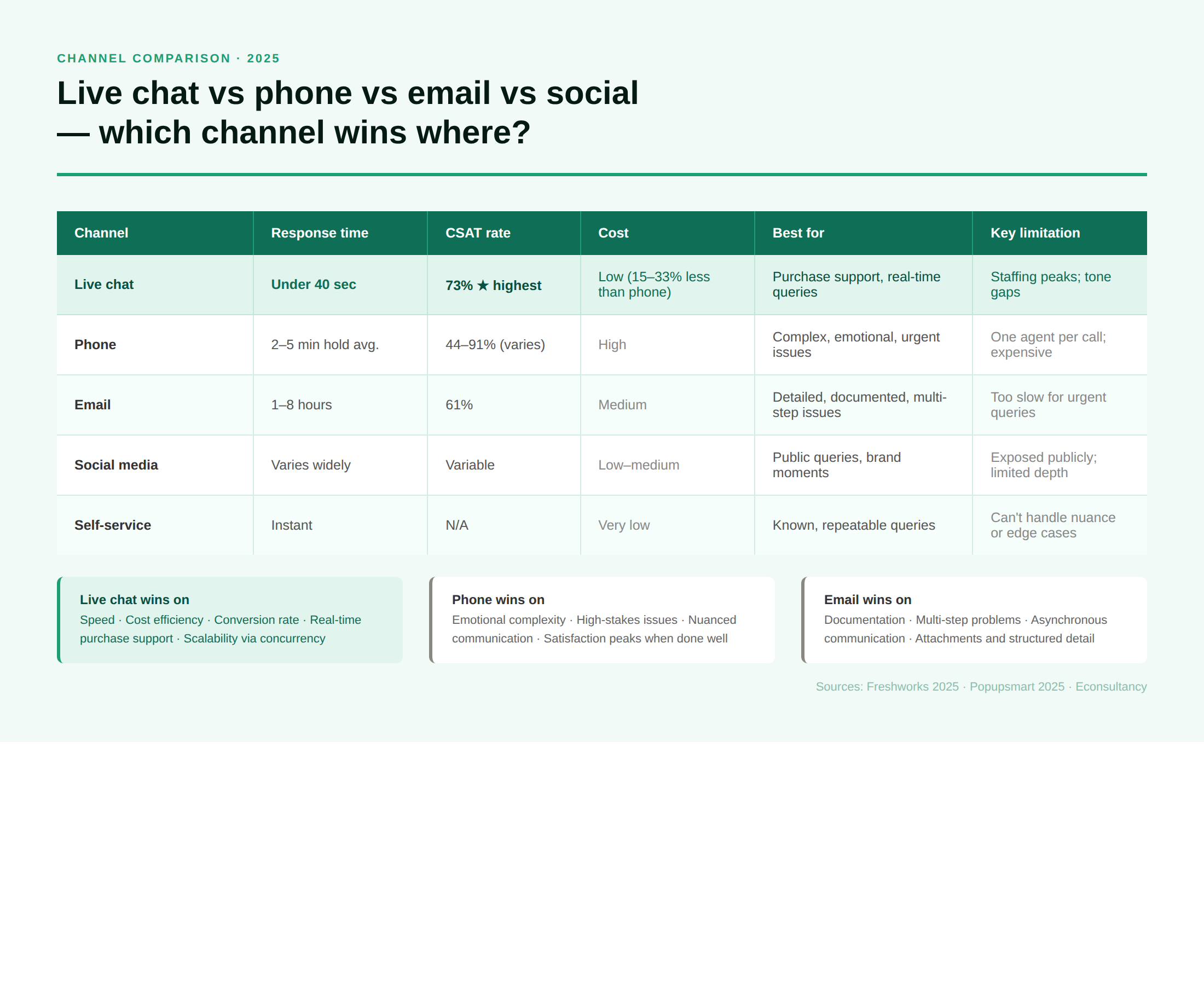
Phone support still leads on emotional complexity and satisfaction peaks. For instance, when a call goes well, phone satisfaction can reach 91%. But it’s costly and unscalable. 42% of customers prefer live chat over phone specifically because they don’t have to wait on hold (Popupsmart, 2025). Live chat wins on cost, volume, and speed, while phone wins on nuance, emotion, and complexity.
Live chat vs email
Email is asynchronous & is valuable for detailed, documented, multi-step issues. But live chat resolves queries 13x faster, and for any time-sensitive situation, email is a liability. The ideal approach: live chat for real-time, quick-resolution queries; email for issues requiring research, attachments, or multi-team coordination. See Kayako’s guide on customer service email for how to optimize both.
Real-world channel split: what leading companies do
Amazon handles millions of contacts daily through a layered model: self-service first (FAQs, tracking), live chat for purchase-related queries, phone as escalation for high-value or complex issues. Apple routes Genius Bar conversations through chat scheduling, reducing walk-in wait times while keeping human resolution rates high. Zappos keeps phone as the primary channel by design, often reflecting it as their premium service positioning, but supplements it with chat for quick queries.
What Are the Challenges of Live Chat?
Beyond the headline disadvantages, live chat has implementation challenges that catch teams off guard. These are the ones that don’t show up in vendor demos.
Context gaps cause the most damage
Most live chat tools operate in isolation from CRM, order management, and ticketing systems. Agents see the message but not the customer’s history, their previous contacts, or their current order status. The result: agents ask questions customers have already answered elsewhere, creating the repetition that drives churn.
Scalability breaks at volume
Live chat works smoothly at low-to-medium volume. At high volume, especially during product launches, seasonal spikes, and outages, the queue grows, satisfaction drops, and agents burn out. Scaling live chat requires either automation (chatbots handling tier-1 queries), smart routing, or significant staffing — none of which are simple to implement mid-crisis.
Quality degrades under concurrency pressure
An agent managing 6 simultaneous chats will provide a different quality of support than one managing 2. As concurrency increases, response times rise, personalization falls, and the risk of error grows. Concurrency is a lever, not a dial, and the optimal number depends on query complexity, not just team capacity.
Integration with the rest of the stack is genuinely hard
Connecting live chat to CRM, helpdesk, order management, and e-commerce platforms is often more complex than vendors suggest. Poorly integrated chat tools create data silos, failing to provide support conversations that are invisible to sales, marketing, and product teams. Without integration, live chat data generates no organizational learning.
Chatbot coverage has a ceiling
AI chatbots handle volume efficiently. IBM reports chatbots can handle up to 80% of routine questions. But customers notice when a bot can’t handle their actual issue. 78% of customers who use chatbots report they still need to reach a human agent afterward. The escalation experience from chatbot to human, with context preserved, is where most implementations fail.
Should You Invest in Live Chat?
The honest answer: almost certainly yes, but the how matters as much as the whether.
The business case is clear
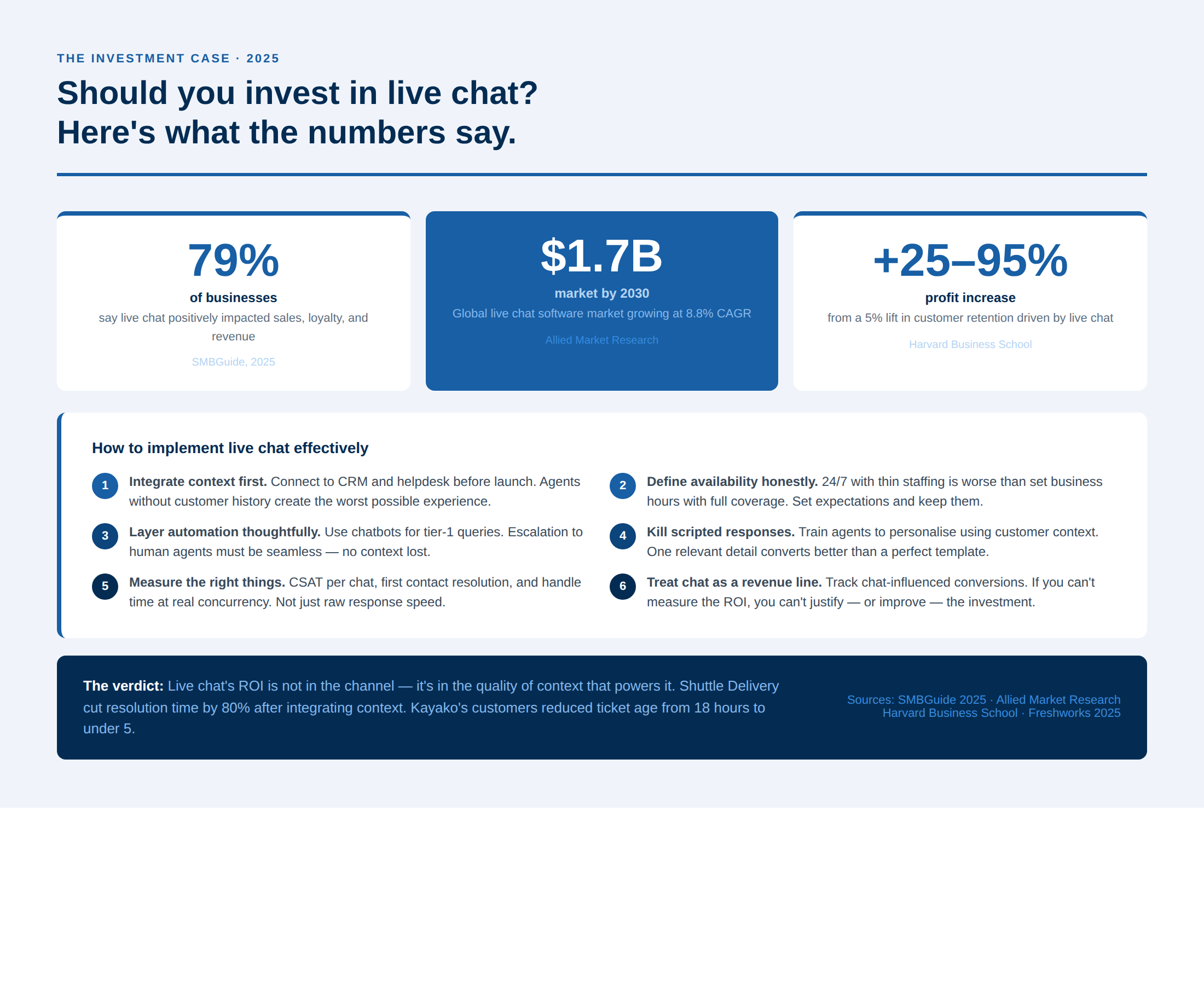
79% of businesses say implementing live chat had a positive effect on sales, loyalty, and revenue (SMBGuide, 2025). Live chat increases customer retention rates by 5%, which translates to a 25–95% increase in profits (Harvard Business School, cited in REVE Chat). The global live chat market is projected to reach $1.7 billion by 2030, growing at 8.8% CAGR (Allied Market Research).
The build vs buy question
For most businesses, buying is the right answer. Building custom live chat infrastructure requires significant engineering resources and ongoing maintenance, and the gap between a custom build and a best-in-class platform has narrowed dramatically. The decision criteria: if your chat volume is high enough to justify engineering investment, or if your integration requirements are highly specific, a custom build may make sense. For everything else, a platform with native integrations and AI capabilities will outperform.
How to implement live chat effectively
- Start with context integration. Connect live chat to your CRM and helpdesk before launch. Agents without customer context create the worst possible experience.
- Define when chat is available. A 24/7 chat with inadequate staffing is worse than defined business hours with full coverage. Set honest expectations.
- Layer automation thoughtfully. Use chatbots for tier-1 queries (order status, FAQs, password resets) and first contact resolution for everything else. Escalation to human agents must be seamless.
- Eliminate scripted responses. Train agents on personalization using customer context. A response that references the customer’s specific issue converts at a higher rate than a generic template.
- Measure the right things. CSAT per chat, first contact resolution rate, and concurrency. Also, adjusted handle times are more useful than raw response speed.
Who uses live chat best and what they prove
Shuttle Delivery (South Korea) switched from phone to live chat via Freshchat. The outcome: 80% of queries resolved directly in the chat app, and resolution time reduced by 80% (Freshworks). The key was full context integration; agents saw delivery status, order history, and previous contacts before responding.
The lesson: live chat’s ROI is not in the channel itself but in the quality of the context that powers it.
FAQs
1. What are the main advantages of live chat for businesses?
A. Speed, cost efficiency, and revenue impact. Live chat resolves queries 13x faster than email, costs 15–33% less per interaction than phone, and increases purchase likelihood by 40%. When implemented with proper context, it also reduces repeat contacts and builds long-term loyalty.
2. What are the biggest disadvantages of live chat?
A. Poor user experience (cited by 38% of consumers), scripted responses (frustrate 29% of users), staffing costs for real-time availability, and context gaps that force customers to repeat themselves. Most of these are implementation failures, not inherent channel weaknesses.
3. Is live chat better than phone support?
A. For speed, cost, and volume — yes. For complex, emotional, or high-stakes issues, the phone often wins. The strongest support operations use both: live chat as the primary channel, phone as the escalation path for issues that require richer communication. See Kayako’s guide on live chat best practices for how to structure this.
4. How does live chat affect conversion rates?
A. Buyers who use live chat are 40% more likely to make a purchase, and live chat generates a 48% revenue boost per chat hour. Proactive live chat by reaching out to visitors before they ask drives conversion rates even higher: 6.3x more likely to purchase for visitors who are proactively invited to chat.