Why Social Media Customer Service Matters
Explore the best social media customer service examples from leading brands. Learn how top companies use fast responses, personalized support, and proactive engagement to improve customer satisfaction and loyalty.
Social media is like a notice board in the visibility of the world. It’s the only customer service channel where your response, or your silence, is visible to every future customer who searches your brand. An email complaint sits in a private inbox. A tweet about the same complaint sits on the public record, visible to the customer’s followers, your other customers, and anyone who searches your name. That asymmetry is what makes social media customer service a different discipline, not just a different channel.
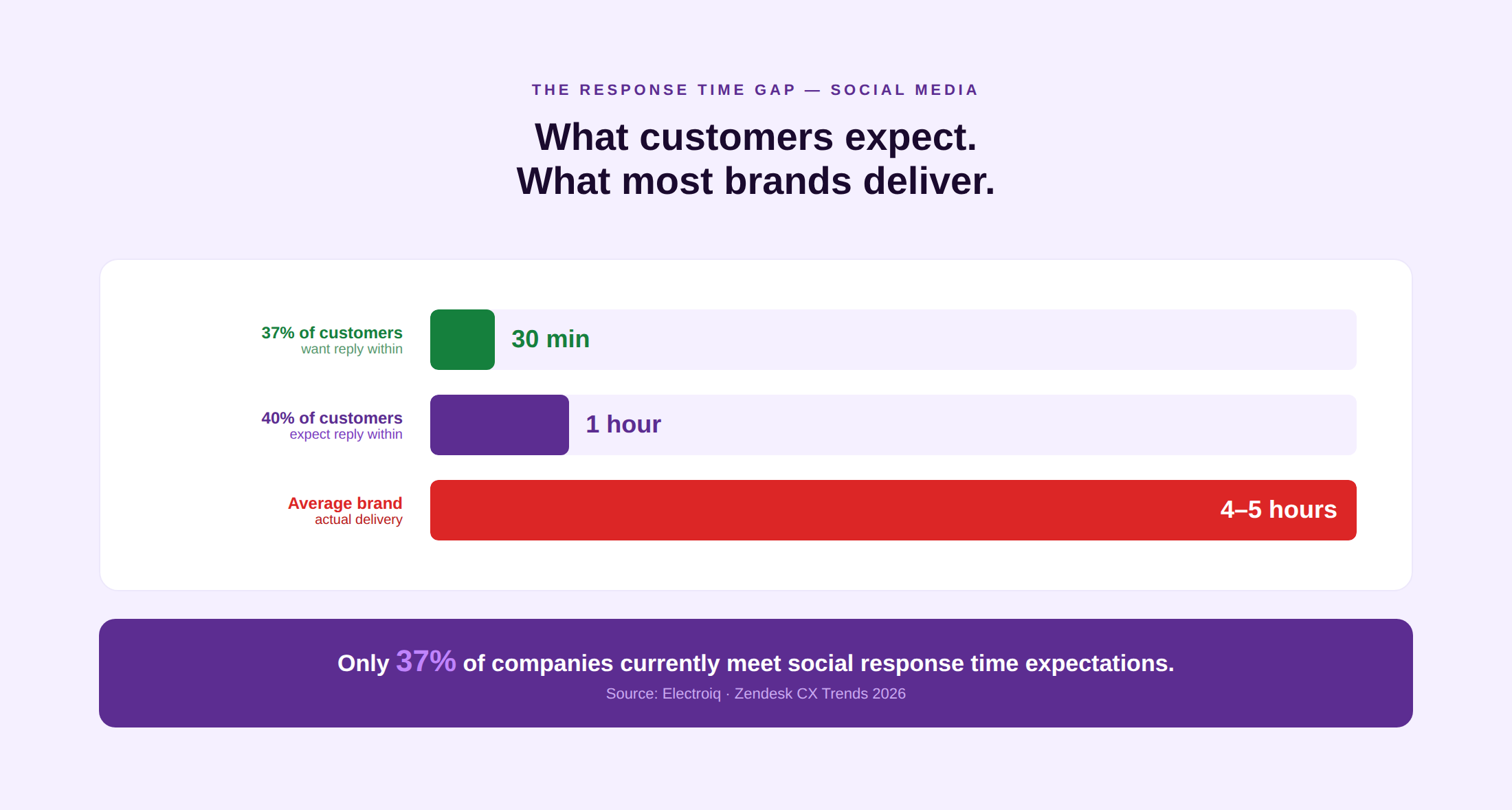
40% of customers expect a reply on social media within one hour, and 37% expect one within 30 minutes. The average brand takes four to five hours. That gap is where reputations are built or quietly eroded every day.
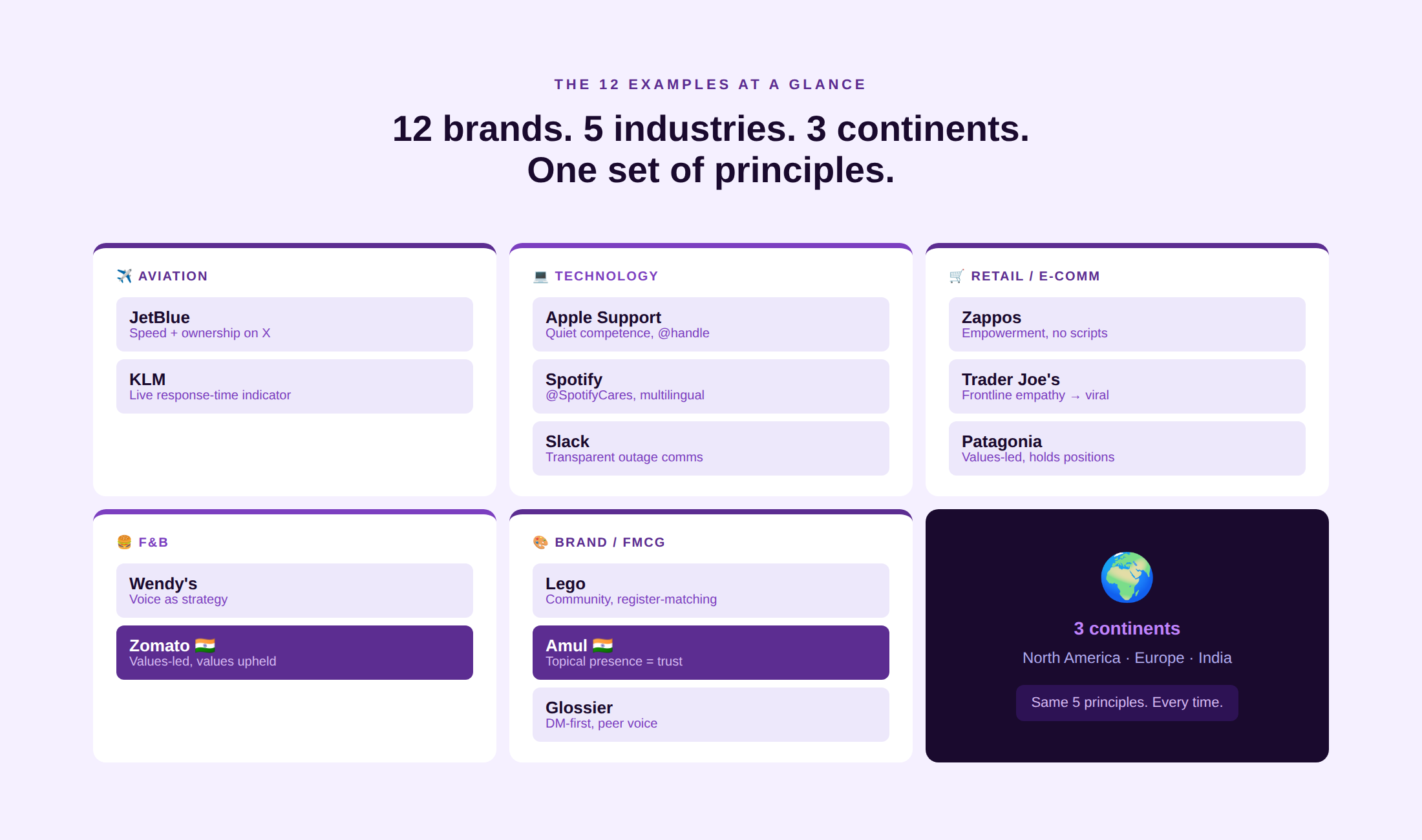
This list covers 12 examples from airlines to food delivery startups, American tech companies to Indian consumer brands, that did something genuinely well on social and left a transferable lesson for everyone else.
Related read: Guide to social media customer service
See how social media customer support platforms connect public social interactions to a unified customer record so context is never lost between channels.
How We Picked These Examples
Each example meets four criteria: it is publicly documented with a verifiable source, it generated measurable positive consumer or media reaction, it demonstrates a principle that other brands can apply, and it is drawn from the last five years where possible (with two older category-defining cases included). The selection spans industries, geographies, and platform types to reflect the breadth of where social customer service happens in 2026.
Related read: Top social media customer service platforms
The 12 Social Media Customer Service Examples
1. JetBlue
(Speed and ownership on X)
Situation: A passenger tweets frustration about a delayed flight, missed connection, or lost bag. JetBlue’s social team spots it within minutes.
What they did: JetBlue was among the first airlines to build a dedicated social support team and has consistently maintained sub-hour response times on X. When things go wrong, the team acknowledges, apologizes, and commits to a specific action in the same public thread. The 2007 ice storm stranded passengers for hours and led to a public CEO apology and the creation of a Customer Bill of Rights, a playbook that began on social and changed company policy.
Why it worked: Speed and specificity. JetBlue does not reply with generic sympathy. It acknowledges the specific flight, the specific problem, and the next step. Customers feel heard because the response is visibly about them, not reputation management.
Lesson: Build a social team with authority to commit to specific resolutions, not just express empathy. A “we’re sorry” that leads nowhere is worse than saying nothing.
2. KLM Royal Dutch Airlines
(The live response-time indicator)
Situation: A passenger needs help with a booking or missed connection before they even send the message.
What they did: KLM publishes its expected social response time directly on its X profile, updated live. When it says it will respond in 17 minutes, it responds in 17 minutes. The social care team handles queries in 12 languages across 24 hours. The live indicator is a public accountability mechanism the team has to meet every day (KLM social ).
Why it worked: Transparency is the highest form of confidence. Publishing a live response-time indicator and meeting it consistently converts a claim into a demonstrated capability. Every brand claims to care; KLM proves it with a visible number.
Lesson: Set a public response-time SLA for your social channels and publish it. The act of publishing creates internal accountability more powerful than any internal target.
3. Apple Support
(Quiet competence at scale)
Situation: A user tweets frustration with an iOS update, a hardware fault, or an account lockout.
What they did: Apple runs a dedicated @AppleSupport handle separate from its main brand account. The team responds with specific diagnostic steps, links to relevant documentation, and DM invitations for account-specific issues. No exclamation points, no marketing language, no hollow enthusiasm. Just competent, on-brand technical assistance delivered at volume across multiple languages.
Why it worked: The @AppleSupport handle matches voice to context. The main @Apple account is aspirational. @AppleSupport is calm, factual, and helpful. The split signals instantly that the customer is in the right place and the team knows what they are doing.
Lesson: Create a separate, clearly named support handle distinct from your brand account. The naming tells customers where to go before they send a message.
4. Wendy’s
(Voice as a service differentiator)
Situation: A fan asks Wendy’s to roast them on Twitter. A competitor makes a claim. A customer makes a joke. Wendy’s team responds to all three with the same unmistakable voice.
What they did: Wendy’s built its social presence on wit, directness, and willingness to engage in ways no other fast-food brand dared. The famous “18 million retweets for nuggs” exchange set a template for brand personality. Even routine complaint responses have a conversational warmth that keeps the voice consistent.
Why it worked: Wendy’s shows that customer service is not always about solving a problem. A response that someone screenshots and shares does more for retention than a resolved ticket. Personality is not decoration; it is a retention strategy.
Lesson: Define your brand voice before complaints arrive. A Wendy’s voice does not work for a bank or a healthcare provider. Document the tone and train your team before they go live.
5. Zomato India
(Values-led response under fire)
Situation: During a Hindu holy month in 2019, a customer complained on X that Zomato had assigned a Muslim delivery partner and demanded a swap. When customer service declined, the customer posted publicly to pressure the company.
What they did: Zomato’s X team posted: “Food doesn’t have a religion. It is a religion.” CEO Deepinder Goyal followed with his own post supporting the stance and declining to back down. The response was specific, values-driven, and non-defensive. It generated massive positive engagement across India and internationally and has since been cited in business school curricula (BBC coverage).
Why it worked: Zomato stated a position rather than managing a situation. In a market as diverse as India, 1.4 billion people across many languages, religions, and regions, clarity about values is itself a form of customer service. Customers who share those values become advocates.
Lesson: Know in advance which requests you will decline and why. A values-based refusal stated clearly and publicly generates more brand loyalty than accommodation. The position must be genuine, not performance.
6. Spotify (via @SpotifyCares)
(Dedicated handle, global consistency)
Situation: A user tweets that a playlist disappeared, a song is not playing, or their account has an unexpected charge.
What they did: @SpotifyCares is staffed with agents trained in Spotify’s specific brand voice and operates in multiple languages. Responses are friendly, on-brand, and technically competent, using the same casual tone as Spotify’s product copy rather than defaulting to formal customer service language. The handle maintains consistency across time zones.
Why it worked: The dedicated handle does two things simultaneously: it tells users exactly where to go (reducing noise on the main account), and it lets the support team build a voice that is distinct from marketing while remaining recognizably Spotify.
Lesson: Train your social support team on product vocabulary and brand voice, not just resolution scripts. Support that sounds like your product feels intentional rather than outsourced.
7. Zappos
(Empowerment, no scripts)
Situation: A customer tweets that their order arrived damaged, sizing is wrong, or they cannot find an item. Occasionally, customers just tweet that they are having a hard day.
What they did: Zappos agents responding on social have the same authority as those on the phone: they can issue refunds, send replacements, upgrade shipping, and famously help customers find a pizza place if they ask. The brand’s social CS is built on the same principle as its phone CS: agents are empowered to do whatever it takes, within reason, without checking a script.
Why it worked: Zappos’ social responses generate organic sharing because they are unexpected. A customer who tweets a minor frustration and receives a specific, empowered, human response tells everyone. The ROI of that organic reach cannot be replicated through advertising.
Lesson: Empower social agents to solve problems, not just acknowledge them. A social agent who can only say “DM us for help” provides a worse experience than saying nothing at all.
8. Trader Joe’s
(Empathy that goes beyond the channel)
Situation: An 89-year-old woman, snowbound before Christmas, called her local Trader Joe’s to ask if they could deliver. Trader Joe’s does not offer delivery.
What they did: The store manager agreed to deliver a selection of low-sodium foods appropriate for her health needs, free of charge, within 30 minutes. A family member posted about the experience, and it went massively viral. The original post was verified by Nextiva. Trader Joe’s did not respond to the virality with a press release. They let the story stand as its own evidence.
Why it worked: The most powerful social media customer service moments often do not start on social at all. Trader Joe’s demonstrated that empowerment at the frontline creates stories that customers tell on behalf of the brand. The social moment was incidental. The principle behind it was structural.
Lesson: Social CS wins are earned operationally before they are posted digitally. Give frontline employees authority and instinct to act, and customers will document it for you.
9. Lego
(Community, creativity, and matching your audience)
Situation: A seven-year-old named Luka Apps saved his pocket money to buy a Ninjago set, lost his favorite minifigure, and wrote to Lego. His father posted the exchange publicly.
What they did: The Lego agent told Luka that Sensei Wu had said it was okay to send him a replacement and to take better care of it this time. The response was warm, in-character, and written for the child, not the parent. It became one of the most-shared customer service stories in the history of social media. Lego’s team also regularly engages with fan builds and community challenges, blurring the line between support and advocacy.
Why it worked: Lego matched the customer’s register perfectly. A seven-year-old was not looking for a corporate refund policy. They were looking for a story. The agent understood the audience and responded accordingly.
Lesson: Social customer service is not one-size-fits-all. Voice and approach should match who you are talking to, not just the brand’s default register.
10. Amul India
(Topical responsiveness as a service signal)
Situation: A national event, sporting result, cultural moment, or political development occurs in India. Consumers tag Amul or discuss the moment publicly on X and Instagram.
What they did: Amul, the Indian dairy cooperative headquartered in Gujarat, has maintained its topical poster series since 1967. On social media, this translates into rapid-response creative posts that react to breaking news and cultural moments within hours. Every topical post signals that the brand is present, paying attention, and willing to take a position. When consumers tweet complaints or queries, the same responsiveness that governs the creative output governs the service response. See Amul’s social presence on Instagram for the full series.
Why it worked: Consistency of presence is itself a service signal. A brand that visibly shows up on social every day, with wit, with cultural awareness, with speed, creates the reasonable expectation that it will also show up when something goes wrong. Amul’s social presence in India has made the brand synonymous with attentiveness.
Lesson: Social presence between crises determines how customers feel when a crisis arrives. A brand with consistent, engaged social output is assumed to be more responsive than one that only appears when there is something to promote.
11. Slack
(Transparent outage communication)
Situation: Slack experiences a service degradation. Thousands of users tweet, post, and share that their tools are down.
What they did: @SlackStatus posts real-time updates during outages with specific timelines, plain-English explanations of what is failing, and confirmation when service is restored. No corporate hedging. The updates are so clear and consistent that Slack outages routinely generate positive social commentary about how the company communicates, even while the product is broken. See Kayako’s guide to the apology letter format for the structural principles behind Slack’s approach.
Why it worked: Slack turns its worst moments into brand-building exercises by treating transparency as a product. Users trust @SlackStatus because it is consistently accurate and specific. That trust transfers to the product itself.
Lesson: Own a @YourBrandStatus handle before you need it. Proactive, accurate outage communication reduces inbound support volume, preserves trust, and turns a failure into a demonstration of your values under pressure.
12. Patagonia
(Values-led responses and the willingness to hold positions)
Situation: A customer questions a Patagonia decision on environmental policy. Another asks why a product has been discontinued. Occasionally, customers push back on the brand’s political stances.
What they did: Patagonia responds to product queries with the same warmth as any other brand. But when customers push back on environmental commitments, the team explains the company’s position clearly, thanks the customer for engaging, and holds the line. The brand also uses social media to direct customers to repair services rather than replacement purchases, a model documented in multiple HBR case studies as a deliberate anti-growth strategy.
Why it worked: Patagonia’s social CS is indistinguishable from its brand identity because they are the same thing. Customers who align with the values become evangelical advocates. The willingness to hold positions under social pressure demonstrates that its commitments are structural rather than cosmetic.
Lesson: Define what your brand will not do on social media as clearly as what it will. The boundaries are as important as the voice.
Build the unified inbox that carries every social interaction into a single customer timeline — so no response starts from zero. See Kayako
What All 12 Examples Have in Common
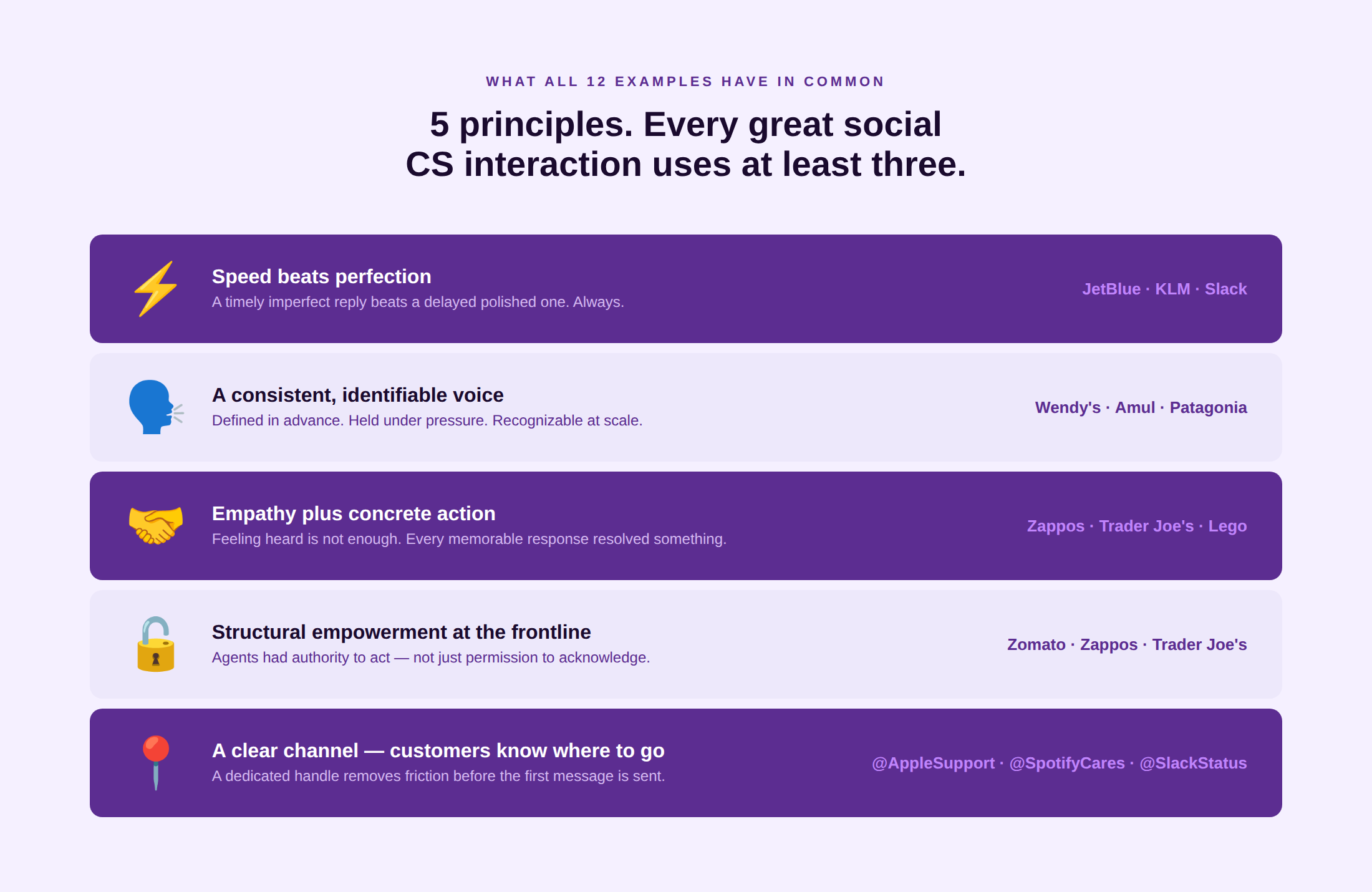
Five patterns appear across every example on this list:
- Speed beats perfection. JetBlue, KLM, Apple Support, and Slack all prioritize responding fast over responding perfectly. A timely, imperfect response preserves the conversation. A delayed, polished one arrives after the damage is done.
- A consistent, identifiable voice. Wendy’s, Glossier, Zappos, and Patagonia have voices that are immediately recognizable. Each brand defined its own register and trained its team to hold it under pressure.
- Empathy plus concrete action. Trader Joe’s and Zappos demonstrate that empathy without action is theater. Every example that generated positive organic sharing involved a specific resolution.
- Structural empowerment at the frontline. The examples that work do so because agents had authority to act. Zomato’s team did not escalate before posting “Food doesn’t have a religion.” Trader Joe’s manager did not wait for corporate approval.
- A clear, separate channel where customers know to go. @AppleSupport, @SpotifyCares, @SlackStatus, @JetBlue- each handle signals “this is where you get help,” separate from the marketing account.
How to Apply These Lessons to Your Brand
1. Create a dedicated support handle
Customers who need help should not have to guess which account to contact. A dedicated handle reduces friction, sets clearer SLAs, and allows the support team to develop a voice distinct from the marketing team. See how omnichannel customer service connects social handles to a unified customer timeline so every DM and mention is captured alongside email and chat.
Related read: Outsourcing your social media customer service
2. Define your voice before the first complaint arrives
Wendy’s witty voice is a documented strategy that every team member is trained on. KLM’s precise, multilingual tone is equally deliberate. Your voice under pressure is either something you decided in advance or something that gets decided by whoever is online when the crisis hits.
3. Set a public response-time commitment and hold it
KLM’s live indicator is the strongest version of this principle, but every brand can apply a lighter version: post service hours, state your target response time in your bio, track it against customer satisfaction score specifically on social interactions.
There are many inspiring stories that can help your own social media team be better with each passing day. But one thing all examples have in common is the basics: fast reply, clarity in further instructions, less waiting time, transparency, and setting the right expectation. It’s a principle which will continue to hold true irrespective of the budget or scale.
FAQs
What makes social media customer service effective?
Five factors: response speed within the hour expectation, a consistent brand voice maintained under pressure, empathy combined with a concrete action, agent authority to resolve rather than only acknowledge, and a clear dedicated handle. The 12 examples in this guide demonstrate each in different contexts.
How quickly do customers expect a response on social media?
40% expect a reply within one hour. 37% expect one within 30 minutes. Top brands on X respond within 15 minutes during business hours. The average brand takes four to five hours. Meeting the one-hour standard alone is a visible differentiator from most competitors.
Should we have a separate handle for customer support?
Yes, if you have meaningful support volume on social. A dedicated handle (like @AppleSupport or @SpotifyCares) tells customers where to direct service queries, allows the support team to develop its own operational rhythm, and makes it easier to measure support-specific metrics separately from brand engagement data.
Which platform matters most for customer service: X, Instagram, or Facebook?
It depends on where your customers post when they need help. B2C consumer brands receive more service contacts on Instagram and Facebook. Technology and B2B brands receive more on X. The correct approach is to monitor all channels and respond where the customer is, not where it is convenient. Over 200 million businesses use WhatsApp Business globally (Meta), making WhatsApp an increasingly significant service channel in South Asia, the Middle East, and Africa.
What is the difference between social media marketing and social media customer service?
Social media marketing is outbound: content, campaigns, brand voice building. Social media customer service is inbound: responding to queries, complaints, and requests. Both happen on the same platforms, which creates the overlap. The most common mistake is allowing the marketing team to manage all social interactions without social-CS-specific training, resulting in responses that are brand-forward rather than customer-forward.
Kayako connects every social DM and mention to the full customer record so your team starts every interaction from the right place. See How It Works