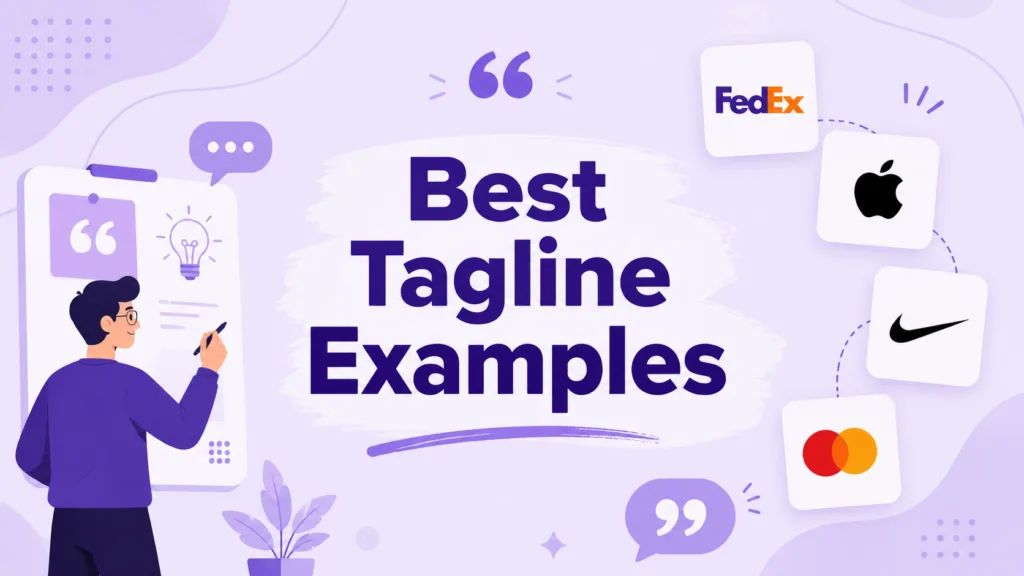
Quick summary: A tagline is a short, memorable phrase that captures what a brand stands for. The best ones are three to five words, emotional, and consistent everywhere they appear. This guide collects tagline examples across famous brands, business and IT companies, websites, movies, and personal brands, explains what makes each work, and ends with a simple process for writing your own. A tagline is a promise, so the experience behind it has to match.
The best tagline examples do a remarkable amount of work in a handful of words. “Just Do It” is three words that have sold motivation for decades. A strong tagline captures a brand’s promise, sticks in memory, and sets an expectation that the product then has to meet. This guide gathers examples across every category people search for, from famous brands to personal brands, and shows what makes each one land. Read it as a swipe file and a teardown at once: the examples give you patterns to borrow, and the commentary explains why they work, so you can apply the same thinking to your own.
The stakes are higher than the word count suggests. Consumers form an initial judgment of a brand in about 1.5 to 3 seconds, and a strong tagline can make a brand nearly 50% more memorable, per Big Red Jelly. In that sliver of time, a tagline is often the one piece of language a person actually retains, which is why brands invest so heavily in getting a few words right. Whether you are naming a company, rewriting a homepage headline, or polishing a personal bio, the same principles apply, and the examples below make them concrete. This guide starts with what a tagline is, then works through examples by category, and finishes with how to write your own. Begin with the basics.
What is a tagline?
A tagline is a short, enduring phrase that sums up a brand’s identity or promise. It is not the same as a slogan, though the words are often swapped. A tagline is brand-level and durable, meant to last for years across everything the company does. A slogan is usually campaign-level and temporary, tied to a specific product or promotion. “Think Different” is a tagline; a line written for a single seasonal sale is a slogan.
The distinction matters because a tagline carries the whole brand, not one campaign, and it should outlive any single product or promotion. Changing it too often throws away the recognition it has built. Because the most recalled taglines average just three to five words, the discipline is compression: saying the most in the fewest words, per OMGee Digital. That compression is exactly what separates a memorable tagline from a forgettable one. A weak tagline tries to say everything and ends up saying nothing; a strong one picks the single most important idea and states it so cleanly that it sticks. The discipline is closer to poetry than to copywriting: every word is load-bearing, and the ones you cut matter as much as the ones you keep. That principle is worth breaking down before the examples.
What makes a great tagline?
Across every category below, the strongest taglines share a few traits, and once you can name them, you start to see them everywhere. Keep these in mind as you read the examples.
- Brevity. Three to five words is the sweet spot. Short phrases are easier to remember and repeat, and they survive being crammed onto a billboard, an app icon, or a business card.
- Emotion. The best taglines sell a feeling, not a feature, because people remember and act on emotion far more than on specifications. Emotional branding has been linked to engagement gains of up to 23%.
- Differentiation. A great tagline says something only your brand could say, not a generic claim any competitor could copy. If a rival could put their logo next to your tagline and it would still make sense, the tagline is not doing its job.
- A clear benefit. About 64% of customers prefer brands that communicate a distinctive benefit clearly.
- Consistency. It should appear everywhere, unchanged, so it compounds over time rather than resetting every time it is tweaked.
The payoff is measurable. Memorable slogans are linked to up to 33% higher revenue growth, and about 64% of customers prefer brands that communicate a distinctive benefit clearly, per MoldStud. A tagline is also a promise, and a promise only builds a brand if the experience behind it delivers. With the principles set, here are the examples, starting with the icons.
A tagline is a promise. Kayako helps you keep it for customers.
Famous brand tagline examples
These are the taglines most people can finish from memory. Each one sells an idea, not a product, which is precisely why they have lasted. Notice that almost none of them mention what the company actually makes. Nike sells motivation, not sneakers; De Beers sold permanence, not carbon; the product is left for the visual and the context to carry.
- Nike: “Just Do It.” A call to action that sells motivation and identity, not footwear.
- Apple: “Think Different.” Two words that positioned the whole brand as creative and unconventional.
- McDonald’s: “I’m Lovin’ It.” Casual, upbeat, and endlessly singable across languages.
- L’Oréal: “Because You’re Worth It.” Sells self-worth, which is far stickier than selling cosmetics.
- BMW: “The Ultimate Driving Machine.” Stakes a clear, ownable claim about performance.
- De Beers: “A Diamond Is Forever.” Tied a product to permanence and love, and reshaped an industry.
- Mastercard: “Priceless.” One word that reframed spending as buying meaningful moments.
What these share is emotion and ownability: each says something only that brand could credibly claim, and each attaches the brand to a feeling rather than a feature. You cannot picture a competitor using any of them without it feeling borrowed. That ownability is the whole point: a tagline anyone could use is one nobody remembers. Brands with recognizable taglines can command noticeably higher margins, per Big Red Jelly. The same principles apply when the audience is other businesses rather than consumers.
A memorable tagline earns attention. Kayako helps you keep the customers it wins.
Business tagline examples
Business and service brands lean toward taglines that promise an outcome or a way of working. They sell trust and results, because their buyers are making a considered, often expensive decision rather than an impulse purchase. The emotion is still there, but it is aimed at confidence rather than desire. A buyer choosing enterprise software is not looking to be thrilled; they are looking to be reassured they made a safe, smart choice, and the tagline can plant that feeling early.
- Slack: “Where Work Happens.” Positions the product as the default home for a team’s work.
- General Electric: “Imagination at Work.” Ties an industrial giant to creativity and progress.
- Accenture: “High Performance. Delivered.” States the promise and the proof in three words.
- HubSpot: “Grow Better.” A benefit and a philosophy in two words.
- FedEx: “The World On Time.” Captures reliability, the one thing a shipping brand must own.
Notice how each names a benefit the buyer cares about, not a feature list. A B2B tagline that lists capabilities reads like a spec sheet; one that promises an outcome reads like a partner. The strongest business taglines sound like the result you want, stated with confidence, which is why they win trust before a single feature is discussed. Emotional and benefit-led messaging drives engagement even in B2B, with emotional branding linked to gains of up to 23% per MoldStud. Technology brands take the same approach with a distinctly forward-looking tone.
Tagline examples for IT and tech companies
Tech taglines balance capability with trust, often promising the future while reassuring on reliability. The challenge is that the product itself can be abstract, so the tagline has to translate complex technology into a human idea anyone can grasp. Nobody buys a processor because of its architecture; “Intel Inside” worked because it turned a technical component into a simple mark of trust.
- IBM: “Think.” A single word that has anchored the brand for a century.
- Intel: “Intel Inside.” Turned an invisible component into a trusted seal of quality.
- Microsoft: “Empowering us all.” Frames technology around human potential rather than products.
- Cisco: “The Bridge to Possible.” Position infrastructure as the path to what is next.
- Salesforce: “We bring companies and customers together.” States the platform’s core purpose plainly.
The best tech taglines make abstract technology feel human and purposeful. They rarely describe the technology at all; instead, they describe what it lets people do, which is what buyers actually care about. That translation of capability into benefit is a skill every category rewards, including broad corporate brands. Company-level taglines take it one step wider.
Company tagline examples
Corporate, company-level taglines sit above any single product and express what the whole organization stands for. They have to be broad enough to cover every product line and market, yet specific enough to still mean something, which is a hard balance to strike.
- Disneyland: “The Happiest Place on Earth.” Sells an emotional destination, not a theme park.
- Adidas: “Impossible Is Nothing.” A motivational stance that spans every product line.
- Red Bull: “Red Bull Gives You Wings.” Promises energy and possibility with playful exaggeration.
- Walmart: “Save Money. Live Better.” Links a practical benefit to a bigger life outcome.
- Airbnb: “Belong Anywhere.” Turns lodging into a feeling of belonging.
Company taglines work when they capture a stance broad enough to cover everything the brand does, yet specific enough to feel true. Vague corporate lines like “innovating for tomorrow” fail this test, because any company could say them; the strong ones stake out a distinct point of view. On the web, taglines do the same job in an even more time-pressured setting.
Website tagline examples
A website tagline, usually the hero headline on a homepage, has seconds to state the value proposition before a visitor leaves. Unlike a brand tagline, which can be aspirational, a website tagline usually needs to be concrete: what you do and why it matters, fast.
- Spotify: “Music for everyone.” Inclusive, instant, and obvious about the value.
- Dropbox: “Keep life organized and work moving.” States two concrete benefits in one line.
- Zoom: “One platform to connect.” Compresses the whole product into a single promise.
- Shopify: “The platform commerce is built on.” Claims category leadership in six words.
- Notion: “The happier workspace.” Pair a benefit with an emotion.
The lesson from homepage taglines is speed to value: say what you do and why it matters before the visitor decides to stay. A clever brand line can come second; the first job of a homepage headline is to make the visitor understand, in one read, that they are in the right place. A very different creative tradition, film, shows how far a tagline can go on tone alone.
Movie and film tagline examples
Film taglines sell a feeling and a hook rather than a benefit. They are built to intrigue in a single line, creating just enough curiosity to make you want to know more without giving the story away. It is a masterclass in tone, and marketers borrow from it constantly. A film has one line and a poster to make you buy a ticket, so every word is chosen to set a mood and raise a question at the same time.
- Alien: “In space, no one can hear you scream.” Delivers the entire mood of the film in nine words.
- Jaws 2: “Just when you thought it was safe to go back in the water.” Weaponized the audience’s own memory of the first film.
- The Social Network: “You don’t get to 500 million friends without making a few enemies.” Frames the whole story in one sentence.
- Jurassic Park: “An adventure 65 million years in the making.” Sells scale and wonder at once.
- Toy Story: “The toys are back in town.” Playful, rhythmic, and instantly clear.
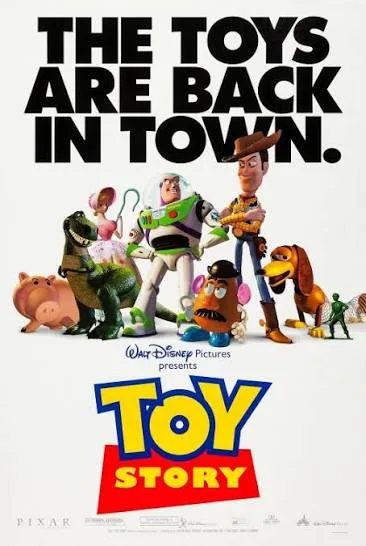
Movie taglines prove that intrigue and tone can carry a line even without a product benefit. The takeaway for any brand is that emotion and curiosity are powerful tools, and a tagline does not always have to spell out a benefit to work. The final category turns the tagline inward, toward individuals.
Personal tagline examples (for a person)
A personal tagline, common on LinkedIn bios and portfolios, states who you help and how in one memorable line, and it is often the first thing a recruiter or client reads. It is the individual’s version of a brand promise, and the best follow a simple pattern: a clear role plus the value you deliver. Vague personal lines like “passionate professional” say nothing; specific ones make you memorable.
- The helper pattern: “Helping SaaS teams turn support into a growth engine.” Names the audience and the outcome.
- The identity pattern: “Designer who makes complex ideas simple.” States a role and a distinctive strength.
- The mission pattern: “On a mission to make finance make sense.” Signals’ purpose and personality.
- The proof pattern: “I build brands people remember.” Short, confident, and outcome-focused.
For a person, the rule is the same as for any brand: be specific about who you help and what changes because of you. The mistake most people make is describing themselves with adjectives rather than outcomes; a strong personal tagline names a result someone would pay for. Whatever the category, though, writing a strong tagline follows a repeatable process.
How to write your own tagline
A good tagline is engineered, not stumbled upon. The famous ones can look effortless, but almost all of them are survivors of dozens of discarded drafts. This process works for a company, a website, or a person.
- Start with the core benefit. Write the single most important thing you deliver, in plain words, before making it clever.
- Cut ruthlessly. Aim for three to five words. Remove anything a competitor could also say, and every word that does not earn its place.
- Add emotion. Turn the benefit into a feeling. People remember how a line makes them feel long after they forget what it literally said.
- Test it out loud. Say it, and check whether it is easy to remember and repeat; if it trips off the tongue, it will travel.
- Apply it everywhere. Consistency is what makes it stick; a tagline used unevenly never compounds.
That last point carries the most weight over time. Tagline consistency across platforms is linked to 80% higher brand recognition, which is why disciplined customer communication matters as much as the words themselves.
There is one honest caveat worth ending on. A tagline is a promise, and a promise only strengthens a brand when the experience behind it delivers. “The Happiest Place on Earth” only works because the visit lives up to it. The same is true for any company: the words set the expectation, and the customer experience has to meet it, which is why a strong service strategy sits behind every credible brand promise. A brilliant tagline attached to a frustrating experience does more harm than none at all.
Make your brand promise real with an experience customers remember, via Kayako.
The best tagline examples, from “Just Do It” to “Impossible Is Nothing,” share the same DNA: they are short, emotional, distinctive, and consistent. Whether you are writing for a company, a website, a product, or yourself, start with the core benefit, compress it to a few words, add a feeling, test it out loud, and apply it everywhere without changing it.
Above all, remember that a tagline is a promise. The words are only half the job; the experience customers have with your brand is what proves the tagline true. A promise kept turns a clever line into a trusted one, and a promise broken turns it into a punchline. Get both right, and a handful of words can carry a brand for decades.
Frequently asked questions
What is a tagline, and how is it different from a slogan?
A tagline is a short, enduring phrase that captures a brand’s overall identity or promise and is meant to last for years, like Nike’s “Just Do It.” A slogan is usually campaign-level and temporary, tied to a specific product or marketing push. In short, a tagline represents the whole brand over time, while a slogan supports a particular campaign. The words are often used interchangeably, but the difference is durability and scope.
What are some examples of good taglines?
Famous examples include Nike’s “Just Do It,” Apple’s “Think Different,” L’Oréal’s “Because You’re Worth It,” BMW’s “The Ultimate Driving Machine,” and Mastercard’s “Priceless.” In business and tech, Slack’s “Where Work Happens” and IBM’s “Think” stand out. What they share is brevity, emotion, and a claim that only that brand could make. The best taglines sell an idea or feeling rather than describing a product.
How long should a tagline be?
The most memorable taglines are typically three to five words, because short phrases are easier to remember and repeat. Some effective taglines are a single word, like Mastercard’s “Priceless” or IBM’s “Think,” while others run a little longer when the rhythm carries them. The guiding principle is compression: say the most important thing in the fewest possible words, and cut anything a competitor could also claim.
How do I write a tagline for my business?
Start by writing your single most important benefit in plain words, then cut it down to three to five words, removing anything generic. Add emotion so it sells a feeling rather than a feature, then say it out loud to test how memorable it is. Finally, apply it consistently everywhere, since consistency is what makes a tagline stick. Remember that the tagline is a promise your customer experience then has to deliver on.
What makes a tagline memorable?
Memorable taglines are brief, emotional, and distinctive. Brevity makes them easy to recall, emotion makes them stick, and distinctiveness means they say something only your brand could credibly claim. Consistency reinforces all three, since a tagline used unchanged across every touchpoint compounds in memory over time. The taglines people can finish from memory, like “Just Do It,” combine all of these traits with a benefit or feeling the audience genuinely cares about.