|
Key takeaways
|
Cold calling is far from dead in 2026, but the math is tighter than the recycled “2% success rate” suggests. Over half of B2B leads still begin with outreach, and after a difficult 2025, the industry meeting rate ticked back up to about 2.7% across a study of more than 200,000 calls (Cognism, via Martal). The real divide is no longer who dials hardest; it is who uses the right data and the right technique. This guide covers the modern cold calling techniques that separate a 2% rep from a 6 to 8% one.
Does cold calling still work in 2026?
Yes, cold calling still works in 2026. Over half of B2B leads start with cold outreach, and focused calling into a verified list books meetings reliably at an average rate of about 2.7%, with top teams reaching 5 to 8%. What has died is untargeted, high-volume blasting, which spam filtering and call screening have made ineffective.
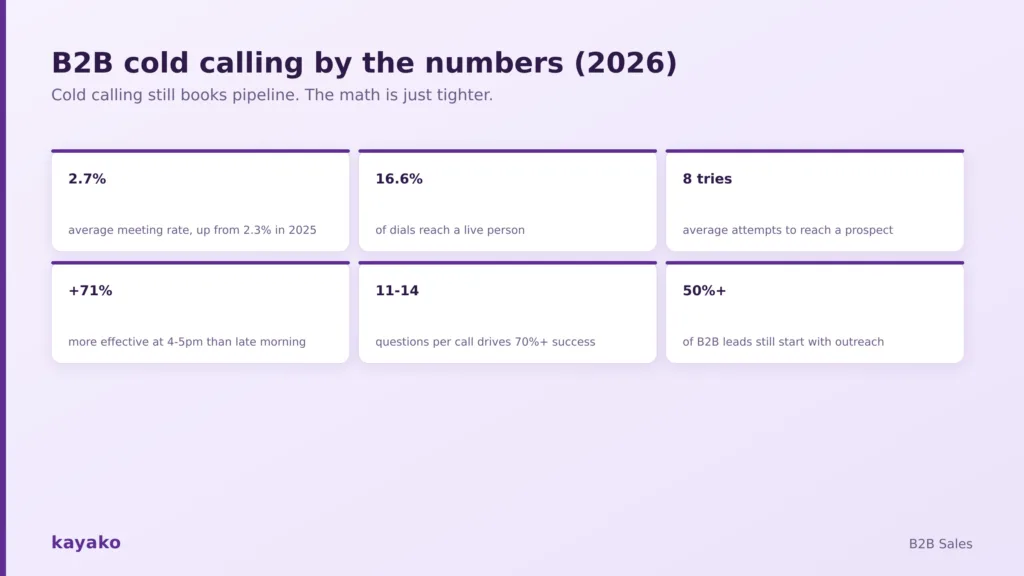
Cold calling still books pipeline. The math is just tighter.
The headline numbers set realistic expectations, so you stop panicking over stats that are simply average.
| Metric | 2026 benchmark |
|---|---|
| Average meeting rate | About 2.7% (top teams 5 to 8%) |
| Connect rate (live person) | Around 16.6%, or 1 in 6 dials |
| Attempts to reach a prospect | About 8 on average |
| Connect rate with verified mobiles | 18 to 22%, versus 8 to 12% on generic lists |
| People ignoring unknown numbers | About 87% |
Those benchmarks reward technique over brute force, so here is what the best reps actually do differently.
7 modern cold calling techniques for B2B sales
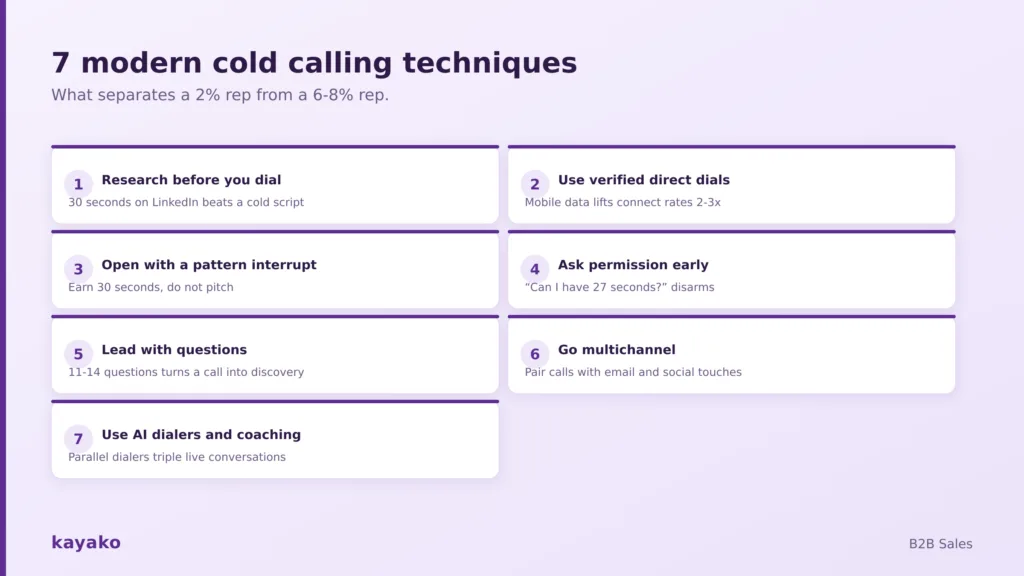
What separates a 2% rep from a 6 to 8% rep.
1. Research before you dial
Thirty seconds on a prospect’s LinkedIn or company news beats any generic script. A single specific, relevant reference at the open signals you are not spraying and praying, which is the fastest way to earn the next thirty seconds of attention. If sourcing quality prospects to call is the real bottleneck, our guide to the best lead generation companies can help fill the top of the list.
2. Use verified direct-dial data
Data quality is the single biggest lever in cold calling. Phone-verified mobile numbers lift connect rates two to three times over main-line or unverified lists, so if your connect rate sits below 10%, the problem is your data source, not your reps.
3. Open with a pattern interrupt
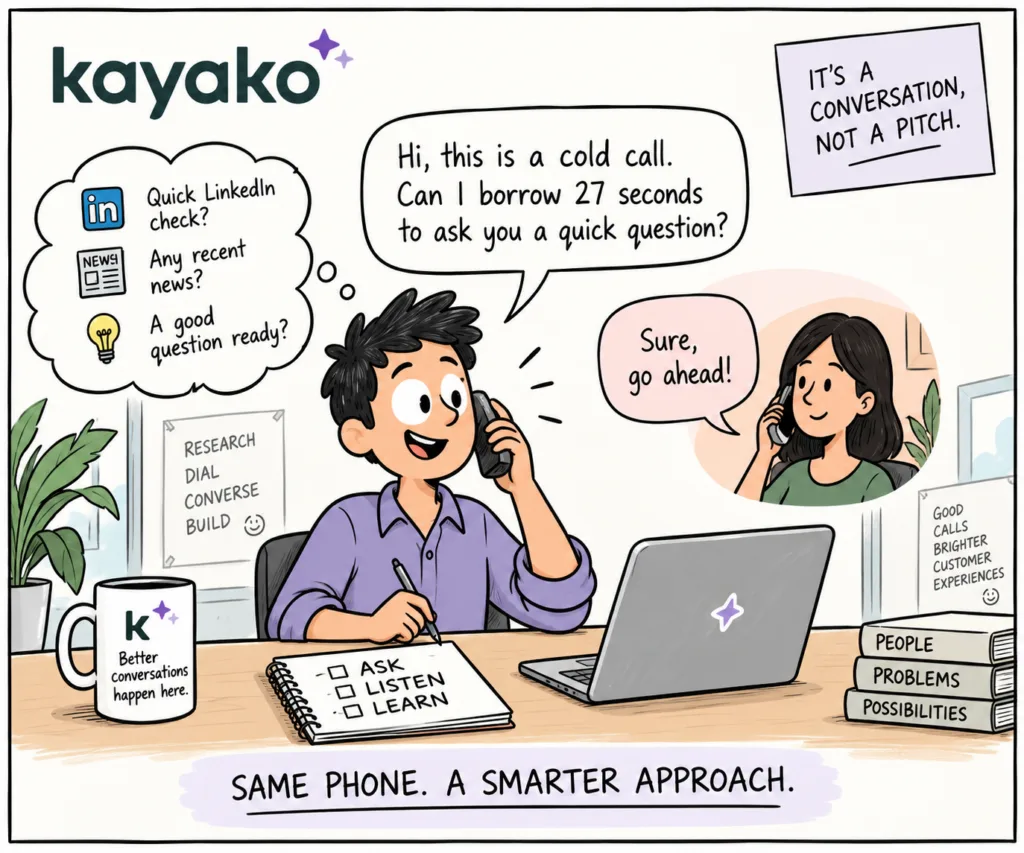
The first line decides everything. Skip the robotic “How are you today?” and open with something honest and human that breaks the telemarketer pattern, such as naming that it is a cold call and asking for a moment. The goal of the opener is not to pitch; it is to buy thirty more seconds.
4. Ask permission early
A short permission question disarms resistance: “Can I borrow 27 seconds to tell you why I called, and you can decide if it is worth continuing?” Giving the prospect an easy out paradoxically makes them far more likely to stay on the line.
5. Lead with questions, not a pitch
The best cold calls are discovery, not monologues. Gong’s analysis found that asking 11 to 14 questions on a call correlates with a 70%-plus success rate (via Growth List). Good questions such as “how are you handling X today?” turn a pitch into a consultative conversation and surface the pain your solution addresses.
6. Go multichannel around the call
A call rarely works in isolation. Wrapping each dial in email and social touches, and planning for about eight attempts across different days and times, dramatically outperforms single-channel effort. The call becomes the sharp point of a coordinated sequence, not a one-shot gamble.
7. Use AI dialers and call coaching
Technology now moves the needle more than raw activity. The right call center tools, from AI parallel dialers that triple live conversations per hour to call analysis that improves success rates by around 50% and coaching that lifts conversion by up to 38%, do more than sheer effort alone. Let the tools handle volume so reps can focus on the conversation.
|
When is the best time to cold call?
The best times to cold call B2B prospects in 2026 are 4 to 5 pm and 10 to 11 am in the prospect’s local time, on Tuesday through Thursday. Calling between 4 and 5 pm is about 71% more effective than calling between 11 am and noon, which is the worst window. Move slightly off the hour, such as 10:15, to dodge the wave of competing reps.
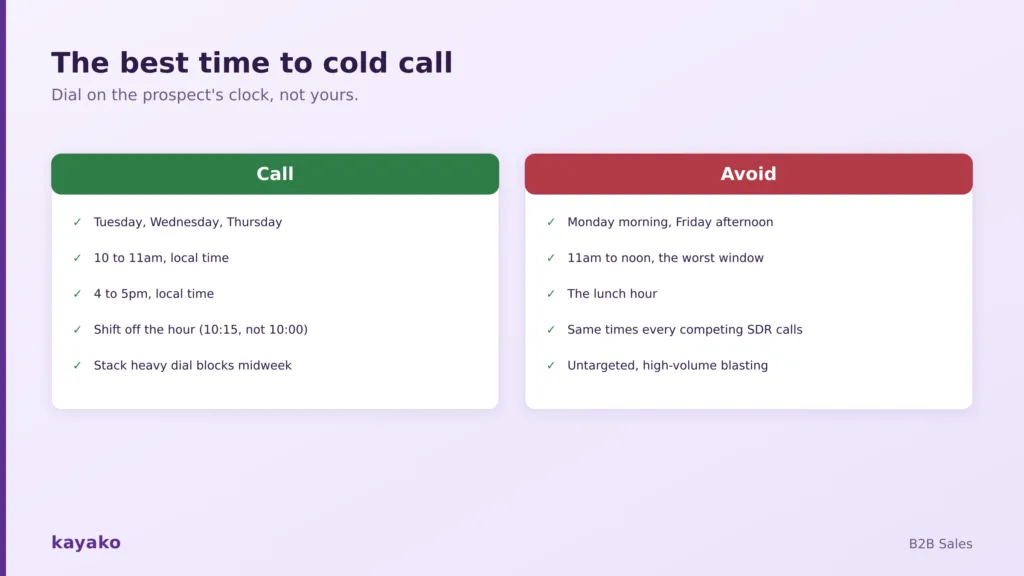
Dial on the prospect’s clock, not yours.
| When | Call or avoid | Why |
|---|---|---|
| Tuesday to Thursday | Call | Highest midweek pickup and booking rates |
| 4 to 5 pm local time | Call | 71% more effective than late morning |
| 10 to 11 am local time | Call | Second-strongest window across datasets |
| 11 am to noon | Avoid | The single worst-performing hour |
| Monday am, Friday pm | Avoid | Low reach; reserve for research and nurture |
Once you are dialing at the right time, a repeatable call framework keeps prospects on the line.
A modern cold call framework
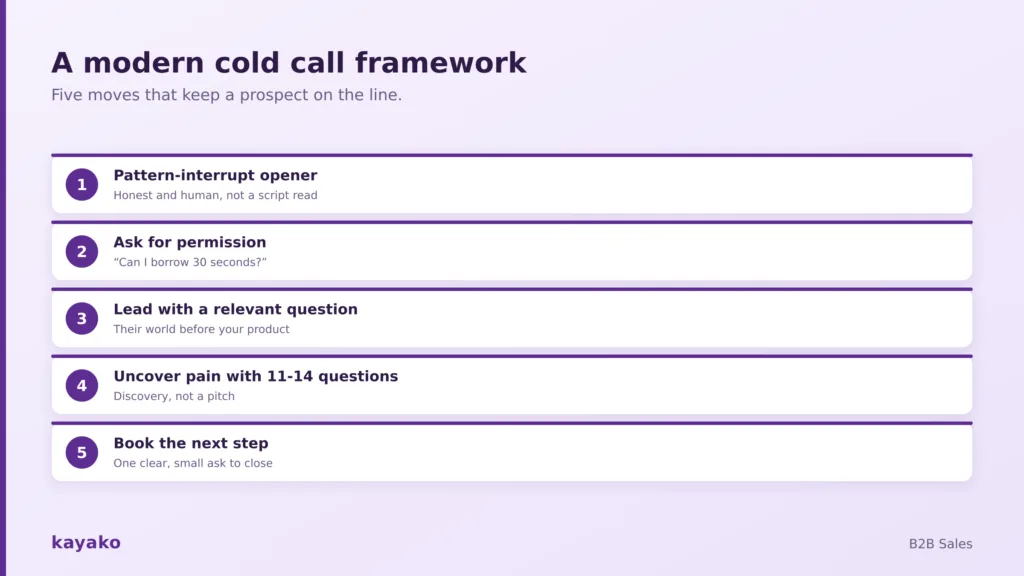
A strong B2B cold call follows five moves: an honest pattern-interrupt opener, a permission ask, a relevant question that centers the prospect’s world, discovery through 11 to 14 questions, and one small, clear ask to book the next step. The aim is a two-way conversation, not a scripted pitch.
Five moves that keep a prospect on the line.
Keep the whole call short and outcome-focused. The purpose of a cold call is almost never to close a deal on the spot; it is to earn a qualified next meeting. End with a single, specific ask, such as two proposed times, rather than a vague “should we set something up?”
How to handle common cold call objections
Objections are signals of engagement, not rejection, and handling them calmly is part of building rapport on the call. A few respond well to a brief, honest reframe.
- “I’m busy.” Acknowledge it and ask for a tiny window: “Totally fair, this will take 30 seconds, then you decide.”
- “Send me an email.” Agree, then earn one qualifying question first so the email is relevant: “Happy to. So I send the right thing, are you handling X in-house today?”
- “We already use someone.” Validate and probe the gap: “Makes sense. Most teams we help did too, until X became a problem. Is that on your radar at all?”
- “Not interested.” Concede gracefully and leave a door open, since persistence across eight touches is what eventually connects.
Handle the objection, book the meeting, and the hard part of the deal is only beginning, because winning the logo is not the same as keeping it.
After the call: from conversation to customer
Cold calling sits at the very top of the B2B sales funnel, where its whole job is to start a conversation. But the revenue a call unlocks is only realized much later, after the prospect becomes a paying customer, and that stage lives on the support and success side rather than the phone. Handled well, that support can even shorten the next sales cycle, turning happy customers into references and expansions.
Where a cold call opens the relationship, a support platform like Kayako protects it, giving your team the full history of every customer on one screen and an AI agent that resolves issues fast, so the accounts your reps work hard to win actually stay and grow. See our approach to AI customer support. The strongest B2B teams pair sharp prospecting up front with support that earns loyalty after the sale.
|
|
Frequently asked questions
Is cold calling still effective in 2026?
Yes. Over half of B2B leads still start with cold outreach, and the average cold call meeting rate rose to about 2.7% in 2026, with top teams reaching 5 to 8%. Untargeted, high-volume dialing has become ineffective because of call screening, but focused calling into a verified, well-researched list continues to book meetings reliably.
What is a good cold calling success rate?
A good B2B cold call meeting rate is around 2 to 3%, which is the industry average, while top-performing teams reach 5 to 8% or higher through better data and targeting. Connect rates, where a live person answers, run near 16% on average and 18 to 22% with verified mobile numbers. Judge performance against these benchmarks rather than expecting a hit on every dial.
How many times should you attempt to reach a prospect?
Plan for about eight attempts across different days and times, since that is the average number of touches it takes to reach a B2B prospect. Most reps give up after two or three tries, which is exactly why persistence separates top performers. Vary the timing and channel of each attempt rather than calling the same number at the same hour repeatedly.
What is the best cold call opening line?
The best openers break the telemarketer pattern and quickly ask permission, such as naming that it is a cold call and asking for 27 seconds to explain why you called. Avoid scripted pleasantries like “How are you today?” The opener’s only job is to earn the next thirty seconds of attention, not to pitch the product.
How many questions should you ask on a cold call?
Aim for 11 to 14 questions on a cold call. Gong’s research found this range correlates with a 70%-plus success rate, because it turns the call into a consultative discovery conversation rather than a one-way pitch. Good questions uncover the prospect’s current process and pain, which lets you tailor your value proposition to what actually matters to them.